
Wondermondo 🢖 Categories of wonders 🢖 Architectural wonders 🢖 Religious architecture 🢖 Christian monasteries
Category
Christian monasteries
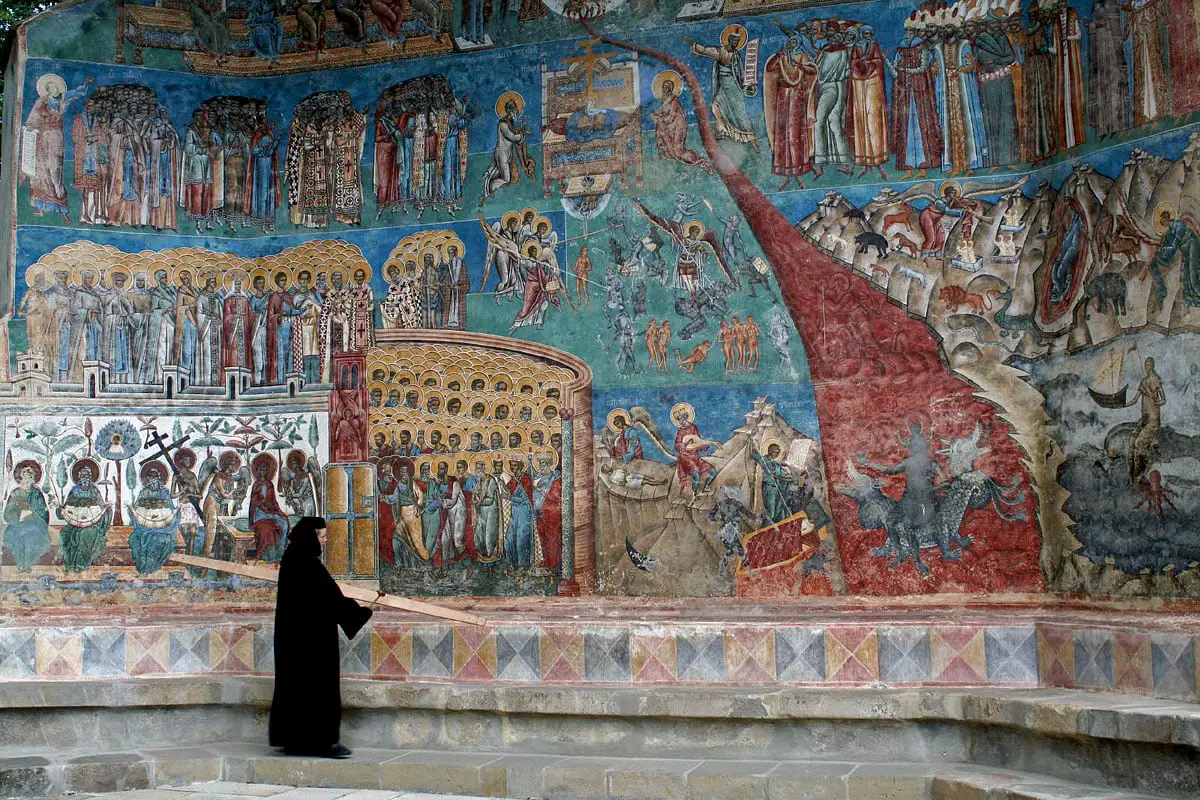
 Described Christian monasteries
If you see this after your page is loaded completely, leafletJS files are missing.
 What is included in this category?
Monastery is a building or complex of buildings where live, work and pray monks or nuns – people practicing religious asceticism.
Christian monasteries have proven to be a very significant element in history, influencing politics, science, architecture and art. Often monasteries themselves serve as collectories of written works, art and crafts.
Short history of Christian monasteries
The idea behind monasticism is certainly older than Christianity. Predecessor religion – Judaism – had influential sects whose members practiced an ascetic lifestyle and Christianity started exactly as one such sect. During the first centuries, Christians were persecuted and thus often forced to live an ascetic life.
Christian monasticism started in the 3rd century when Christianism became widely adopted, tolerated, and finally – when it became the state religion.
Coptic monasticism
Oldest existing Christian monasteries are located in Egypt or in Palestine. A kind of more primitive monastery is lavra – a group of monk’s cells or caves and a church. The oldest could be lavras in Palestine, e.g. Pharan Lavra (before 350 AD). One of the oldest true monasteries ones is the Monastery of Saint Anthony southeast of Cairo, in the desert: it evolved gradually in 311 – around 400 AD. Of quite similar age are monasteries in Wadi El Natrun (Nitrian desert, Scetes) – between Cairo and Alexandria – such as Paromeos Monastery. Monasticism in Egypt has maintained the Coptic Church with its distinct tradition and the latest stage of ancient Egyptian language which now is used as a liturgical language.
Monasteries of the comparatively easily accessible Nitrian Desert in the 4th – 6th centuries served as a model for later European monasteries. A very special role in the history of monasticism has ascetic Saint Anthony: he to large extent developed and popularized the concept of Christian monasticism.
Monasticism in Eastern Christianity
In Eastern Europe and the Near East monasteries developed as comparatively isolated, self-sustaining communities.
Some of the most influential monasteries are located on Mount Athos peninsula of Greece, forming here a Self-governed Monastic State of the Holy Mountain – although it was adhering to the legislation of Greece. This peninsula is available only by water and here up to this day exist 20 monasteries.
In spite of traditional isolationism monasteries have played a significant role in the development of national identity for such Balkan nations as Greeks, Romanians, Bulgarians, Serbs, and others. Art and literature in these monasteries have turned into the symbols of these nations. Such role to larger or lesser degree is played by Rila Monastery (Bulgaria), Studenica Monastery (Serbia, Raška) and also Meteora monasteries (Greece, Thessaly).
Monasticism in Southern and Central Europe
First Christian monasteries in this region followed soon after the ones in Egypt and were established in the area of present-day France in the 4th-5th century. Among the first ones could be mentioned Tours Marmoutier Abey (France, Indre-et-Loire) established sometime around 372 AD. This monastery much later – in the 11th – 16th centuries became very important and influential. Lérins Abbey (France, Alpes-Maritimes) was established around 410 AD and later, after numerous raids built as a strong fortress. This monastery was an important location where Europeans learned about monasteries and were inspired next ones. Around 529 there was established Monte Cassino monastery (Italy, Lazio) where St.Benedict of Nursia wrote the Benedictine Rule – one of the cornerstones of Western monasticism. Monte Cassino developed into a collectory of knowledge and art.
In the Middle Ages monasteries were seen as morally and legally strong entities and this led to (it would be somewhat unexpected by early founders – ascetics) an enormous increase of their wealth and weight in worldly issues. Nobility often bequeathed their properties to monasteries and thus monasteries got also numerous serfs supplying monks with the necessary food and other accommodations.
Importance of monasteries in mundane issues slowly started to fade in the 11th – 12th century, and a certain role here is played by increasingly popular mendicant orders refusing ownership of properties and other valuables (e.g. Franciscans).
Irish and Scottish monastic tradition
At the end of the 5th century first monasteries appeared in Ireland. Here Christianity developed in a specific, locally adapted form. The first influential monastery was Kildare Abbey (Ireland, Kildare) established by St. Brigitte sometime around 470 AD. Irish monasteries with their distinct, highly developed teaching and traditions left a large impact on Christians in Northern Europe. St. Columba and other missionaries spread this practice elsewhere and other important monasteries founded by them were Bangor Abbey (Northern Ireland, County Down, founded in 558 AD), Iona Abbey (Scotland, Iona Island, founded in 563 AD), Lindisfarne Abbey (England, Northumberland, founded around 635 AD.), Marmoutier Abbey (France, Bas-Rhin, established in 659 (?) AD).
Irish and Scottish monks created influential monasteries also as far as in Germany (Scots Monastery, Regensburg in Bavaria, established around 1070 AD), Switzerland (the influential Abbey of Saint Gall, St.Gallen, started in 613 AD) and Italy (Bobbio Abbey, Emilia-Romagna, 614 AD).
Other articles
Wondermondo has defined several other categories of religious structures:
- Religious architecture – list of more than 60 most interesting and impressive religious structures and sites around the world.
- Buddhist shrines
- Churches
- Hindu temples
- Jain shrines
- Judaism monuments, sinagogues
- Islamic shrines
- Other contemporary shrines
- Ancient pyramids
- Ancient and prehistoric shrines
 Top 25 Christian monasteries
Africa
Debre Damo
Ethiopia
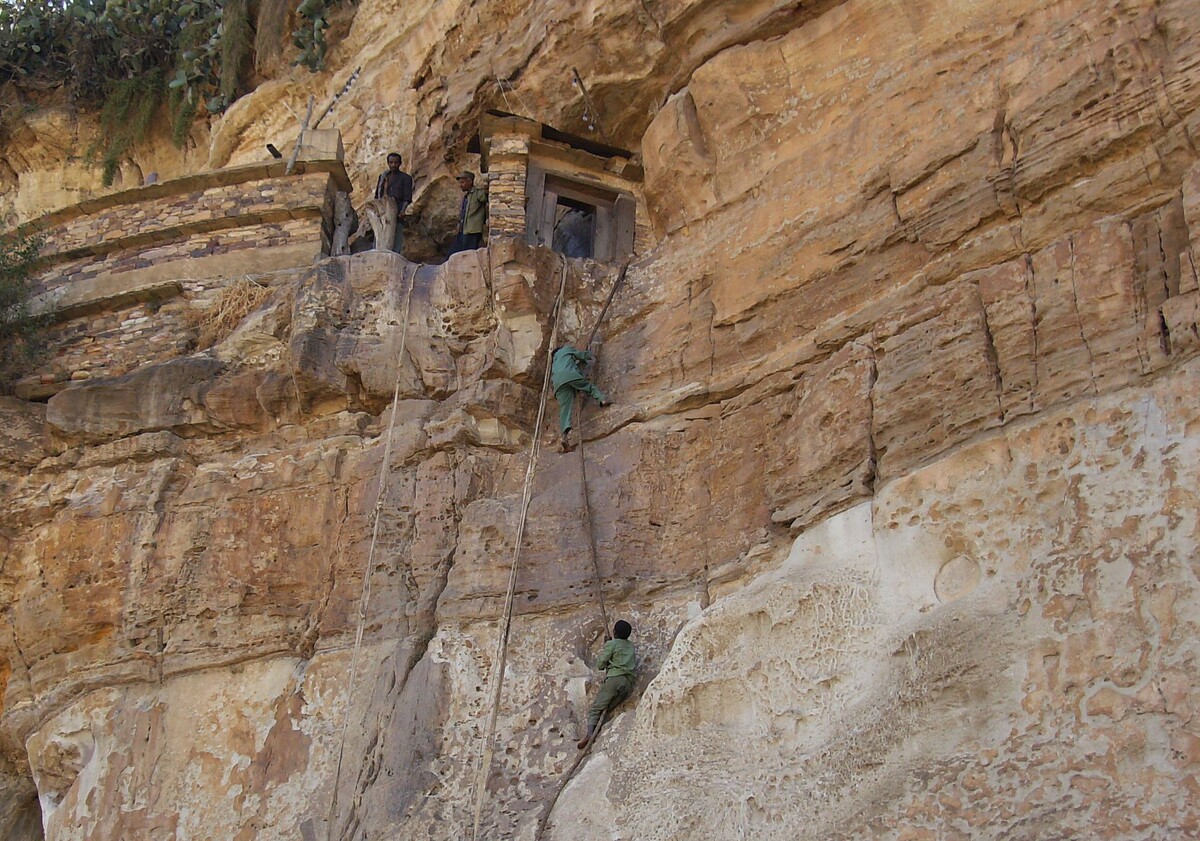
This monastery from the 6th century is accessible only by rope up a vertical cliff. Here is located the oldest Christian church in Ethiopia (around the 6th century AD). For its construction were used obelisks of Axum state.
Saint Catherine’s Monastery, Mount Sinai
Egypt
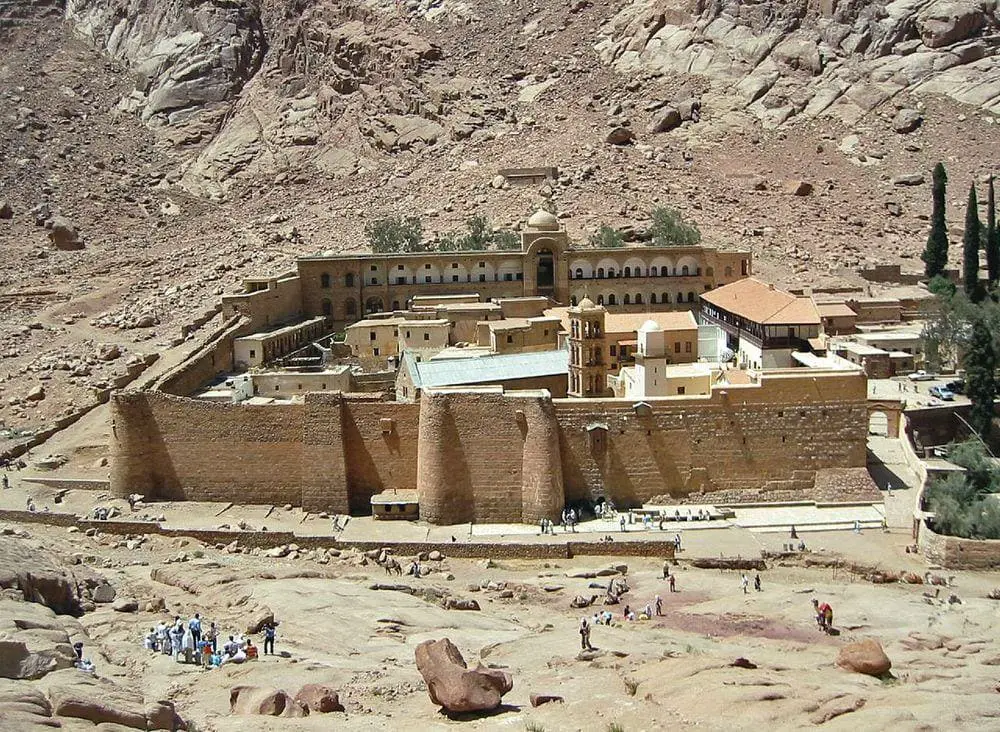
An ancient, continuously operating Christian monastery, active since around 381 AD. The monastery was built between 527 – 565 AD and hosts an extremely important library of ancient writings.
Asia
Temple Mount
Palestine
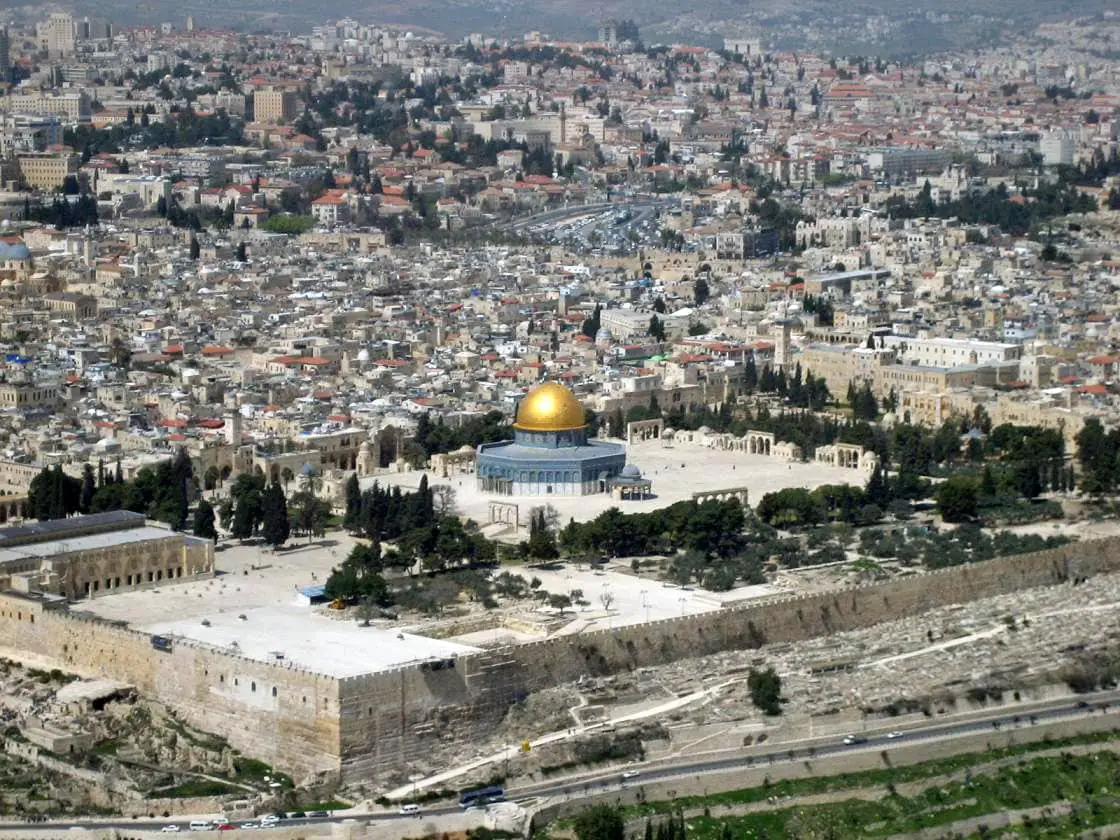
A sacred site of huge importance for many millennia. This has been a sacred site for Judaism, Christianity, Islam, and Roman paganism. According to Judaism some aspect of Divine Presence is present here. On the mount has been built Al Aqsa Mosque – the third most sacred site for Muslims and the Dome of the Rock with Foundation Stone (the most important site for Judaists), as well as several more valuable structures. Also – one of the most contested religious sites in the world, especially between Judaists and Muslims. Here started the development of Jerusalem in the 4th millennium BC. Under the Temple Mount is a maze of underground passages.
Tatev Monastery
Armenia
This monastery was established in the 9th century and is located on the rim of the canyon, in the site of the former pagan cult site. In the 14th – 15th century here operated Tatev university. Sts. Paul and Peter Cathedral was built between 895 and 906 AD, ornamented with murals in 930. Monastery has also a pendulous column (Gavazan Siun) that warns about earthquakes.
Sümela Monastery
Turkey
A very old monastery, founded in 386 AD. Enormous building high in the cliffs in front of the cave. The monastery contains exquisite frescoes.

St. George Monastery (Monastery of Choziba)
Palestine
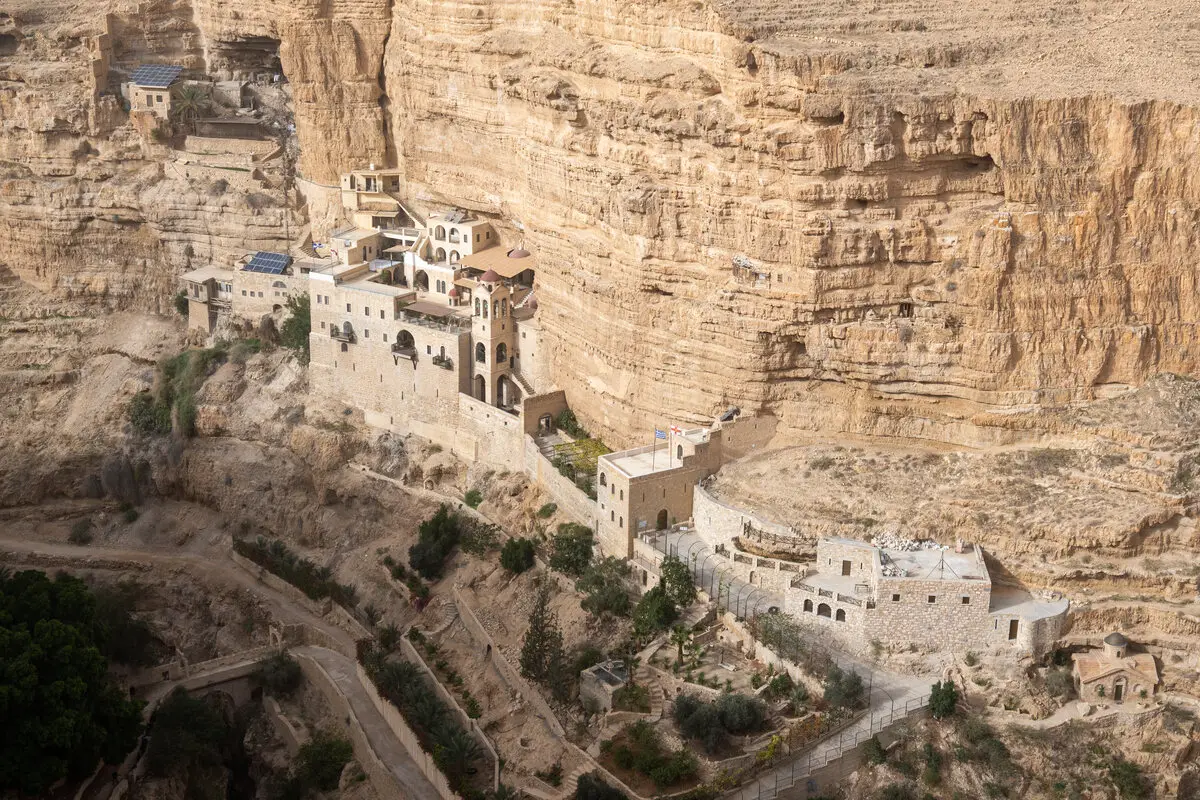
This cliff-hanging monastery is located in a narrow canyon. It started in the 420ies and became a monastery in 500 AD. This Greek Orthodox monastery is active up to this day. Here are important relics of three saints and the site is linked to Biblical history.
Europe
Mont Saint-Michel
France
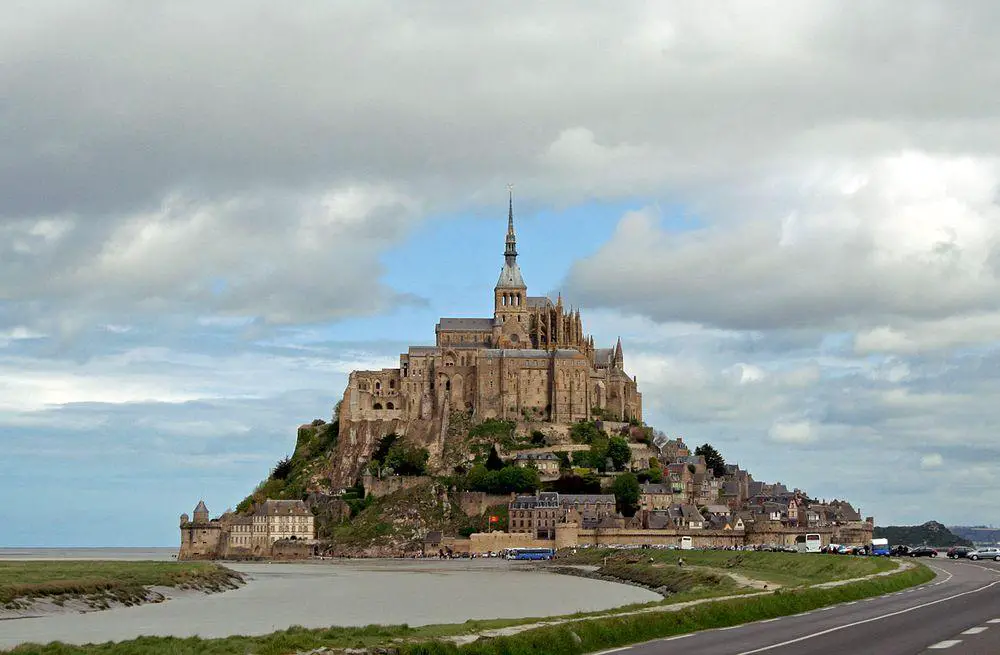
Unique monument of urban planning – a fortified monastery with a surrounding small town, built on a rocky tidal island. This monastery was established here in the early 8th century. Its buildings were constructed in a Romanesque style, mainly in the 10th – 11th century AD. The island is topped with the massive, Romanesque Mont-Saint-Michel church (11th century).
Skellig Michael monastery
Ireland
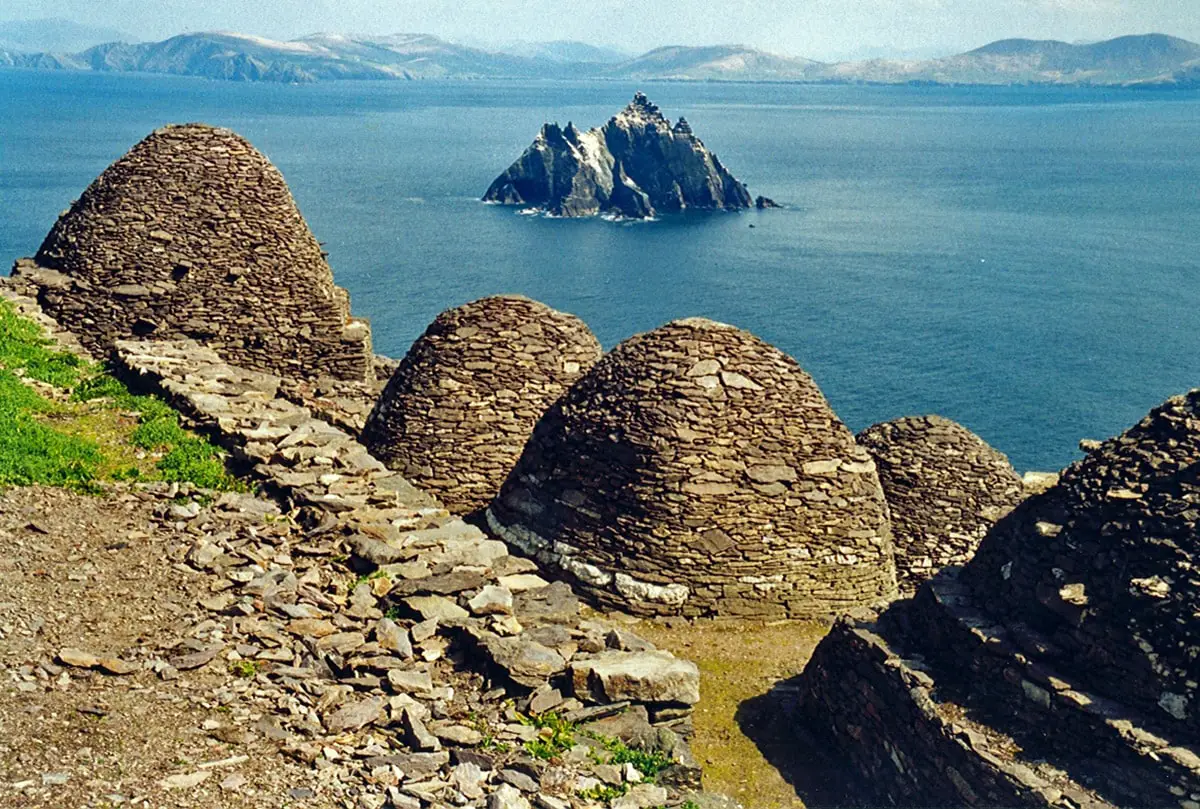
Exceptionally well-preserved remnants of an early medieval monastery located in a dramatic landscape – a cliff in the sea. This Christian monastery was founded here sometime in the 6th – 8th century AD and was occupied until the 13th century. The monastery was built on artificial terraces and contained six beehive cells, two oratories, and a church as well as stone crosses and slabs.
Great Lavra of Athos
Greece
The most important monastery on the Athos peninsula. Founded in 963 AD, it contains an important library. The other 19 monasteries of Holy Mount Athos are also very important monuments of history and culture.
Kyiv Pechersk Lavra
Ukraine
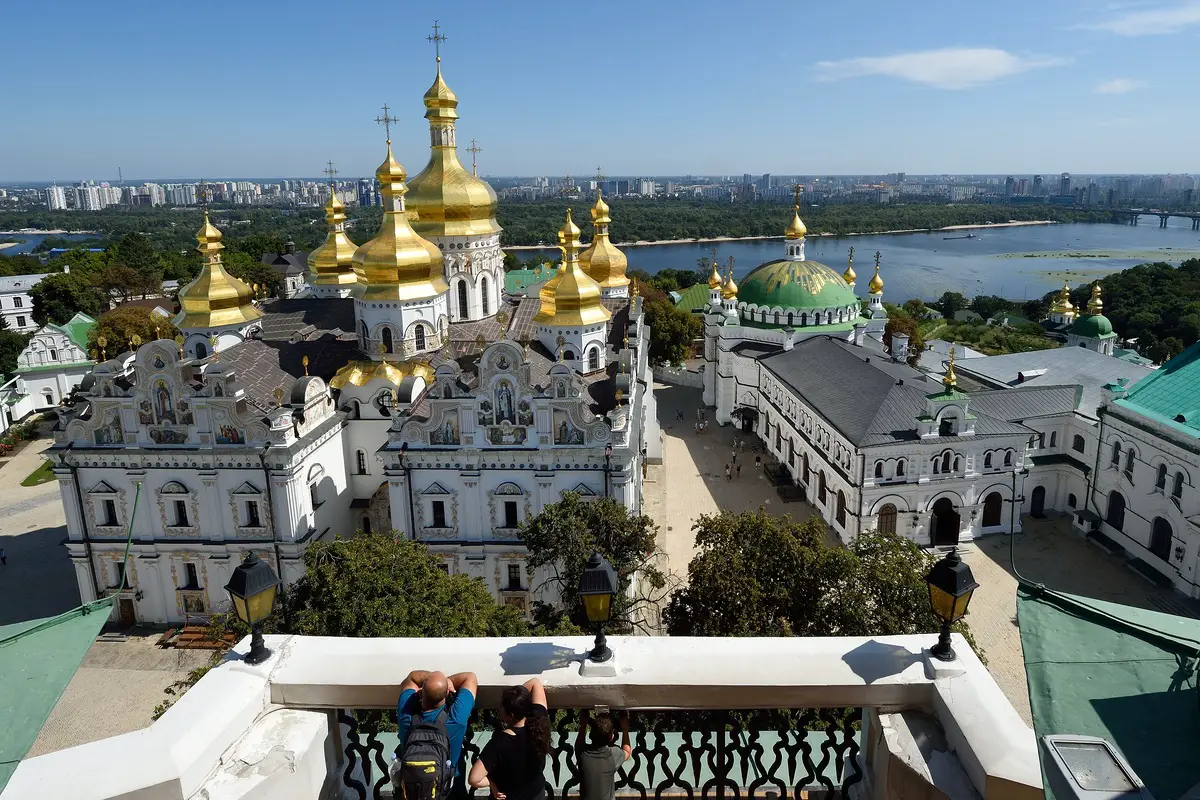
Outstanding Orthodox monastery that started as a cave monastery in 1015, and developed as a center of the Eastern Orthodox church. Numerous valuable buildings and artwork. The monastery is protected with massive fortification walls. Contains such outstanding structures as the Great Lavra Bell Tower – a 96.5 m tall bell tower, constructed in 1745 in Neo-Classical style, Gate Church of the Trinity (1108), a network of monastic caves (in use since 1057) with murals and burials of monks and saints.
Iona Abbey
United Kingdom
Once one of the largest religious centers in Western Europe, established in 563 and serves as a center for the spread of Western Christianity. 48 kings of different Western European countries are thought to be buried here.
Jerónimos Monastery
Portugal
One of the most beautiful buildings in Portugal, the Hieronymite monastery from 1450, built in 1552 in Manueline style, is richly decorated.
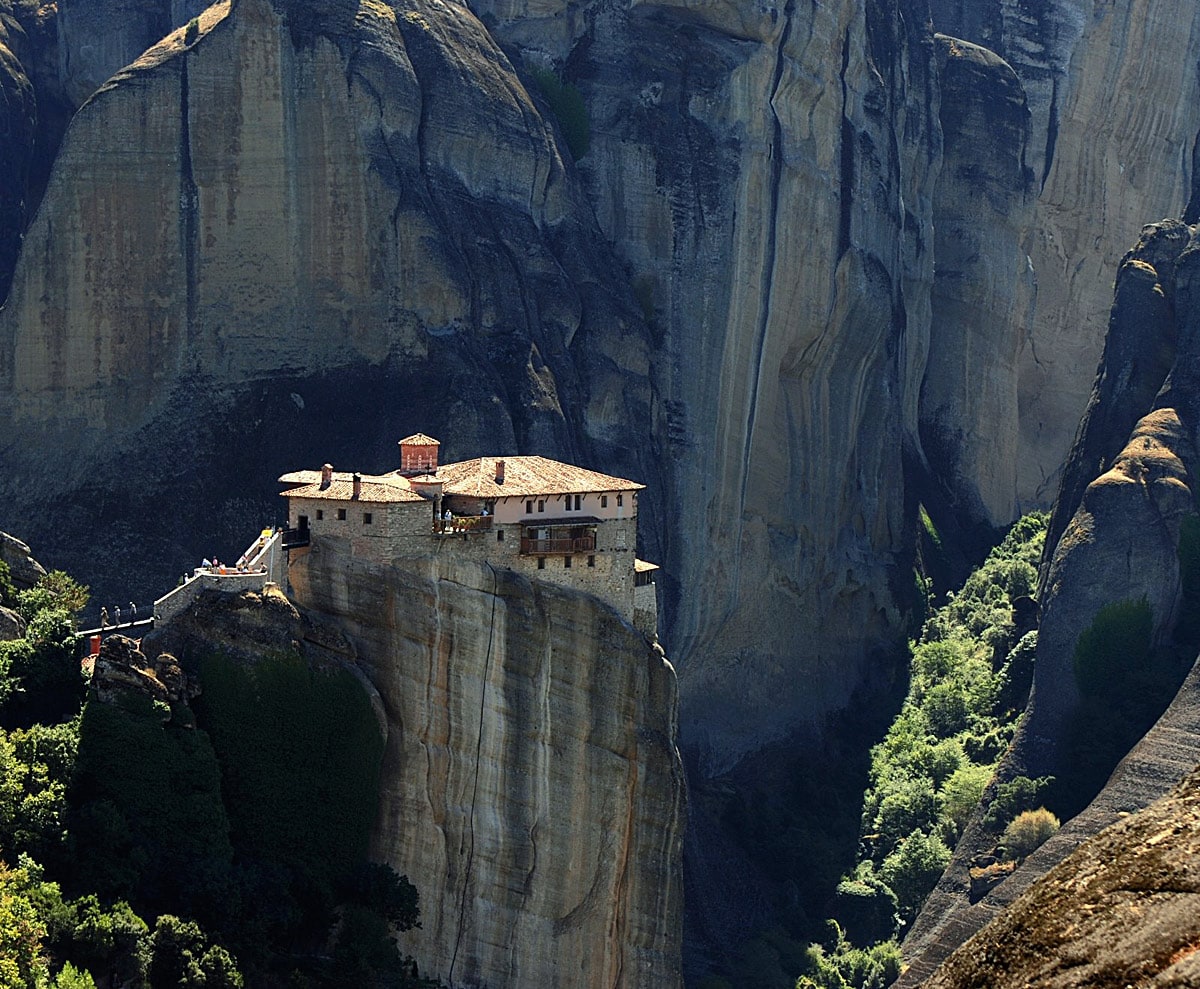
Holy Monastery of Rousanou, Meteora
Greece
One of the six remaining monasteries of Meteora, built on the top of natural sandstone pillar.
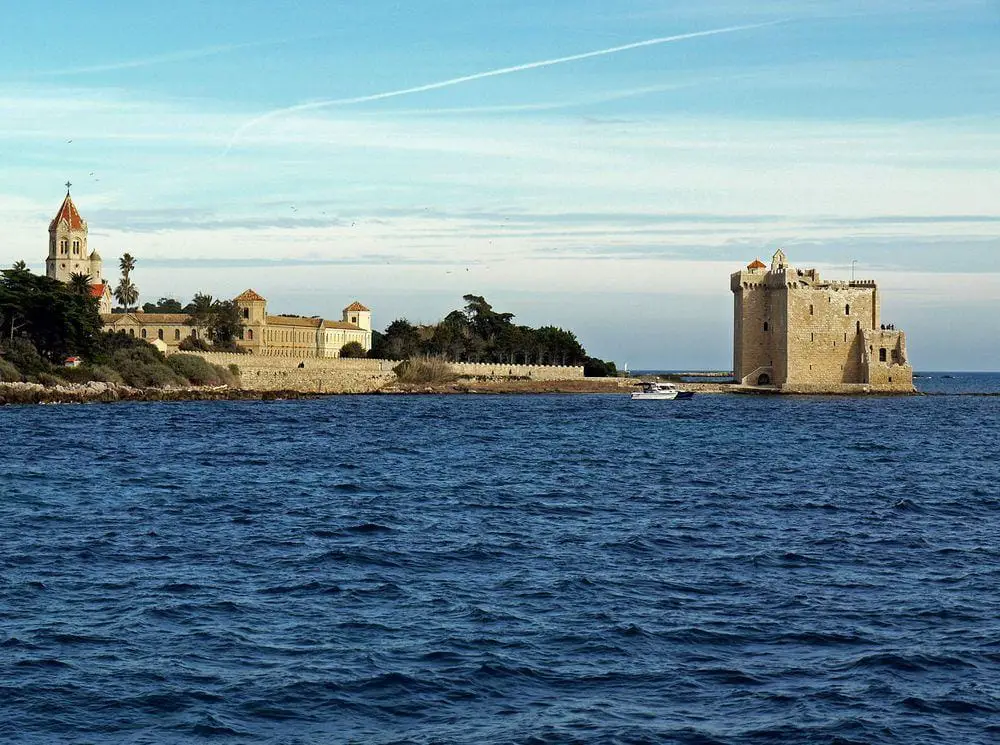
Lerins Abbey (Lérins Abbey)
France
A large, fortified Cistercian monastery on an island, active since the 5th century. It is one of the centers of development for Western European monasticism. The oldest buildings date from around 1073.
Farfa Abbey
Italy
Benedictine abbey, built around 370 – 380 AD and later destroyed. Activity restarted around 681 AD. It has huge importance in the history of Italy, as well as numerous architectural and artistic points of interest.
Abbey of Saint Gall
Switzerland
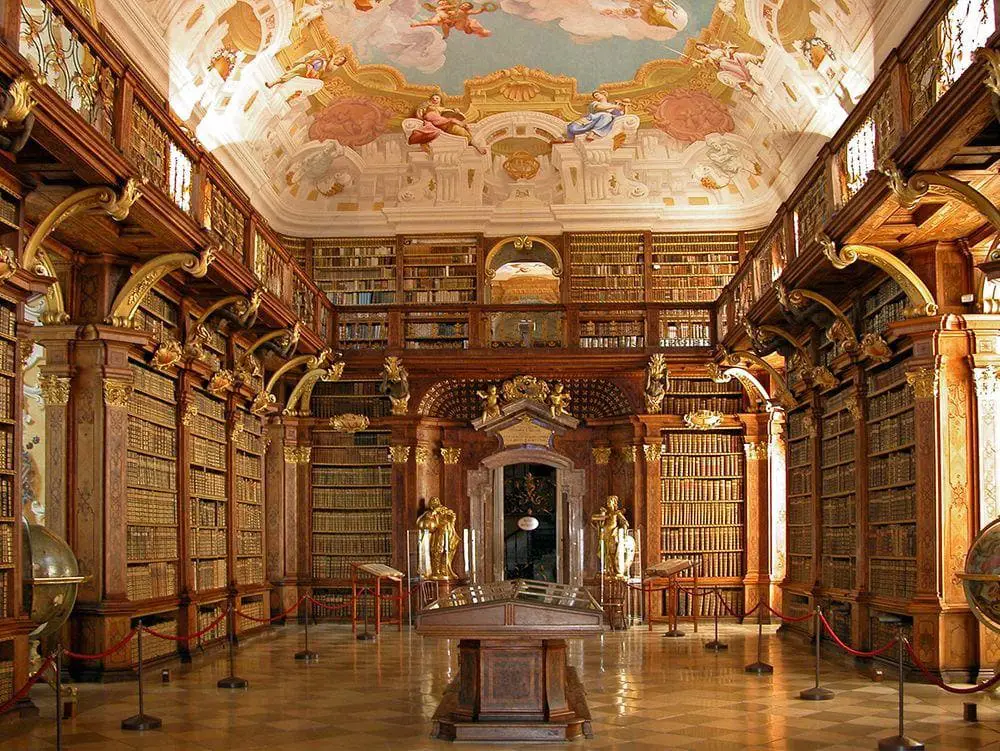
A very old monastery, started in 719 AD (or even 613 AD) and gained much influence. It contains one of the richest medieval libraries in the world – the Abbey library of Saint Gall, with a beautiful interior in Rococo style. Another beautiful structure is St. Gall Cathedral (1681 – 1766) – an enormous church in Baroque style, with a wonderful interior.
Holy Monastery of Great Meteoron
Greece
One of the six remaining monasteries of Meteora, built on the top of natural sandstone pillar.
Holy Monastery of Varlaam, Meteora
Greece
One of the six remaining monasteries of Meteora, built on the top of natural sandstone pillar.
Rila Monastery
Bulgaria
The largest monastery in Bulgaria, founded in the 10th century, spiritual and cultural center of the Bulgarian nation in medieval times. Rebuilt several times. Includes numerous interesting structures such as Hrelyo Tower (1335) – a fortified tower house, the oldest structure in the monastery.

Mafra National Palace and Basilica
Portugal
An enormous palace – monastery, built in Baroque style in 1717 – 1730. During its construction this was by far the most ambitious project in the country, involving up to 45 thousand workers. Palace and monastery have more than 1,200 rooms, the facade is 220 m long. The highlight of the palace complex is the gorgeous library in Rococo style.
El Escorial
Spain
The enormous Spanish royal palace, also one of the largest Christian monasteries. Completed in 1584. The Basilica of San Lorenzo el Real is an especially valuable monument of art and architecture, constructed in Late Gothic and also – a unique, austere style.
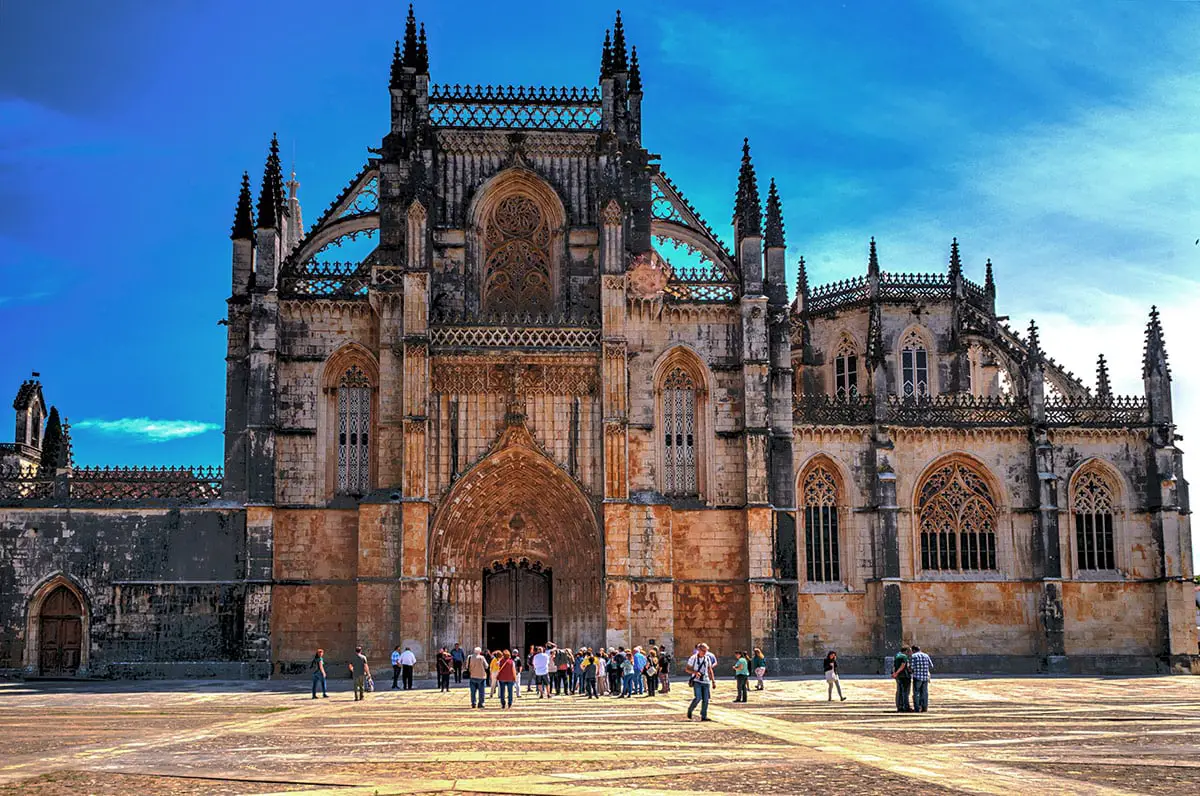
Batalha Monastery
Portugal
A beautiful structure of Dominican convent, built in Late Gothic style in 1386 – ˜1517. One of the greatest Gothic structures.
Certosa di Pavia
Italy
This enormous, beautiful Gothic-Renaissance monastery complex was constructed in 1396 – 1495.
Melk Abbey
Austria
Founded in 1089, developed into an important intellectual center. Beautiful Baroque architecture.
Troitse-Sergiyeva Lavra
Russia
The spiritual center of the Russian Orthodox Church, founded in 1345. Numerous valuable buildings.
Recommended books
Great Monasteries of Europe


This remarkable book is a comprehensive examination of the art and architecture of European monasteries, from early Carolingian examples in the eighth century to a modern structure by Le Corbusier in 1960, featuring an authoritative text and more than five hundred stunning, full-color photographs.
Monasteries And Monastic Orders: 2000 Years of Christian Art and Culture


How did the monks, nuns, and hermits live? What rules did they agree to obey? To what extent were they able to uphold those ideals in reality? What was the relationship between the monasteries and worldly authorities? And what was the source of the power that the religious orders were able to exercise in political affairs at various times?
