Wondermondo 🢖 World 🢖 Wonders of Europe 🢖 Wonders of the United Kingdom 🢖 Wonders of Scotland 🢖 Wonders of Perth and Kinross
Territory
Wonders of Perth and Kinross
 Highlights
The most amazing wonders of Perth and Kinross are:
- Castles. The diversity and number of castles is amazing, and even more amazing is the fact that many castles still are owned by the families of original builders and are inhabited.
- Pictish picture stones and Celtic crosses – Perth and Kinross contain a rich collection of these amazing stones, created at the dawn of Christianity.
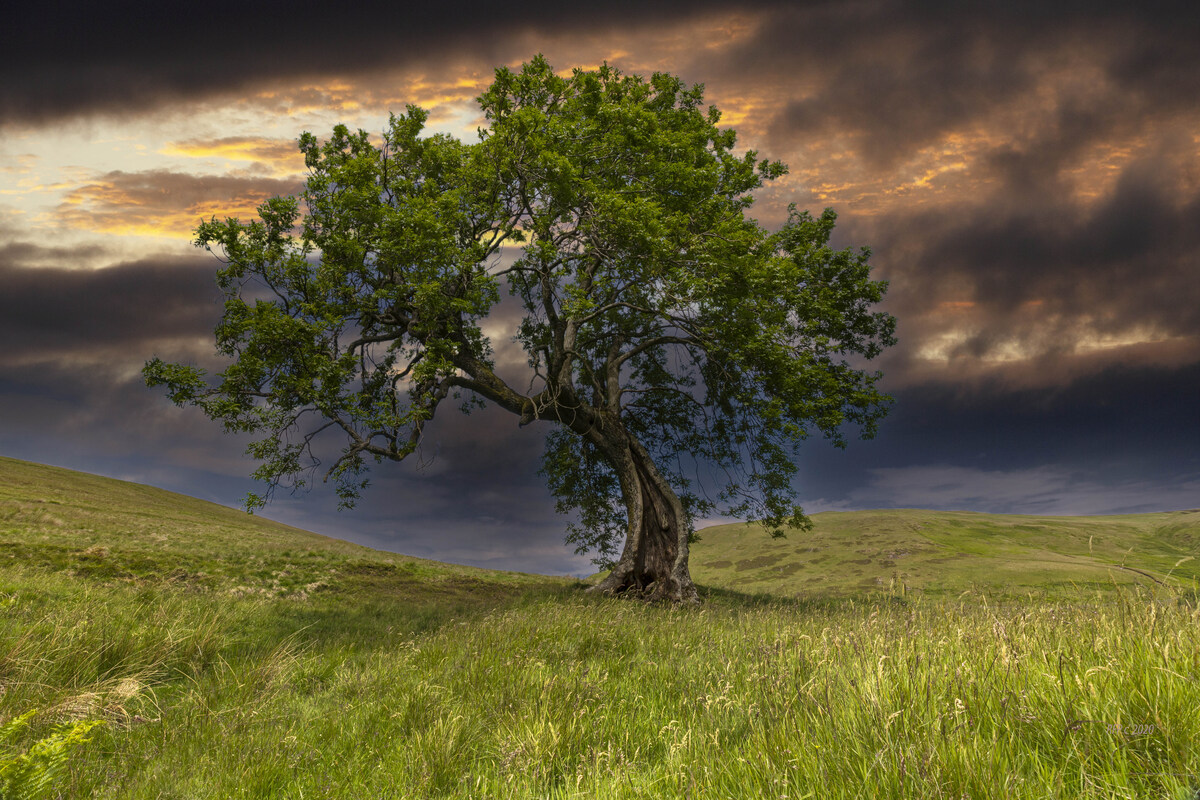
- Trees – many of the largest trees in the United Kingdom are located in Pert and Kinross.
Map with the described wonders
If you see this after your page is loaded completely, leafletJS files are missing.
 Top 25 wonders of Perth and Kinross
Geological wonders
Praying Hands of Glen Lyon
Unusual formation. Two huge standing stones are divided by a split and resemble two hands held together in prayer. It is possible that this stone setting is man made.
Biological wonders
Diana’s Grove Grand Fir
This tree near Blair Castle is the second tallest known tree in Britain – in 2009 it was measured to be 62.7 m tall.
Giant sequoia of Cluny House Gardens
Enormous Sequioadendron giganteum – 33.5 m tall and with a girth of 11 m. Planted roughly at 1853.
Archaeological wonders
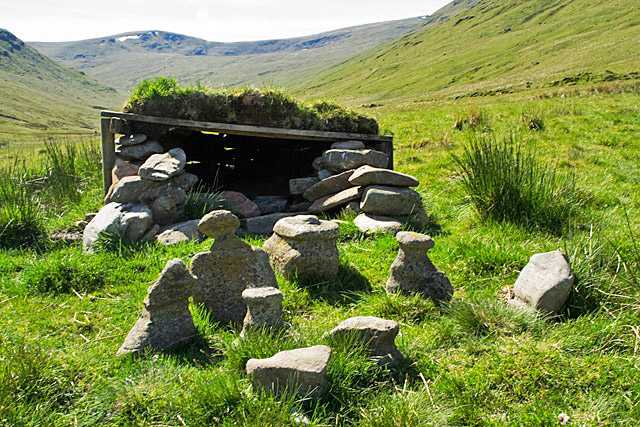
Tigh nan Cailleach (House of the Cailleach)
Megalithic structure – a shrine to Celtic Mother Goddess. Most likely it is made after the coming of Christianity by the remaining pagans.
Crannogs of Loch Tay
More than 20 man-made defensible islands, now submerged in Loch Tay.
Architecture wonders
Scone Palace
Palace in a late Georgian Gothic style, constructed in 1808, based on an earlier structure from the 16th century. It was constructed on the site of ancient gatherings of the Picts and a possible site of the early Christian church. A fine collection of interior items. Here was located the Stone of Scone (now in Edinburgh Castle) – the crowning stone of the early kings of Scotland.
Blair Castle
Well preserved the castle. Construction started in 1269 but the castle has been rebuilt several times. Collections of arms, hunting trophies.
Drummond Castle
The country house consists of a fortified tower house from the late 15th century and a 17th-century mansion, both rebuilt in Victorian times.
Dunkeld
Picturesque, small town – one of the best-preserved towns from the 18th century in Scotland. The history of the town goes into the early Middle Ages with remnants from the 9th century.
Castle Huntly
This castle was constructed roughly in 1452 and now serves as a prison. Legends about haunting.
Meikleour Beech Hedges
Tallest and longest hedge on earth. Consists of beech trees that were planted in 1745. This fine-pruned hedge is up to 30 m high and 530 m long and is trimmed once in ten years.
Kinross House
Country house from the late 17th century, a beautiful example of early Neo-Classical architecture.
Drummond Castle Gardens
Formal terraced gardens that were set in 1832. Contains a collection of some 50 sculptures from the 17th – 19th centuries.
Balvaird Castle
A fine and extremely well-preserved example of the late medieval Scottish tower house that was built sometime around 1500. Gatehouse was built in 1567. Adorned with sculptures.
Balmanno Castle
L-shaped towerhouse, built around 1580. Preserved in excellent condition.
Castle Menzies
Well preserved, spectacular castle from the 16th century, the seat of the Menzies Clan.
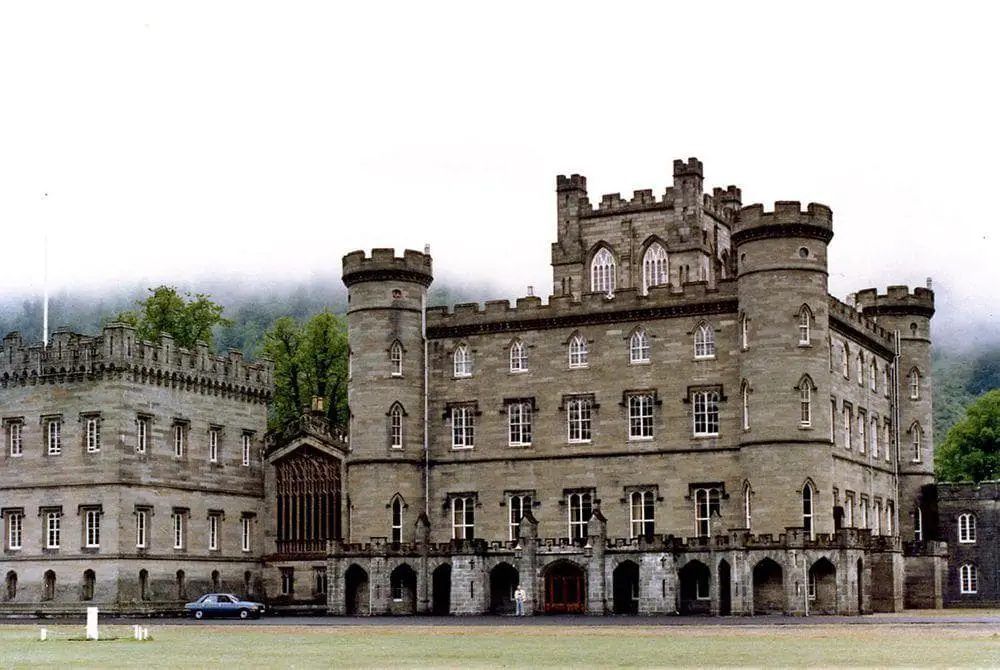
Taymouth Castle
Large country house built on the site of earlier Balloch Castle. The present country house was built in the early 19th century in a Neo-Gothic style. Sumptuous interiors with numerous valuable artworks.
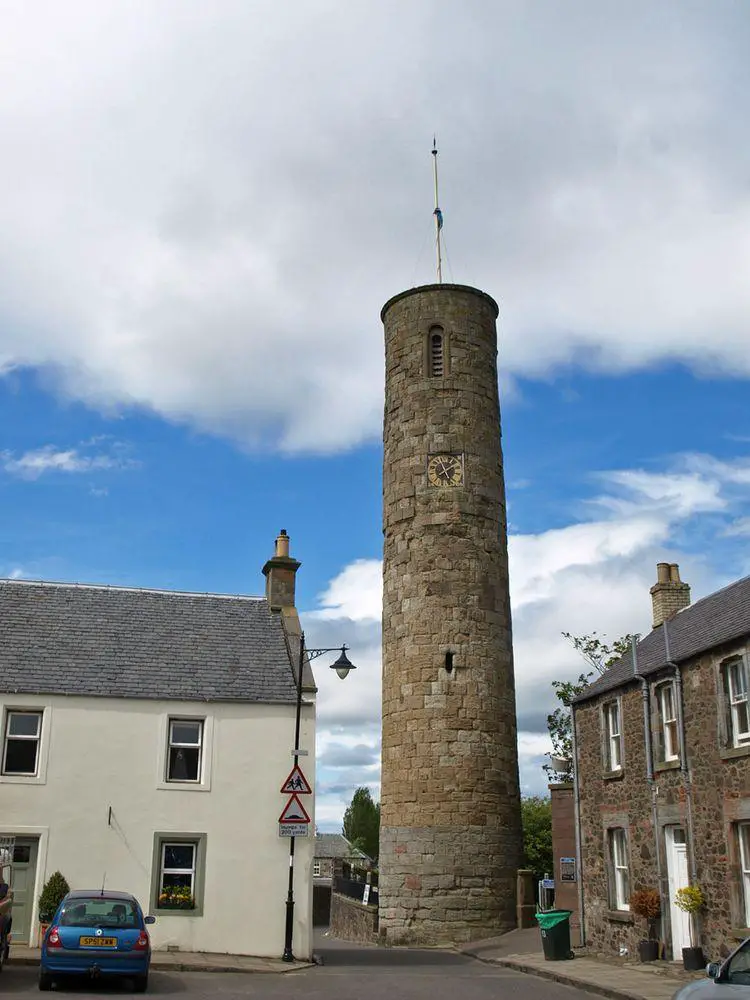
Abernethy Round Tower
One of the best-preserved freestanding circular towers in Scotland. The tower is 22.5 m tall, diameter at the base is 4.57 m. Built around 1100 AD.
Kinnaird Castle
Well-preserved tower house from around 1450.
Dunkeld Cathedral
Large church built in Norman and Gothic styles in 1260 – 1501. Partly in ruins.
Uamh Tom a’Mhor-fir
Site of legends in Mount Schiehallion. According to local legends, this is a cave where fairies used to live, there are many diverse stories about the interactions between local people and fairies.
Fingask Castle
Manor house built in 1592. Beautiful park.
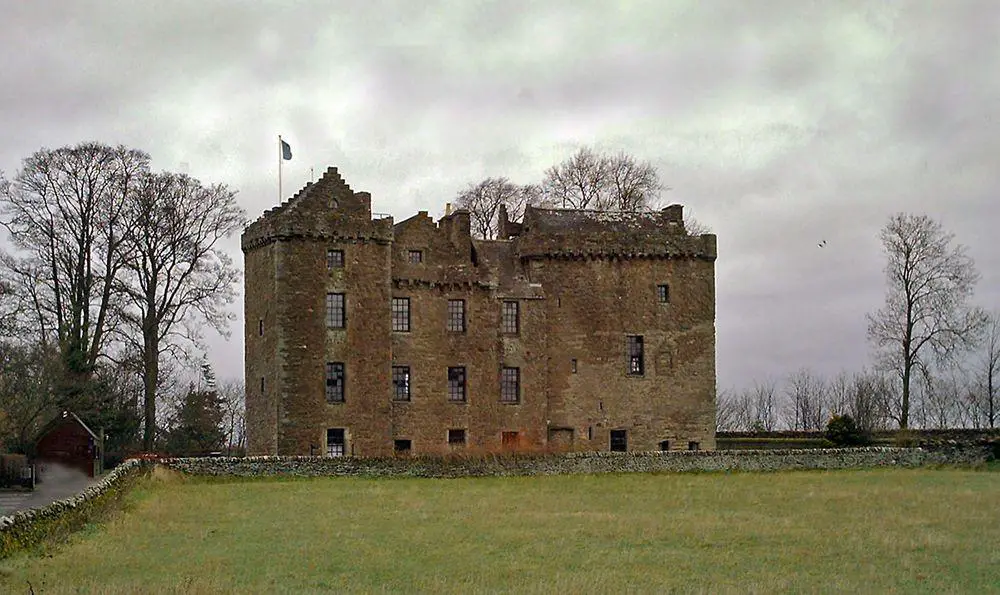
Huntingtower Castle
Freestanding towerhouse – late medieval castle. Construction started in the 15th century and was rebuilt and extended over the next centuries. Abandoned in 1767. Contains Renaissance-style paintings from the early 16th century on walls and ceilings. Stories about haunting by Lady Greensleeves.
Ardblair Castle
Old, fortified family house, consists of several parts that were built in different periods.
Pitfour Castle
Large country house, built in 1784.
 Recommended books
Perth and Kinross: An Illustrated Architectural Guide


The “Fair City” of Perth is the starting point for this much sought-after guide in the RIAS/Landmark Trust series. The Gateway to the Highlands was second only to Berwick in terms of wealth by 1200 and a meeting place of parliaments and general councils when Scone Palace witnessed the coronations of Macbeth, Robert the Bruce, and Charles II.
Perth and Kinross: The Big Country


A wide-ranging review of the history, geography, landscape, flora, and fauna of Perthshire and Kinross-shire comprising the old counties of Perth and Kinross. Contemporary issues, including the local economy, are also surveyed.


