
Wondermondo 🢖 World 🢖 Wonders of Australia and Oceania 🢖 Wonders of Micronesia 🢖 Wonders of Nauru
Territory
Wonders of Nauru

 Highlights
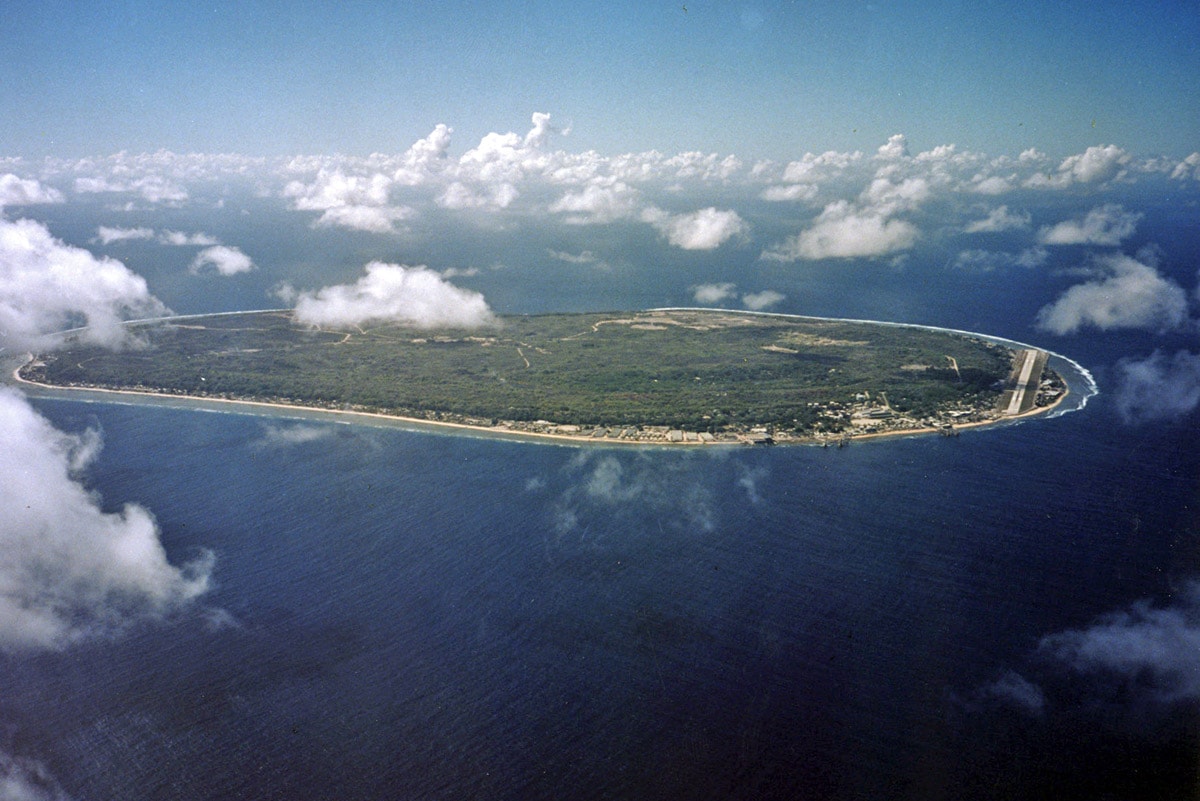
Nauru is a raised dolomitic limestone atoll. Most of its surface contained a rock rich with phosphatic fertilizers – and the island has experienced mining operations of grand scale, changing the landscape and environment.
Map with the described wonders
If you see this after your page is loaded completely, leafletJS files are missing.
 Top wonders of Nauru
Geological wonders
The Cave (Nauru)
A beloved dive site some 30 m below the sea level.
Moqua Caves and Moqua Well
Cave where is Moqua Well – an underground lake (0.2 ha) – an important source of freshwater.

.jpeg)
Archaeological wonders
Ewa Cave
Possible remnants of a burial cave where human bones still can be found. Some burial caves in Nauru most likely have been lost due to the phosphate mining in the central part of the island.
 Recommended books
Paradise for Sale: A Parable of Nature


The grim history of Nauru Island, a small speck in the Pacific Ocean halfway between Hawaii and Australia, represents a larger story of environmental degradation and economic dysfunction. For more than 2,000 years traditional Nauruans, isolated from the rest of the world, lived in social and ecological stability. But in 1900 the discovery of phosphate, an absolute requirement for agriculture, catapulted Nauru into the world market…
Talash: Journey to Republic of Nauru


This book is based on the writer’s journey to a pleasant Island- the Republic of Nauru. How he performed his journey. What he experienced during his stay and work on the Island. He has explained in this book his achievement and contributions to the people of the Island. “It was half-past ten at the night. I took dinner in the hotel and back to my room. I was excited and could not sleep. I prepared a cup of tea and switch on the TV watching the news and then a movie”…