
Wondermondo 🢖 World 🢖 Wonders of Australia and Oceania 🢖 Wonders of Micronesia 🢖 Wonders of the Northern Mariana Islands
Territory
Wonders of the Northern Mariana Islands
 Highlights
The most amazing wonders of the Northern Mariana Islands are:
- Unique submarine volcanoes – research of the submarine volcanoes north from Farallon de Pajaros has revealed several phenomena very rare or unique on Earth.
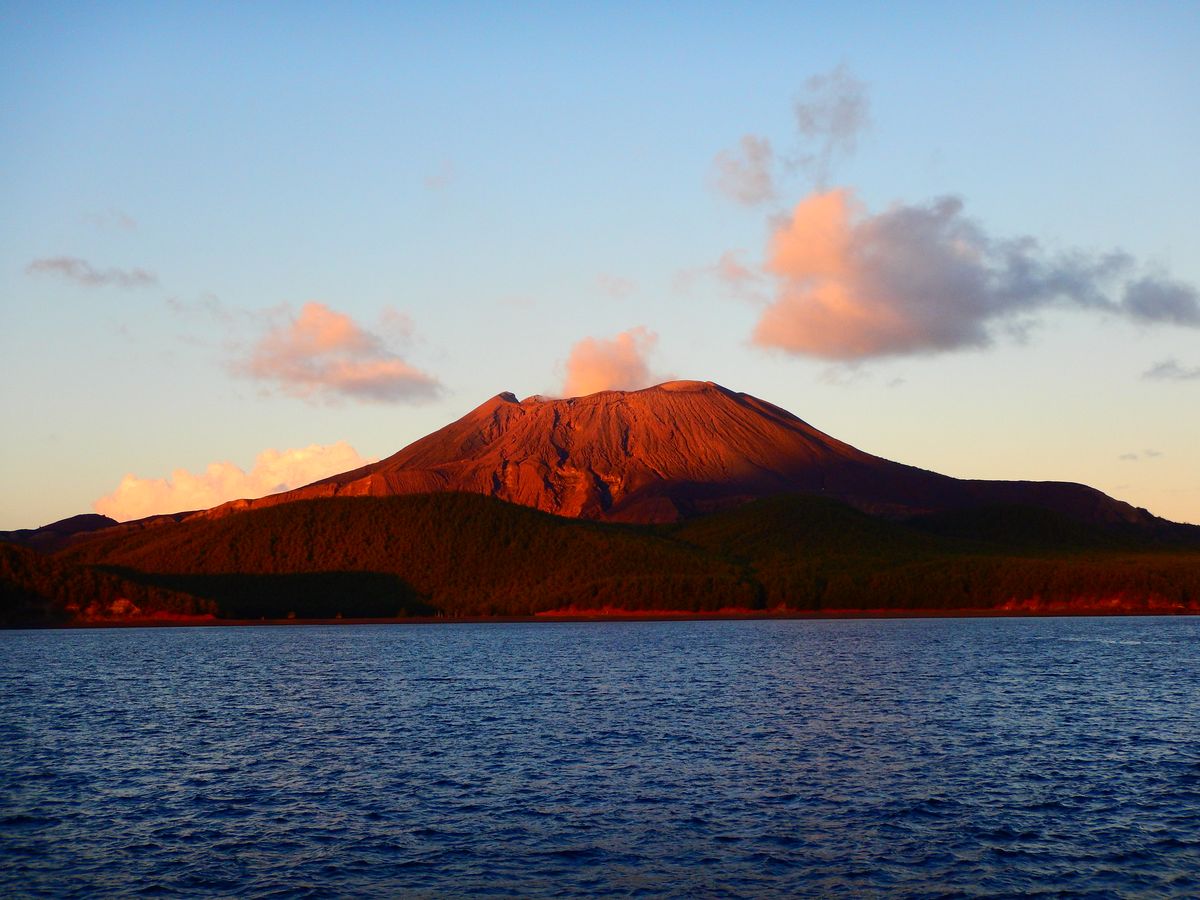
- Beautiful, rugged nature of the Northern Islands. These small islands are tops of steep, active volcanoes and are covered with pristine tropical vegetation.
- Latte stone settings – unique megalithic structures, found only in Mariana Islands. The largest megaliths are found in Tinian and Rota islands.
- Petroglyphs. In several caves in Rota, Saipan and Tinian are found interesting, prehistoric drawings.
Map with the described wonders
If you see this after your page is loaded completely, leafletJS files are missing.
 Top 25 wonders of the Northern Mariana Islands
Geological wonders
Daikoku Sulfur Cauldron
Northern Islands Municipality
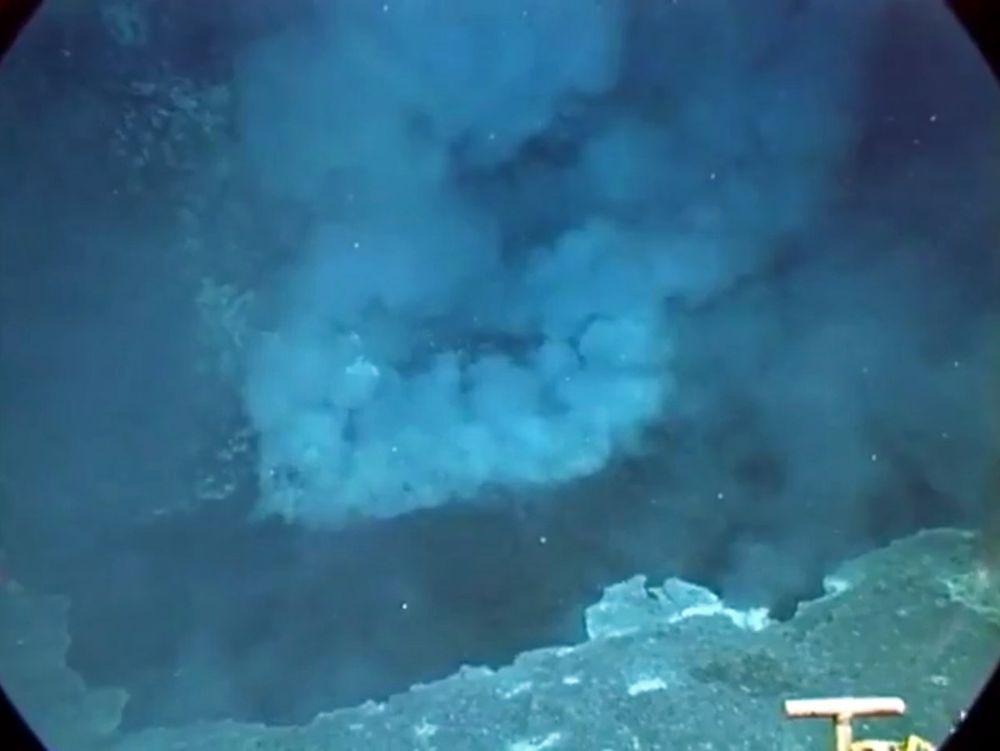
A unique pool of liquid sulfur at the summit of a submarine volcano, one of the few in the world.
Agrihan fumarole field
Northern Islands Municipality
Approximately 100 x 100 m large fumarole field in the exotic crater of Agrihan.
East Diamante Volcano Black Forest
Northern Islands Municipality
Submarine volcano between Anatahan and Saipan. A group of more than 50 sulfide mineral chimneys that emit a metal-rich, hot solution. The tallest chimneys are up to 9 m tall.
Asuncion Island
Northern Islands Municipality
Several volcanoes of the Mariana Islands look like almost perfect cones but Asuncion could be the most impressive one. The volcano is rising 857 m tall above the sea and is covered with primeval vegetation. Island has fumaroles.
Farallon de Pajaros volcano
Northern Islands Municipality
The most active volcano in the Marianas. This remote island has fumarole fields with a temperature of gases up to 130°C.
Togari Natural Arch
Northern Islands Municipality
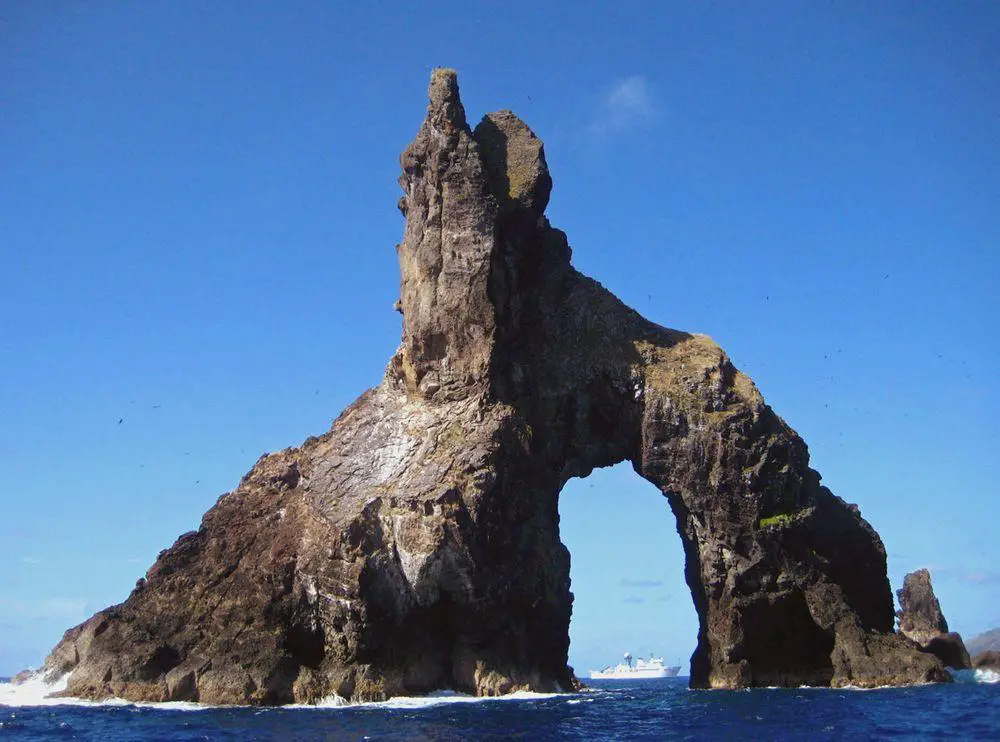
Togari Rock is an island with an enormous natural arch.
Banzai Cliff
Saipan Municipality
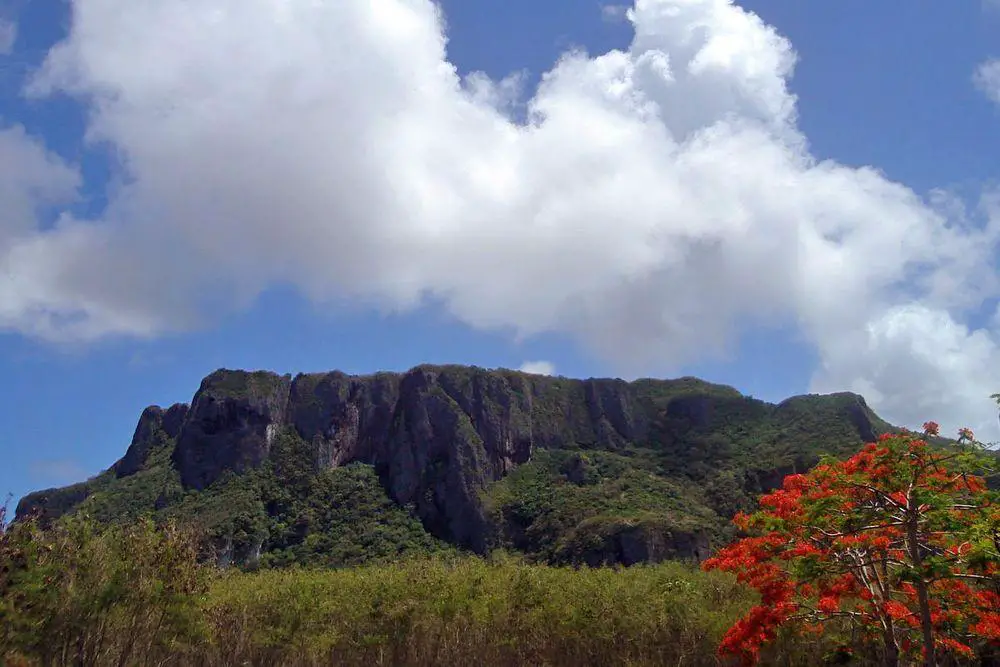
Some 30 m tall seaside cliff. Another site of the mass suicide of Japanese soldiers and civilians at the end of the Battle of Saipan in 1944.
Suicide Cliff
Saipan Municipality
Approximately 250 m high limestone cliff. A site of the mass suicide of Japanese soldiers and civilians at the end of the Battle of Saipan in 1944.
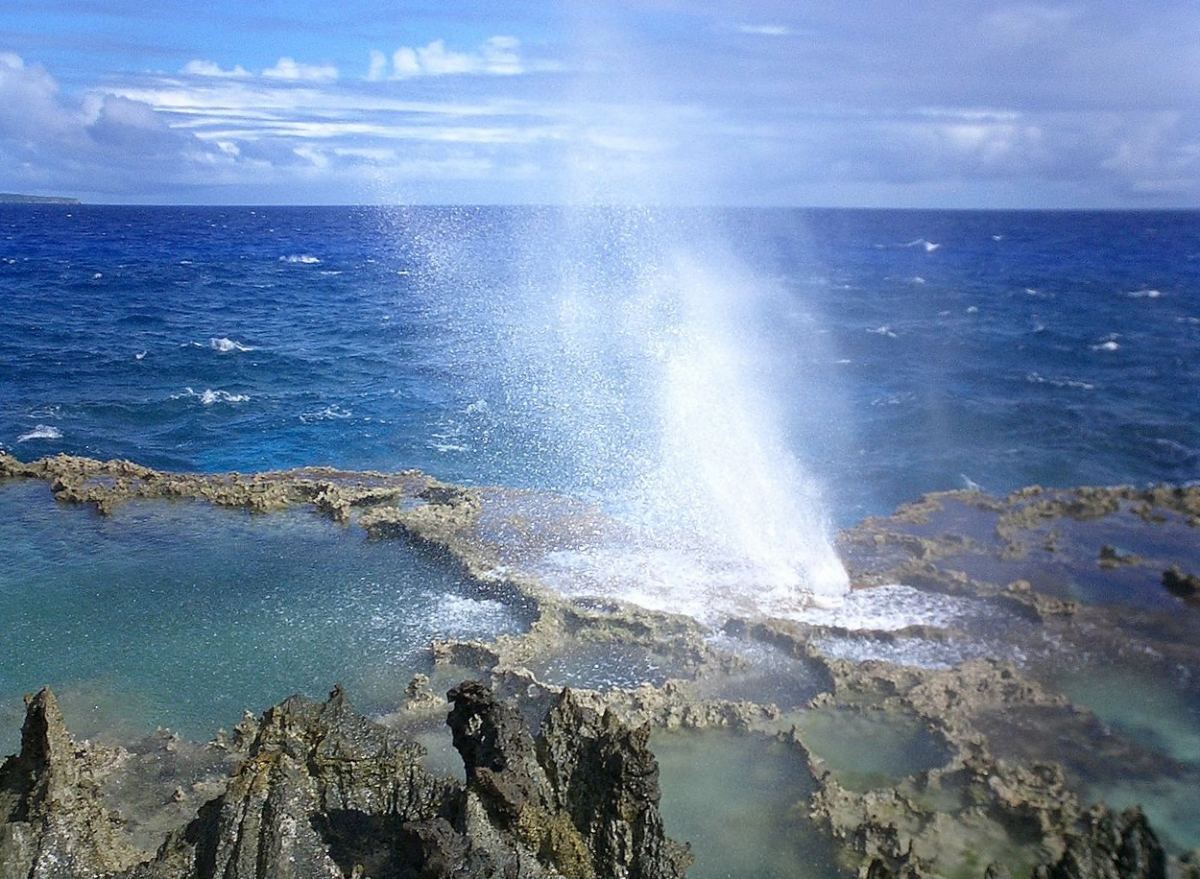
Tinian Blowhole
Tinian Municipality
Beautiful blowhole amidst several natural pools with emerald-colored water. Wave action has formed also limestone terraces. During rough weather, the blowhole could get up to 60 m high!
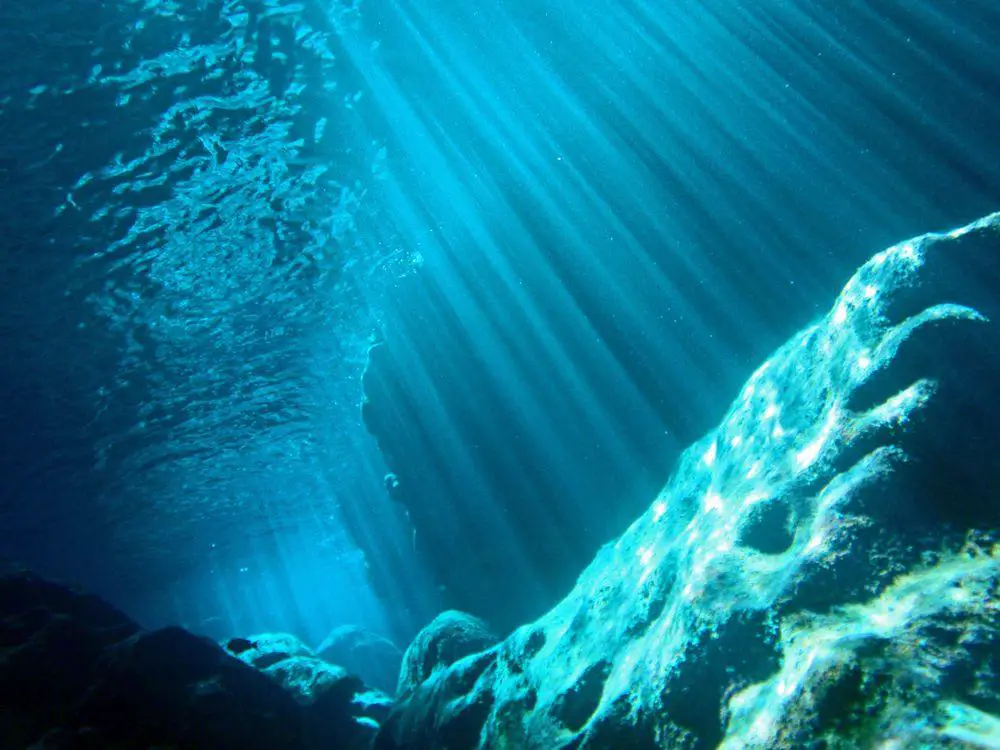
Blue Grotto of Saipan
Saipan Municipality
A collapsed cave, filled with seawater through three openings to the sea. Sunlight colors the water in eerie blue color. The cave is filled with marine life – sharks, barracuda, and even turtles and rays.
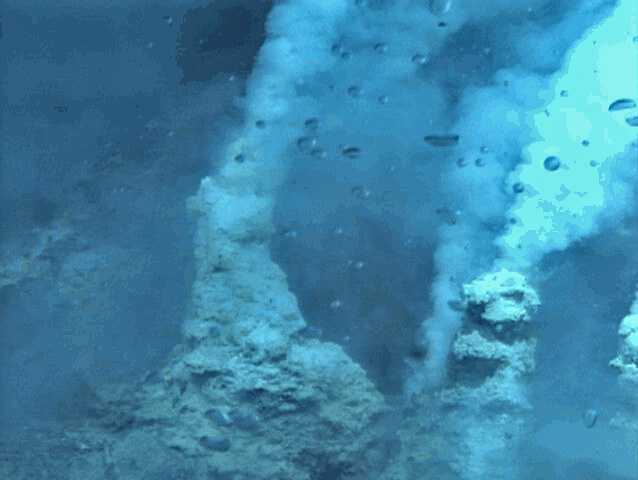
North-West Eifuku Champagne Vent
Northern Islands Municipality
A submarine vent on a volcano emits almost pure liquid carbon dioxide at 1,600 m depth. Such phenomenon is known in three places on Earth and at Eifuku it is most abundant.
Lyiang Dangkolo
Tinian Municipality
The largest cave on the island with a floor area of 1,300 m². It can be entered by descending some 10 m through open pits – sinkholes.
Biological wonders
NW Eifuku Mussel mounds
Northern Islands Municipality
A unique aggregation of Bathymodiolus mussels. These 18 cm long mollusks cover the rocks densely – no ground is seen behind this unique aggregation of mussels.
Archaeological wonders
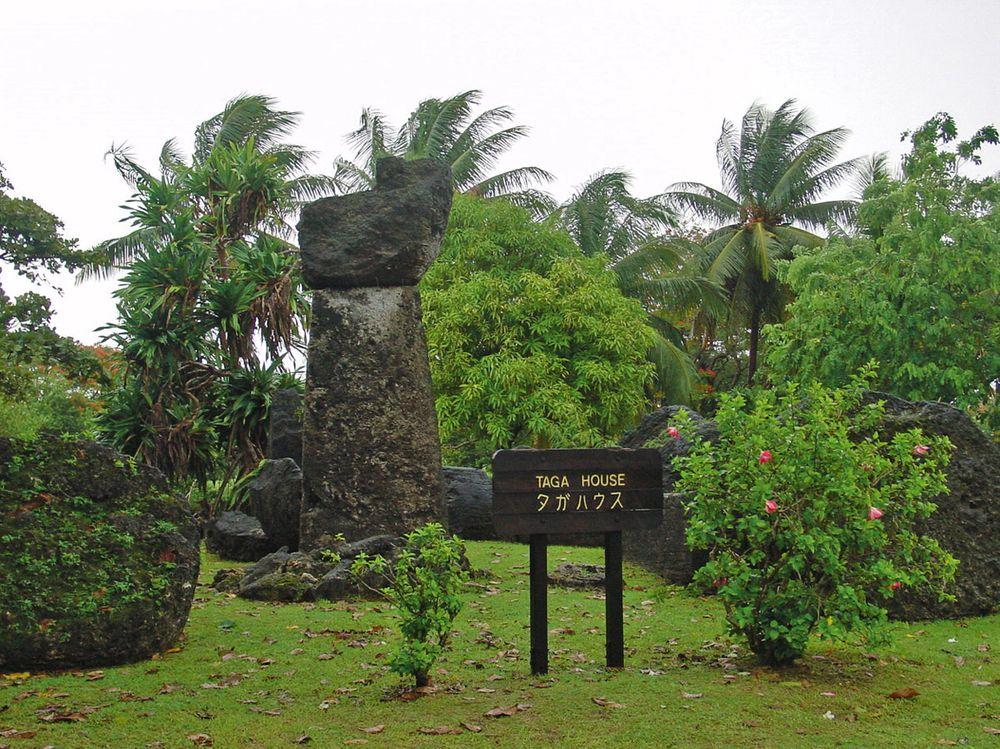
House of Taga latte stones
Tinian Municipality
Currently the largest latte stones – megalithic construction (house foundation) of two stones, characteristic of the Marianas. The only standing latte stone here is 4.6 m tall and was a part of the house of the mythological chief Taga. Other latte stones have fallen.
Mochong latte stones
Rota Municipality
A well-preserved prehistoric Chamorro village with an amazing number of latte stone foundations – 53 in total! This is the richest megalithic site in the Mariana Islands.
Kalabera Cave
Saipan Municipality
A cave with some 50 prehistoric petroglyphs and white paintings, a possible site of prehistoric burials. Skulls were found here up to the 1920ies. Petroglyphs for the most part show people.
Rota Latte Stone Quarry
Rota Municipality
The original quarries for the unique megaliths of Marianas – latte stones. Here are found the largest latte stones – up to 7.6 m long.
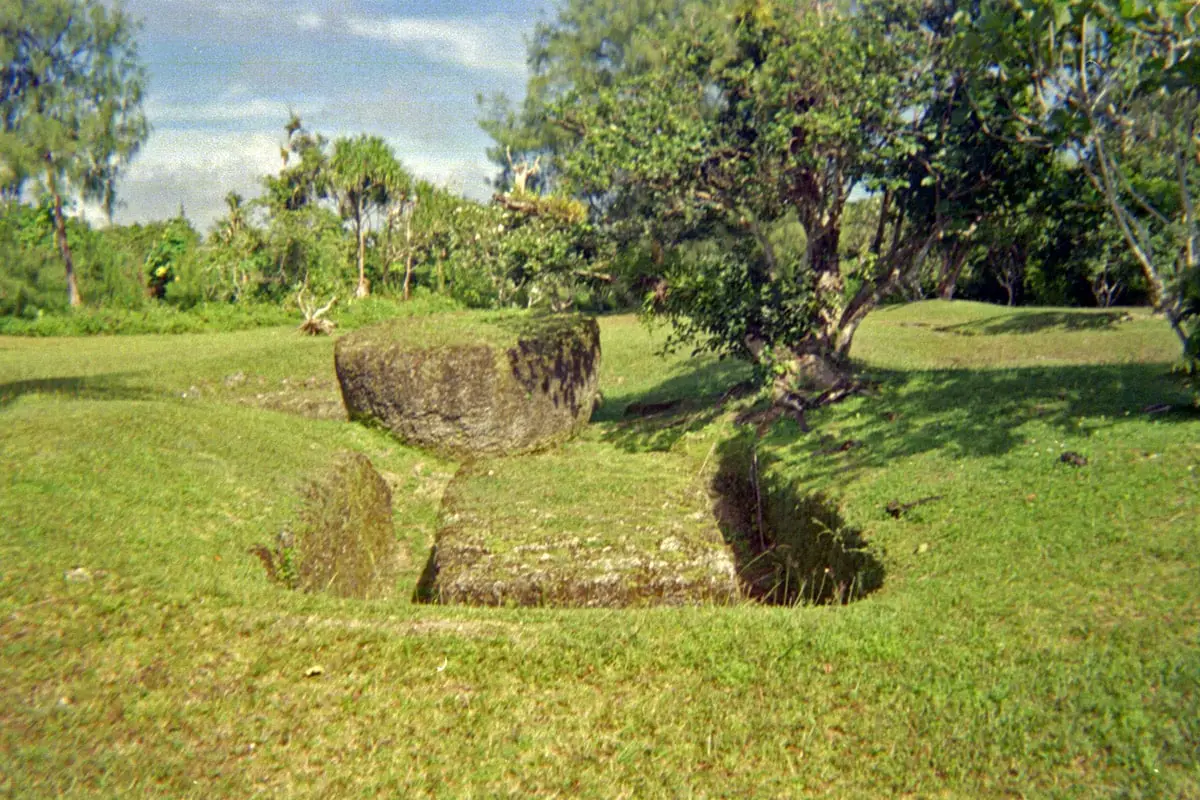
Pictograph Cave
Rota Municipality
This cave is some 60 m long and in several places is decorated with possible prehistoric drawings.
Tachognya
Saipan Municipality
Well preserved site of a prehistoric village. It contains a latte stone setting.
Railhunter Rockshelter
Tinian Municipality
A rock shelter – site of an ancient settlement. Sediments in this shelter contain bones of animals that lived in Tinian 400 – 200 BC. Found remnants of 21 species of birds, 9 of these birds now are extinct on Tinian.
Pagan latte stone
Northern Islands Municipality
Latte stones – flat basalt plates made of hard basalt.
Unai Dangkulu village
Tinian Municipality
Remnants of an ancient village with sixteen sets of latte stones and a possible site where latte stones were mined.
Laulau Kattan latte stones
Saipan Municipality
A site with groups of 10 and 6 latte stones.
Lau Lau Beach latte stones
Tinian Municipality
A group of prehistoric megaliths – standing stones.
Legendary wonders
Treasure of Roberton
Northern Islands Municipality
Legends tell that at the beginning of the 19th century, a pirate named Roberton hid a treasure of gold on this island. Although much sought, it reportedly has not been found.
 Recommended books
Diving & Snorkeling Guide to Guam and the Northern Mariana Islands 2016


New for 2016, with more photos and new images, a macro photography section, and updated dive site and marine preserve info. Guam and the Marianas can be aptly described as hard coral kingdoms. Some 400 species of coral and over 1000 species of fish inhabit these incredible reefs. There is much diversity and intense growth competition on the healthy reefs. This guide is intended to bring to the diver the most popular and unique dive sites of the Mariana Islands.
Our Northern Islands: The first expedition to the Mariana Trench Marine National Monument


Our Northern Islands is a first-person telling of the first expedition to the Mariana Trench Marine National Monument.
