
Wondermondo 🢖 Categories of wonders 🢖 Geological wonders 🢖 Caves
Category
Caves
 Described caves
If you see this after your page is loaded completely, leafletJS files are missing.
 What is included in this category?
Every year there are reported exciting discoveries of new caves and discoveries of new qualities such as cave paintings in the ones known before. But there still is a feeling that our knowledge covers just a small part of all these monuments of nature.
Though, those which we know offer a surprising diversity of unusual features and impressive sights.
Definition
Cave is natural underground space which is large enough for human to enter.
As a separate subcategory there are included also sinkholes – large natural depressions or holes, which for most part represent collapsed caves.
Criteria
Category includes caves with outstanding characteristics such as large size, significant geological, biological or archaeological values.
Formation
Fairly solid rock is required to have rigid cave walls and ceilings. Several geologic processes can create large hollows in such solid rock. Most common ones are:
- Dissolution – hollows are created by the flow of water (in most cases) or gases. The process of the solution is facilitated by the naturally occurring acids in groundwater. This is the most frequent cave formation process which for the most part takes place in limestone, dolomite, marble, gypsum and other comparatively easily soluble rocks. Dissolved minerals in hollows form diverse interesting speleothems – stalactites, stalagmites, columns and also beautiful crystals. Countless caves have beautiful stalactite and stalagmite formations and many show caves are marketed as being the most beautiful ones. Wondermondo will not judge which is the most beautiful one but few will object that Lechuguilla Cave (New Mexico, United States), Phong Nha cave (North Central Coast, Vietnam) or Kap Kutan cave (Lebap, Turkmenistan) are gorgeous. If there is enough time, water can dissolve even quartzite – material considered to be insoluble. The longest known quartzite cave is the 16 kilometres long System Roraima Sur (Bolivar, Venezuela).
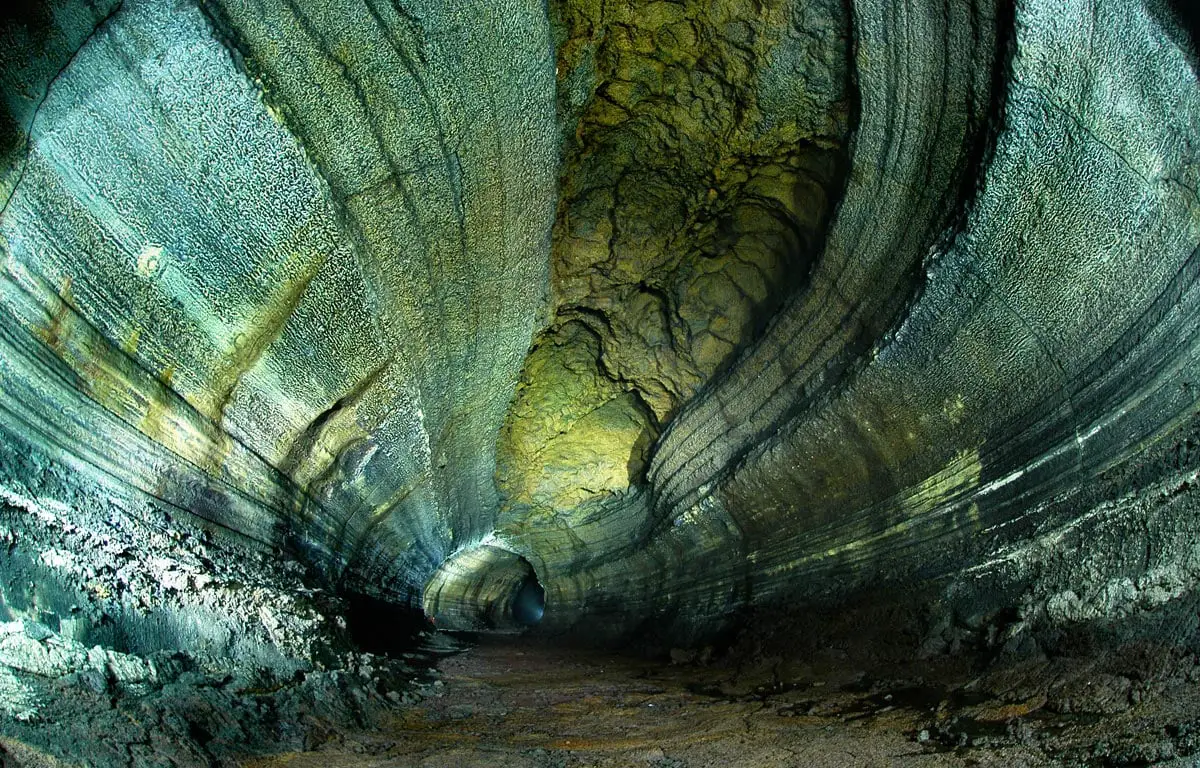
- Volcanic proccesses form several kinds of so-called primary caves – caves which form together with the surrounding rock. Lava tubes are created in conditions where hot lava stream gets a harder crust which remains after the lava flows away. Sounds impossible but such process have created even such cave as Kazumura Cave (Hawaii, United States) which is 65.5 kilometers long!
- Erosion processes of the sea waves and streams, but sometimes even wind, often create short caves. Sea caves often have beautiful lighting – only blue rays of the sunlight remain after going through the layer of seawater (Blue Grotto in Capri, Italy).
Many caves are formed otherwise – by glacial processes, earthquakes, biological processes – even by elephants (Kitum Cave in Kenya).
Values
Caves can be unique in several ways: most often due to their geological, biological and archaeological values.
Geological values
Many caves are adorned with diverse speleothems – specific rock and mineral formations seen only in caves and created by mineral solutions sedimenting the dissolved minerals in cave. Diversity of speleothems is very high and from time to time there are discovered new fantastic forms. Most common speleothems are stalactites, stalagmites, columns and flowstones. Sometimes such speleothems can reach incredible size: the tallest stalagmites can reach 70 metre height (Zhijin Cave in Guizhou, China).
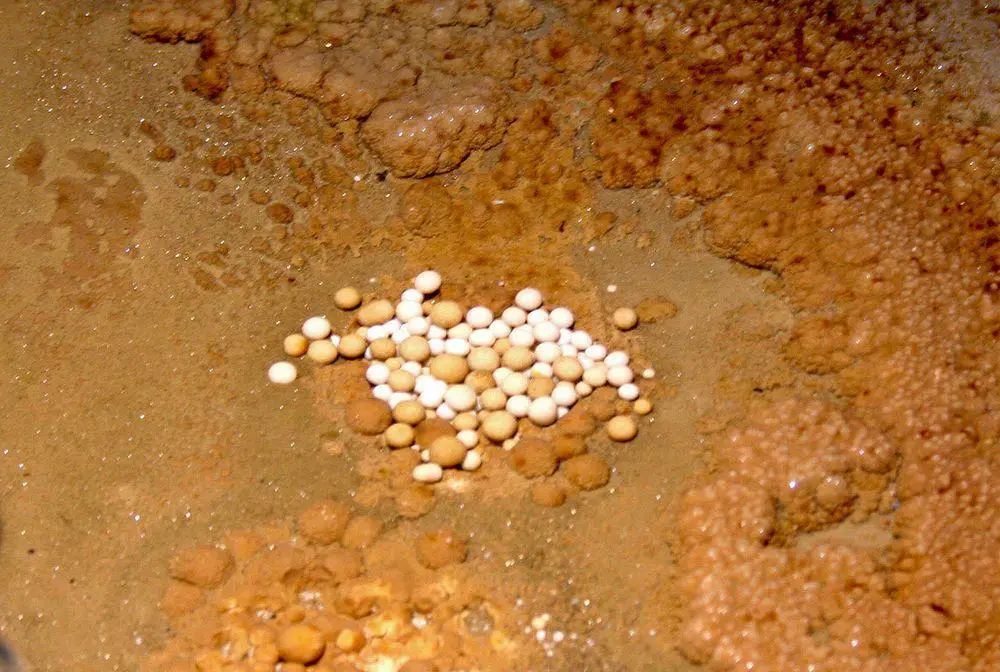
There are also very exotic and rare speleothems such as:
- Cave pearls – limestone balls up to 15 centimeters in diameter. The floor of Gruta de las Canicas (Tabasco, Mexico) is covered with some 200,000,000 cave pearls! Cave pearls are beautiful – sparkling white or with a marble texture.
- Cave ballons – real ballons from minerals! Ballon is made of hydromagnesite and moonmilk (fine, white pasta of carbonate material) and filled with gas.
- Cave showerheads – hollow cones attached to the ceiling of the cave with the narrow end. As if to justify its name one such showerhead in Deer Cave (Sarawak, Malaysia) is the source of shower – waterfall.
- "Champignons" – opal formations of microbial origin in quartzite caves (Venezuela). These weird formations are up to 1 metre across. Quartzite caves in tepuis of Venezuela are known to have several kinds of otherworldly formations, weird symbiosis of minerals and microorganisms.
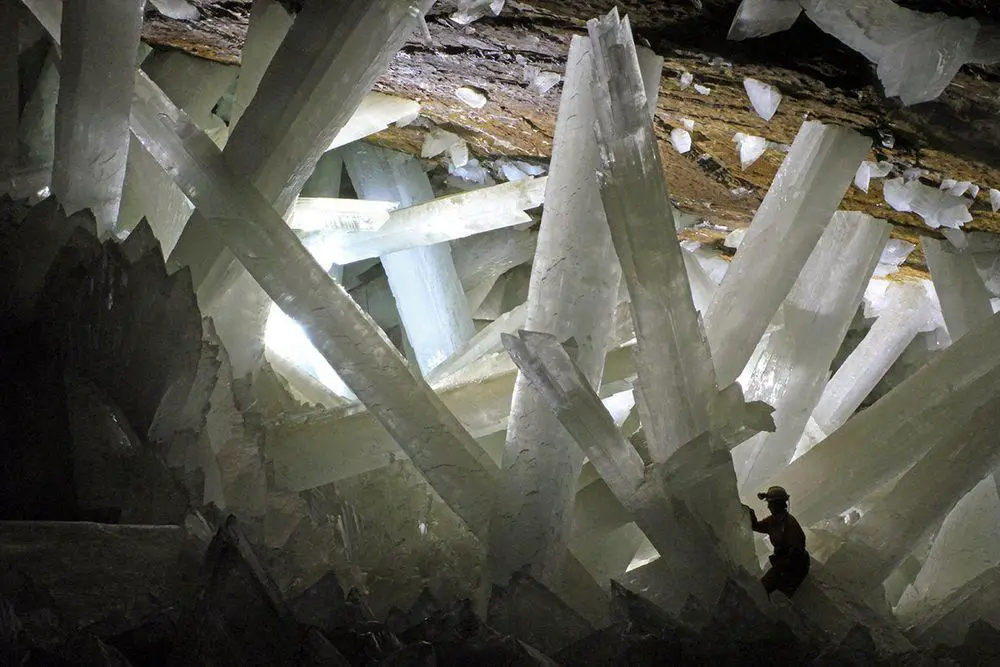
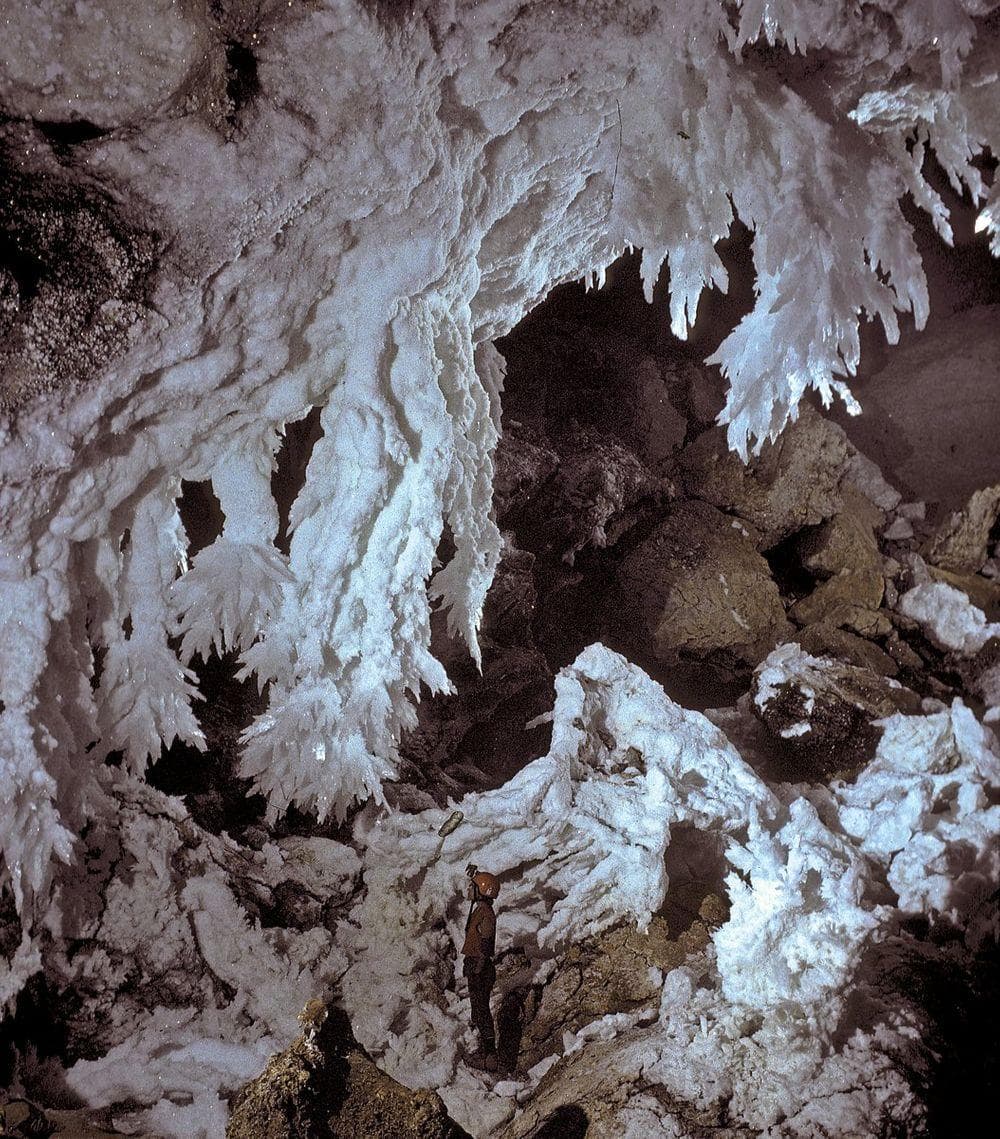
Cave environment is very beneficial for the formation of crystals. The largest crystals ever found are up to 12 metres long and 55 tons heavy, beautiful translucent crystals of gypsum in the Cave of the Crystals (Chihuahua, Mexico). Often crystals in caves form very beautiful and unusual formations such as white, intricate "trees" of aragonite crystals or gypsum flowers.
Caves have lots of other interesting geological characteristics such as unique minerals, for example sveite is found in Autana Cave (Venezuela), archerite is found only in caves where are bat guano deposits.
Biological values
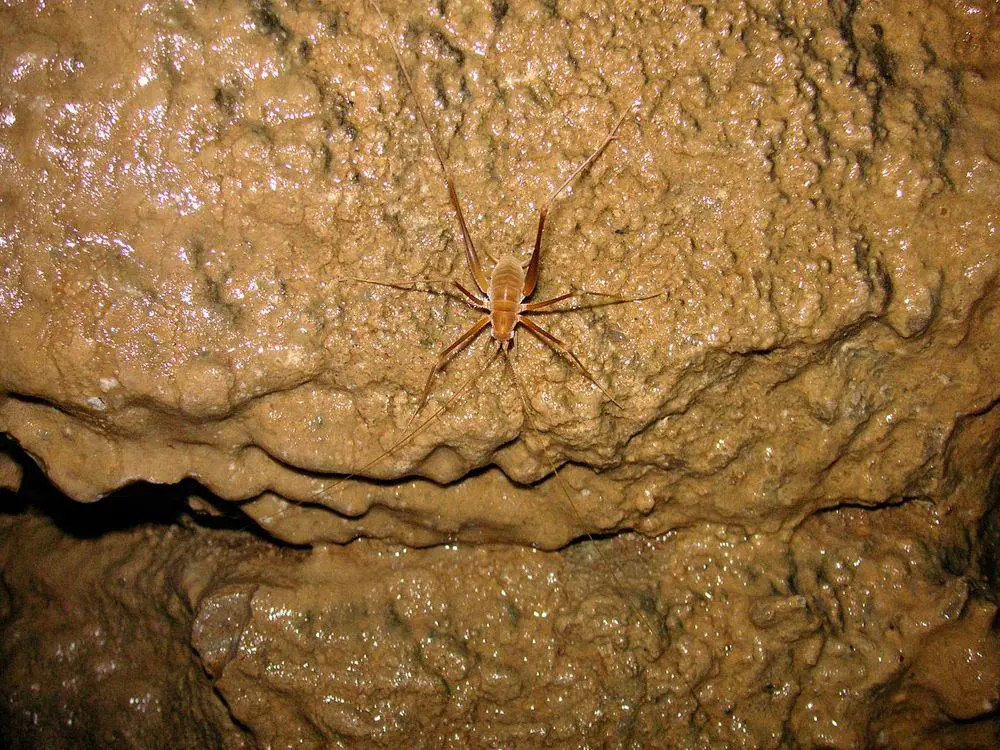
The specific cave environment provides shelter for certain species adjusted for more or less permanent life in cave. Scientists have specific names for several groups of cave dwellers:
- Trogloxenes use caves but they need to leave caves periodically to survive, e.g. to get food. Typical trogloxenes are bats. Bracken Bat Cave (Texas, United States) with some 20 million bats is considered to have the largest bat colony of the world.
- Troglophiles are attracted by the caves due to cave environment, but survive in other conditions as well. Famous troglophile is New Zealand glow-worm (Arachnocampa luminosa). Larvae of this small insect attach at the ceiling and walls of many caves and emit blue-green light. This creates unforgettable sights in such caves as Waitomo Glowworm Cave (Waikato, New Zealand).
- Troglobites – animals living only in caves and fully dependant on cave environment. This is very specific group of animals well adapted to a life in total darkness, limited food supply and narrow space. If animal is living in cave waterbodies, he could be called also stygobite.
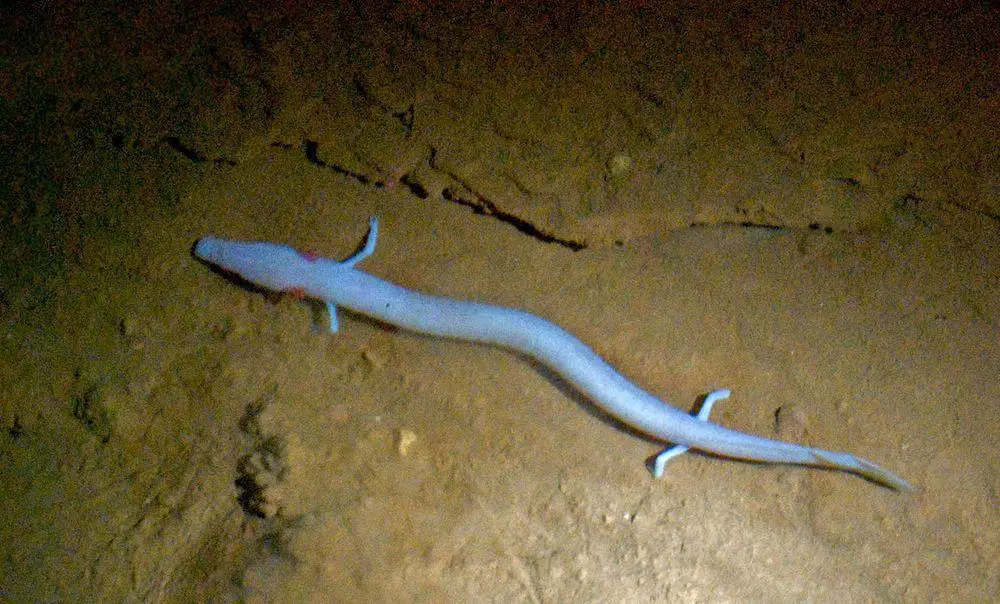
Troglobites are unique organisms adapted to specific life conditions and high isolation. Cave dwellers can be slow and live very long lives – up to 175 years, they often do not have eyes but other senses are heightened. Hundreds of species of troglobites are found only in one cave and not anywhere else. So far there are known approximately 7,700 species of troglobites but further investigations could increase this number several times.
The largest known troglobite is Black Proteus (Proteus anguinus parkelj) living in few caves of Slovenia. It is up to 35 centimeters long.
The highest cave biological diversity is observed not in tropical regions but in Europe. Most biodiverse is Sistema Postjna-Planina (Notranjsko-kraška, Slovenia) with 84 species of cave dwellers. A unique monument of nature is Movile Cave (Constanţa County, Romania) with 33 species of animals found only in this cave.
Microorganisms in some caves and also sinkholes create unique conditions. Thus the highly unusual Black Hole of Andros (South Andros, Bahamas) is water-filled sinkhole where at the depth of 18 meters is a dark purple layer of toxic sulfur bacteria. In this layer of bacteria due to biochemical processes, the water temperature increases up to 36°C. In Venezuelan quartzite caves, microorganisms create unusual opal formations – dendrites, "Champignons" and also unusual stalactites.
During the ice age several species of large animals in Europe and the Americas found that caves provide suitable habitat in harsh climatic conditions. Developed such species and subspecies of large animals as cave bear (Ursus spelaeus), cave hyena (Crocuta crocuta spelaea), Balearic cave goat (Myotragus balearicus). Evidence of these and many other extinct animals is found in many caves around the world, notably Peştera Urşilor (Bihor County, Romania) with remains of some 140 cave bears.
Archaeological values
The history of the development of humans has been well preserved in the caves of the world. Sterkfontein Caves (Gauteng, South Africa) contain remains of some 500 early hominins up to 3.3 million years old. Caves contain remnants of extinct human species such as Neanderthals (Homo neanderthalensis) whose last refuge seems to be the southern Iberian peninsula. Here in Gorham’s cave (Gibraltar) have been found the most recent known, around 30,000 – 24,500 years old remnants of Neanderthals.
Most recent another species of human have been found in Liang Bua cave (Flores, Indonesia). This man, Homo floresiensis, went extinct some 12,000 years ago.
Caves contain valuable artwork of prehistoric man such as the oldest known artwork – 70,000 years old engraved pieces of ochre (Blombos cave in Western Cape, South Africa) and the oldest sculpture in the world – 35 – 40 thousand years old "Venus of Hohle Fels" (Hohle Fels in Baden-Württemberg, Germany). Petroglyphs of Bhimbetka Caves (Madhya Pradesh, India) might be even 290 – 700 thousand years old.
Conditions in caves are beneficial for preserving artwork and there are known many hundreds of caves with prehistoric paintings in the whole world. Many cave paintings show that tens of thousands of years ago inspiration and skills of artists did not differ too much from that of contemporary artists.
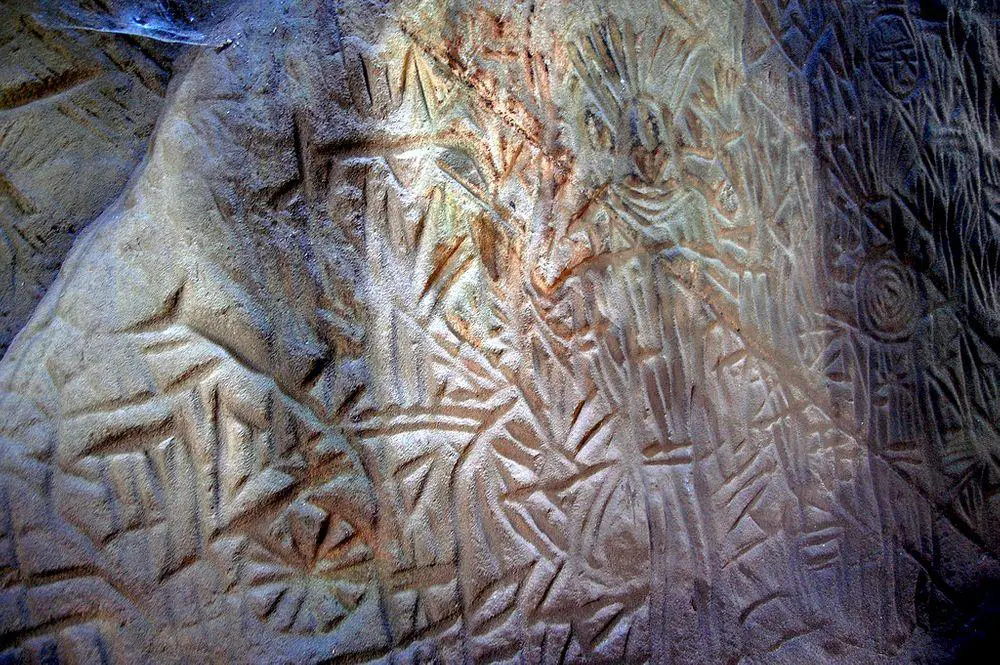
The oldest known cave art comes from Fumane Cave (Veneto, Italy) where barely discernible drawings on the pieces of rocks are some 32,000 – 36,500 years old. Chauvet Cave (Ardèche, France) has 30,000 – 33,000 years old drawings and here the quality of artwork is already very high. Some of the best monuments of cave art in the world are in Cave of Altamira (Cantabria, Spain) and Lascaux (Dordogne, France). Unusual and well matured artistic style is represented in Laas Gaal (Togdheer Region, Somalia). Great 9,000 years old stencil art is represented in Cueva de los Manos (Santa Cruz, Argentina), even more impressive stencils were made by ancient Aborigenes in Cathedral Cave (Queensland, Australia). Unusual are the 6,000 – 8,000 years old pictograms in Edakkal Caves (Kerala, India).
Numerous important archaeological finds have been made in Central American caves. Sometimes around 1,200 – 900 BC have been made Olmec influenced paintings in Juxtlahuaca (Guerrero, Mexico). Maya culture has left important artefacts in sacred wells (cenotes) such as the Sacred Cenote (Yucatán, Mexico). Naj Tunich (Peten, Guatemala) – former Mayan ceremonial cave – contains diverse important artefacts: petroglyphs, paintings, ceramics, burials.
Hidden and fragile
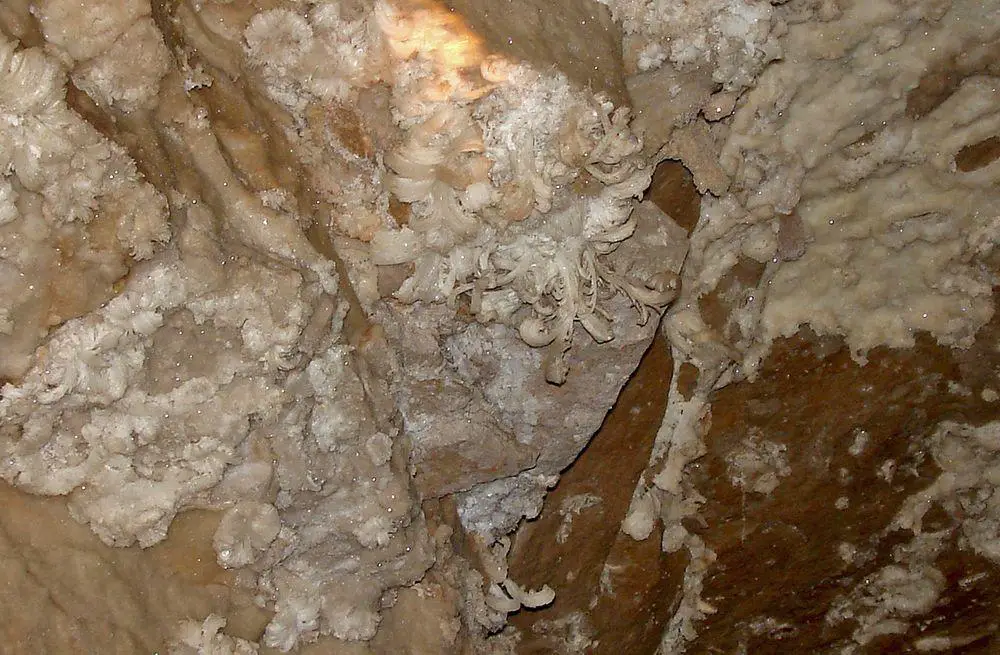
Caves in a way are "hidden monuments" because nearly any cave contains very fragile values which are easily lost through unorganised tourism and vandalism.
We can be sure that in every single country, where are found caves, local speleologists (cave explorers) know a huge lot more than is written in tourist guidebooks. But we should not complain about this: unfortunately there is no other way to preserve cave art, fragile crystals and unique, delicate animals living in caves. It feels much better to know that they exist somewhere than to experience a loss of values due to the faulty nature of human.
 Top 25 caves
Africa
Dahab Blue Hole
Egypt
Approximately 130 m deep underwater sinkhole. At the depth of 56 m, there is a 26 m long tunnel – The Arch, leading out to the open sea. This unusual natural location has experienced many fatalities, bringing gruesome fame to the site.
Asia
Son Doong Cave
Vietnam
The biggest known cave in the world. Especially impressive is the more than 4 km long passage that is continuously 90 m wide and up to 200 m high. The total known length of this cave is 9 km. A powerful stream flows through the cave. Here are found unique cave pearls as large as baseballs, as well as green, algae-covered gours.
Qinlong tiankeng
China
One of the most impressive complexes of natural attractions in the world. A very impressive, enormous sinkhole, up to 276 m deep, up to 520 m wide, volume of 31.7 million m³. With the giant Qinlong natural arch is connected to nearby Shenying tiankeng – up to 285 m deep, and 300 m wide. Both tiankengs have two more exits through natural arches – Qinlong tiankeng can be exited through two Tianlong Natural bridges, Shenying tiankeng – through Hailong natural bridge.
Bala’a sinkhole and waterfall (Balaa)
Lebanon
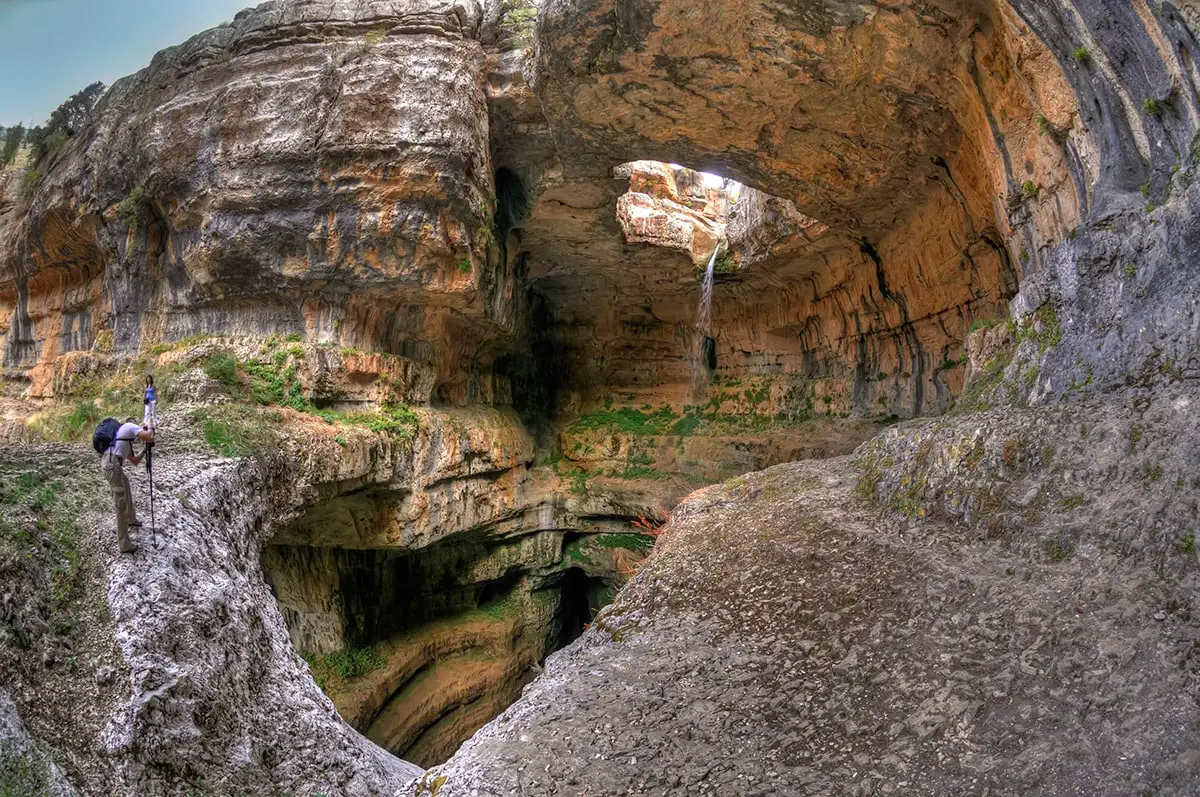
Approximately 255 m deep, nearly vertical cave with waterfall in it. The entrance in the cave is some 70 m deep sinkhole. Here waterfall has percolated one side of the sinkhole, creating three natural bridges one above the other. Waterfall disappears underground.
Khoun Xe Cave
Laos
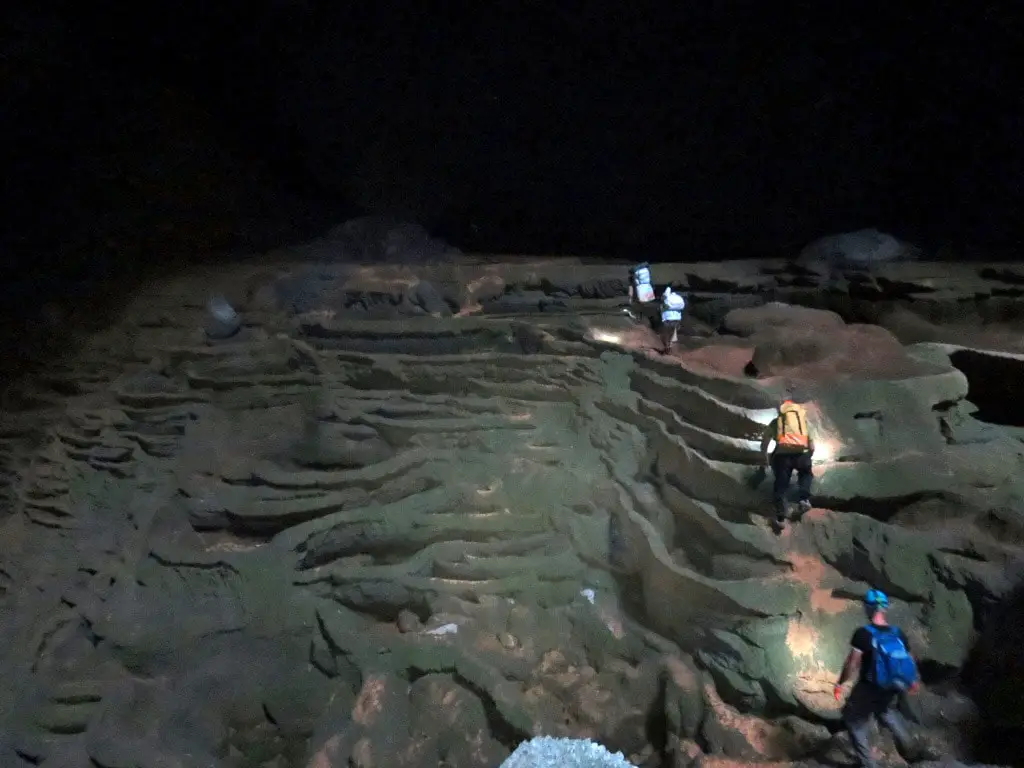
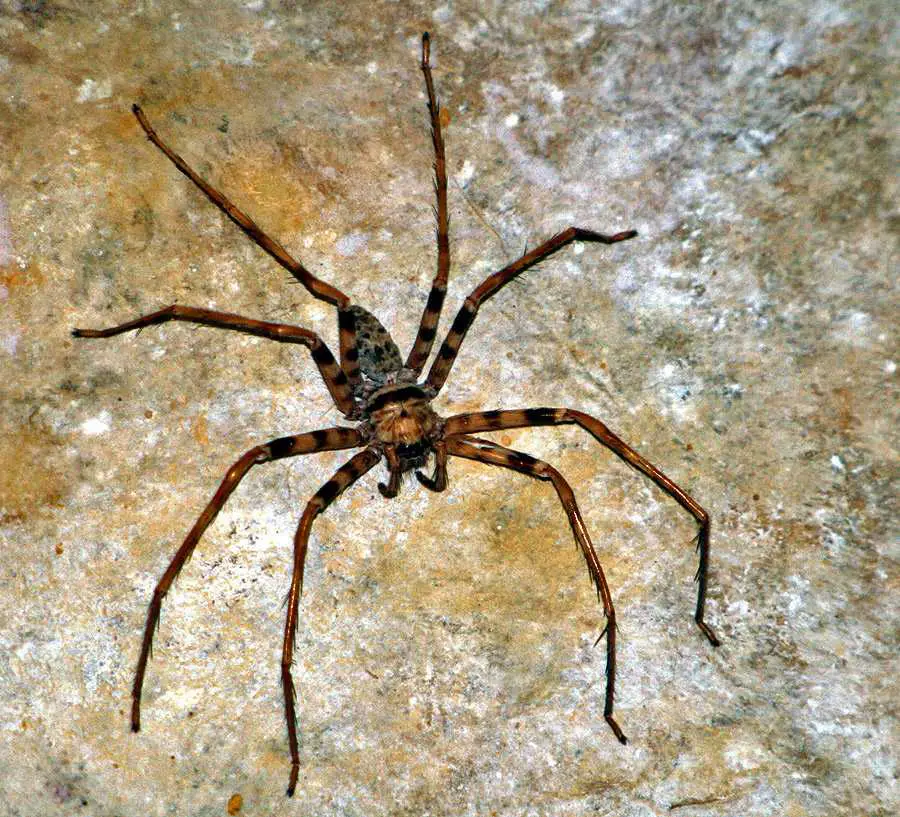
Giant and unique cave, 13.6 km long. The upstream entrance is a giant sinkhole. The cave contains the largest known rimstone pools (gour pools) in the world – up to 60 m wide. Xe Bang Fai river flows through the cave for a 7 km long stretch and is one of the most powerful cave rivers in the world. Width of this underground river – 56 – 100 m. The ceiling of the cave is up to 120 m high, width is up to 200 m. The cave contains the largest known cave pearls in the world – 32 cm in diameter and even larger weird formations called Alien Eggs. Stalagmites over 20 m tall. More than 130 species of fish live in caves, some several meters long. Giant, very fast cave spiders including the giant huntsman spider.
Veryovkina Cave
Georgia
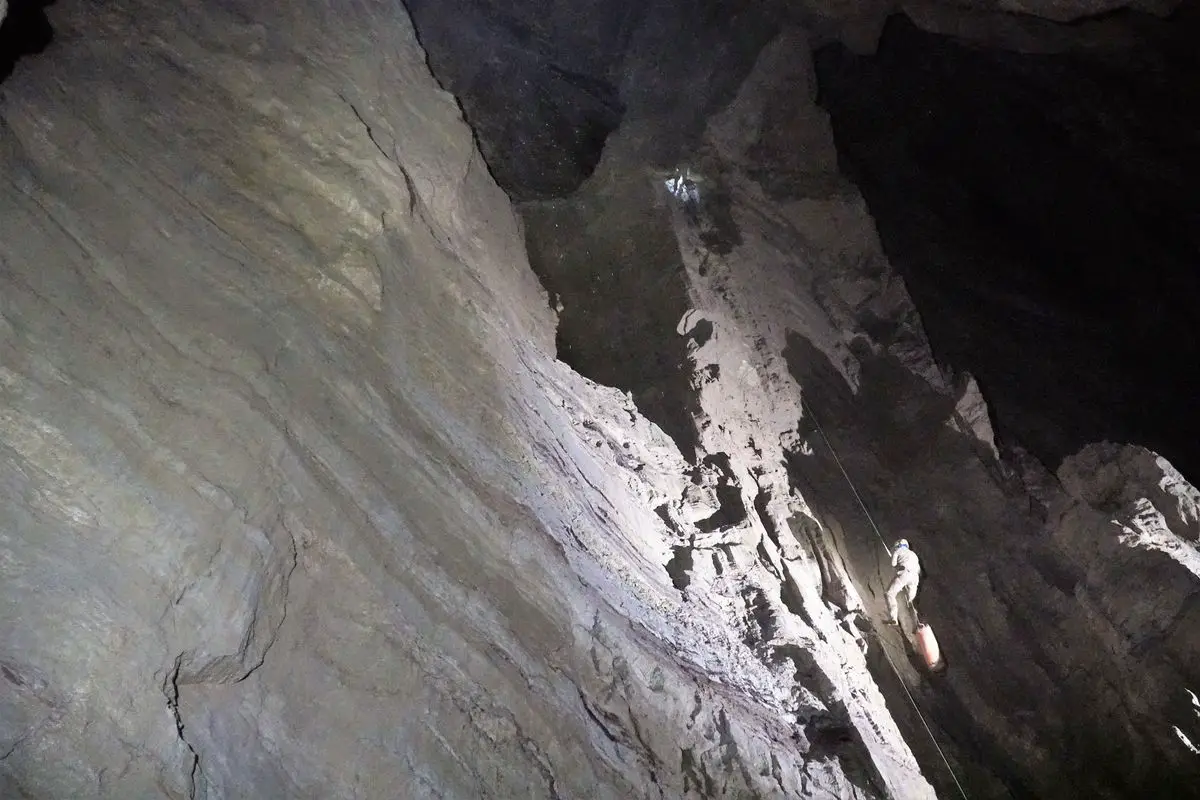
The deepest known cave in the world, 2 212 m deep. Discovered in 1968, but the full depth was reached in March 2018.
Xiaozhai tiankeng
China
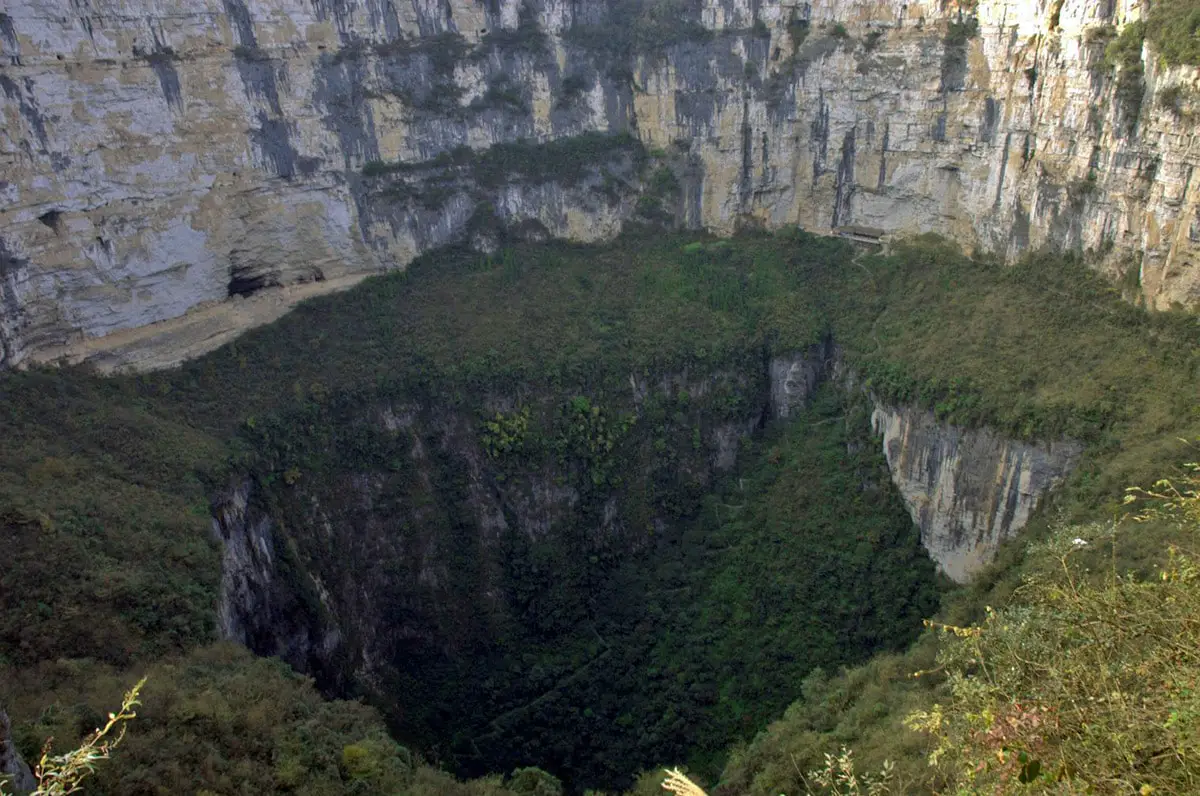
Largest sinkhole (tiankeng) in the world, up to 662 meters deep, 625×535 meters across.
Denisova Cave
Russia
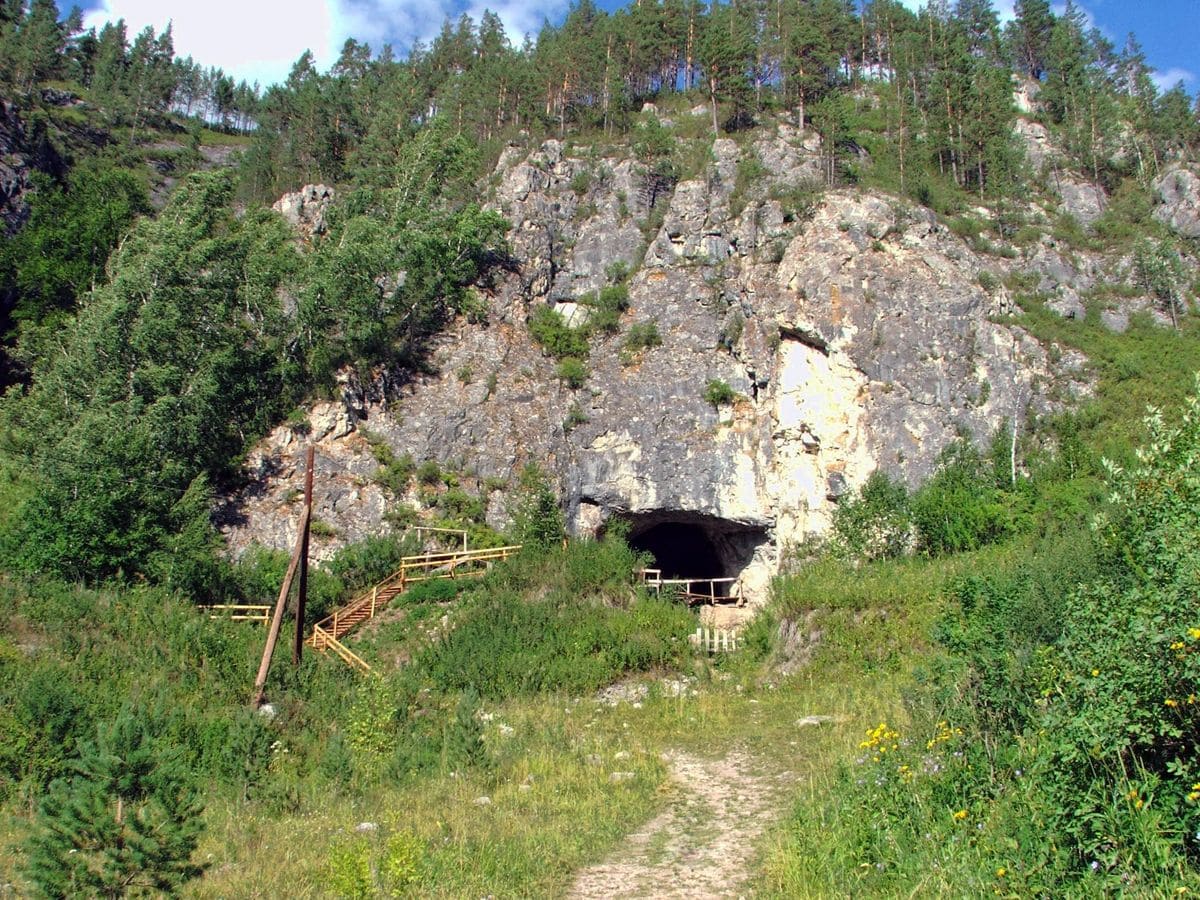
This cave contains at least 125,000 years old artifacts left by ancient hominins. After a splinter of bone here has been identified new species of early humans – Denisova hominin or Denisovan.
Deer Cave (includes Lang Cave)
Malaysia
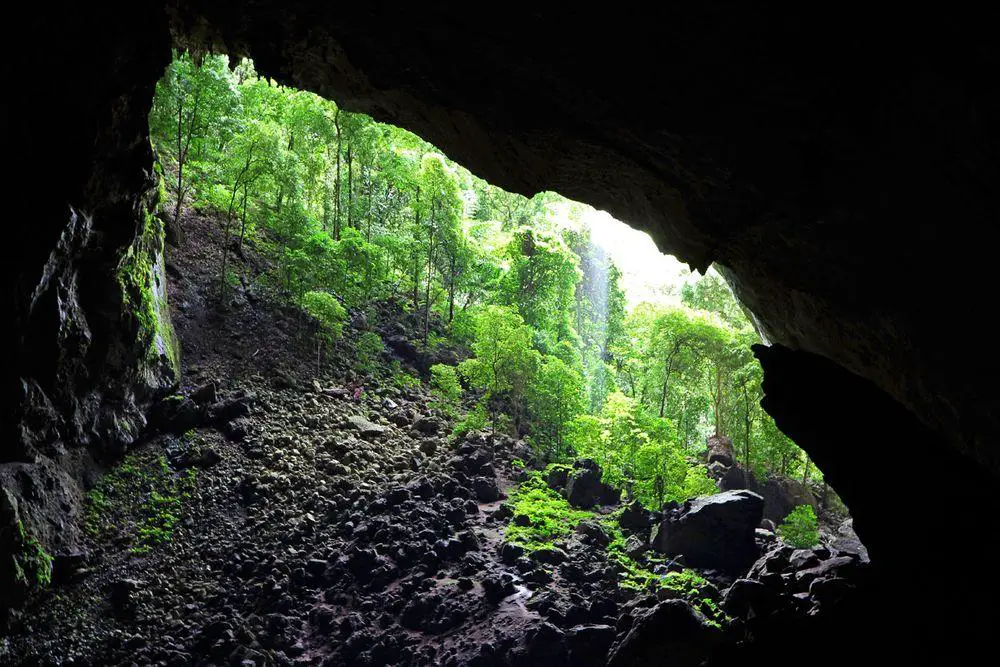
Enormous show cave, 4.1 km long. Cave has giant cave rooms, the largest one has a height of the ceiling of 125 m, width – 169 m. The main entrance is 146 m high. The cave contains a very interesting cave formation – a cave showerhead. This feature looks like a true showerhead in the ceiling of the cave with a waterfall coming from it. In the cave lives a giant colony of bats (Tadarida plicata).
Puerto Princesa Subterranean River
Philippines
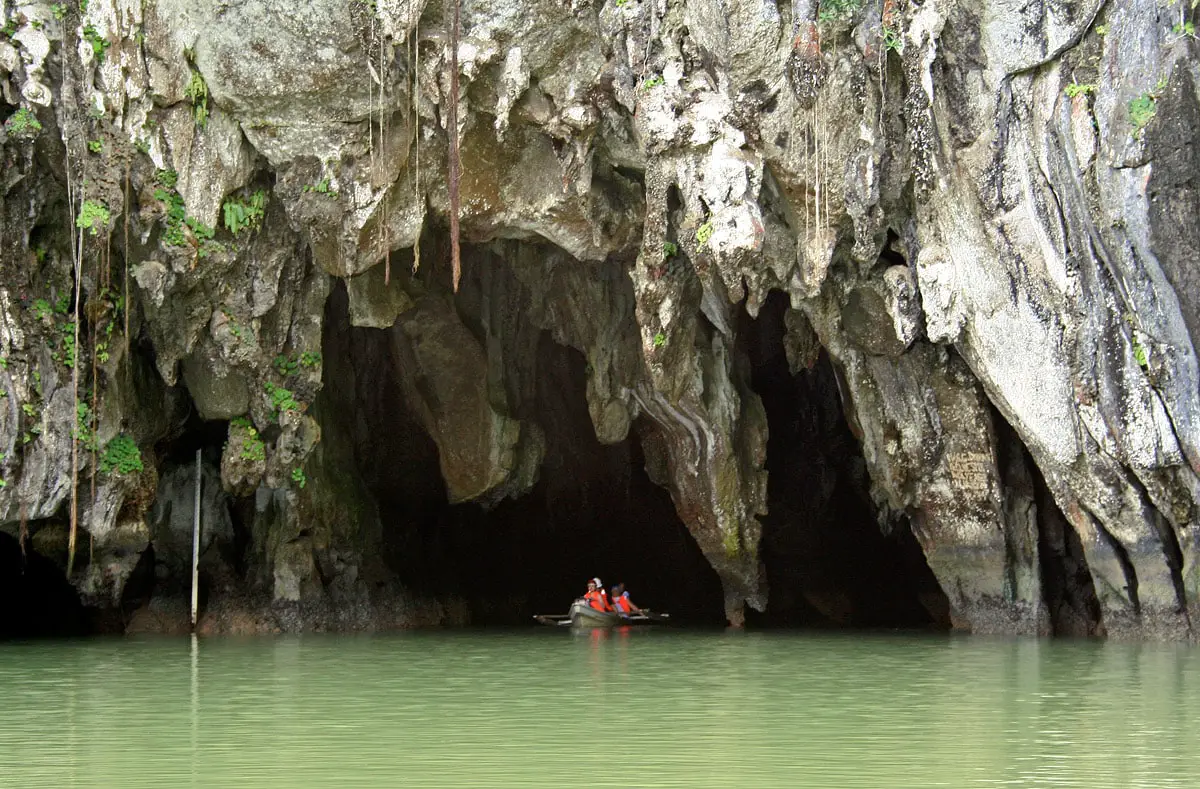
More than 24 km long cave system with 8.4 kilometers long underground river, which is accessible directly from the sea and navigable up to 4.2 km deep. Contains also Italian’s Chamber – a giant cave hall.
Batu Caves
Malaysia
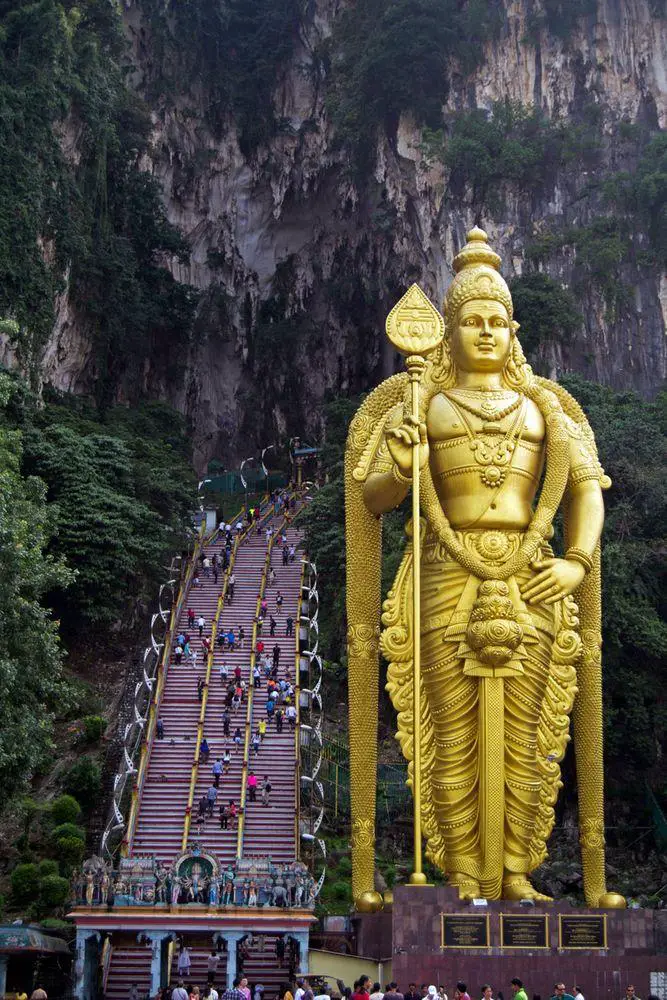
Limestone hill with a group of caves and cave temples. Some caves contain remnants of prehistoric settlements, but in 1890 here started the development of Hindu temples. An impressive part of the temple is a majestic stairway with 272 steps. The site contains numerous amazing monuments of art and architecture, including a 42.7 m tall statue of Lord Murugan that was constructed in 2006. Below the temples is Dark Cave – a 2 m long network of caves with endemic species of animals.
Callao Cave
Philippines
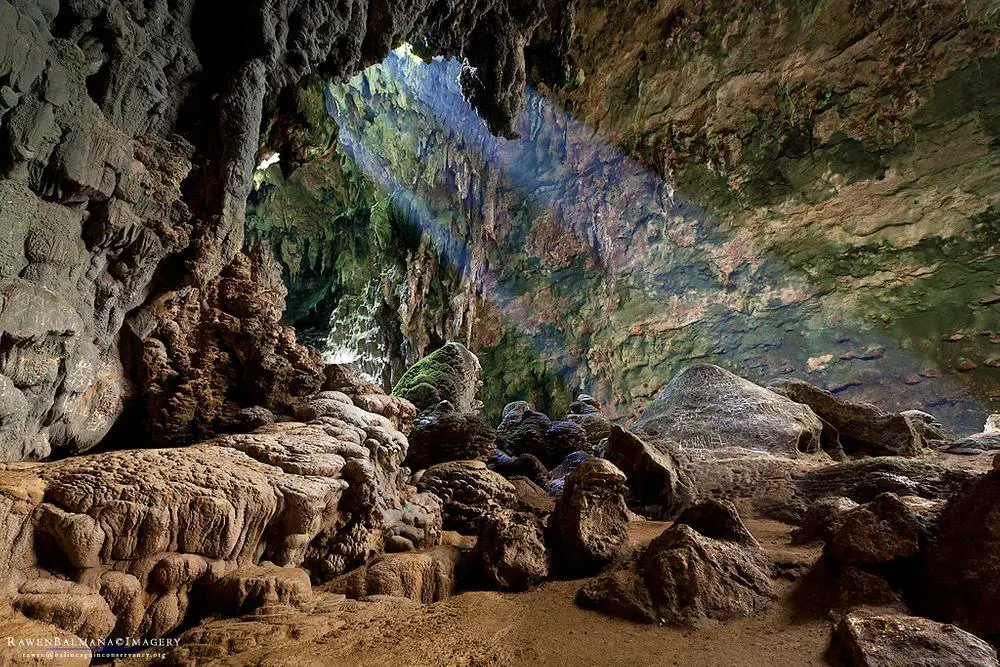
An enormous cave system with beautiful speleothems. Here have been found the earliest human remains in the Philippines, at least 67 thousand years old. These remnants belong to an extinct species of humans – Homo luzonensis.
Europe
Chauvet Cave (Chauvet, Grotte ornée)
France
Cave with some of the best examples of prehistoric painting. Contains 420 drawings (paintings and engravings) of animals that have been created since 35,000 BP, Aurignacian period. These drawings belong to the oldest artworks in the world. The quality of the drawings shows that ancient humans already very long ago professed high-quality art. Paintings and engravings are done in different techniques but always in very high quality.

Grotte de Lascaux
France
Group of caves with some of the best-known Palaeolithic polychrome paintings in the world. Paintings were made sometime around 15,300 BC. Here are depicted mostly large animals.
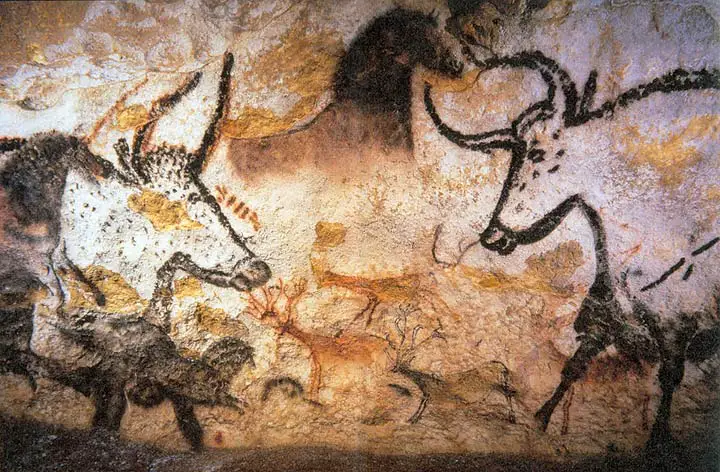
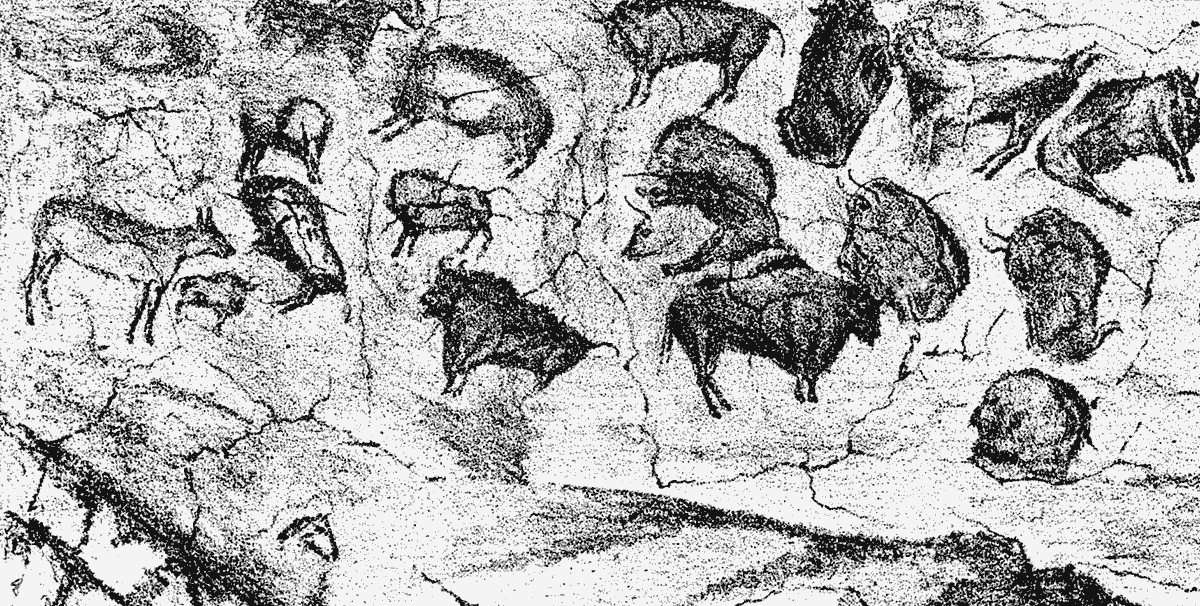
Altamira Cave
Spain
Cave with some of the best cave paintings in the world, mostly polychrome paintings of wild mammals, 18 – 14 thousand years old.
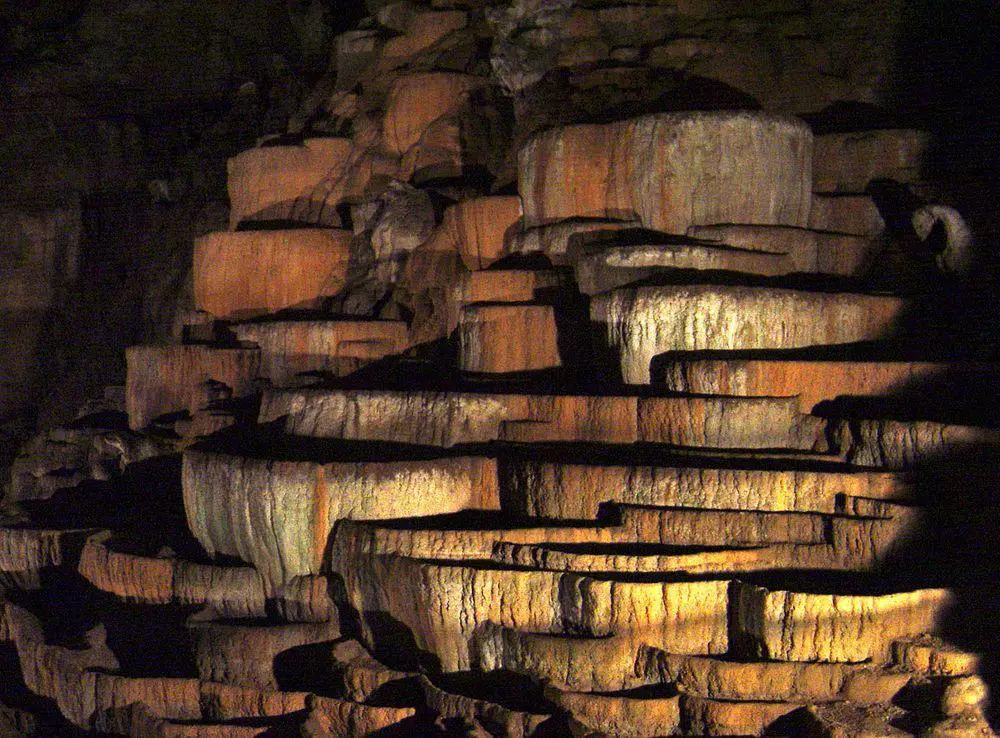
Škocjan caves
Slovenia
Cave system with numerous unique characteristics: giant, 146 meters deep underground canyon of River Reka, underground travertine terraces, Bronze Age and later temples, and Pre-Christian pilgrimage center.
North America
Mammoth Cave
United States
The total length of Mammoth Cave passages is 676 km: it is the longest known cave system in the world. Cave has formed in Early Carboniferous (Mississippian) limestone and is covered with sandstone. Burials of Native Americans.
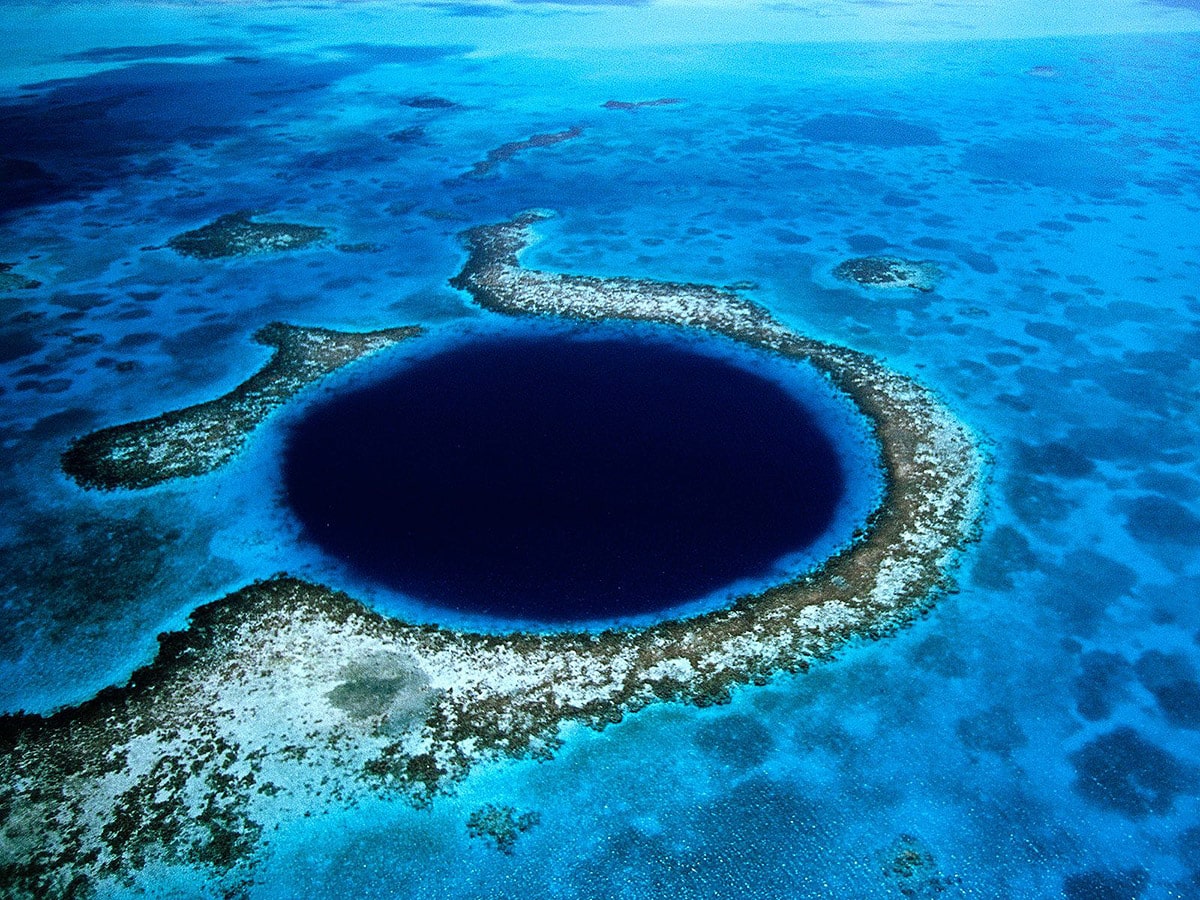
Great Blue Hole
Belize
A perfectly round undersea sinkhole, 318 meters across and 124 meters deep. Contains tilted stalactites possibly hinting at tectonic movements.
Sistema Zacaton
Mexico
Unique karst field created by thermal acidic waters heated by volcanic heat. Contains the world’s deepest water-filled sinkhole, the 339 meters deep El Zacatón sinkhole with 319 meters deep lake, and floating islands. Poza Seca is one of the unique travertine-capped sinkholes of Sistema Zacatón – here the formerly open sinkhole has sealed itself with a limestone lid. Most likely it hides unknown life forms, not investigated.
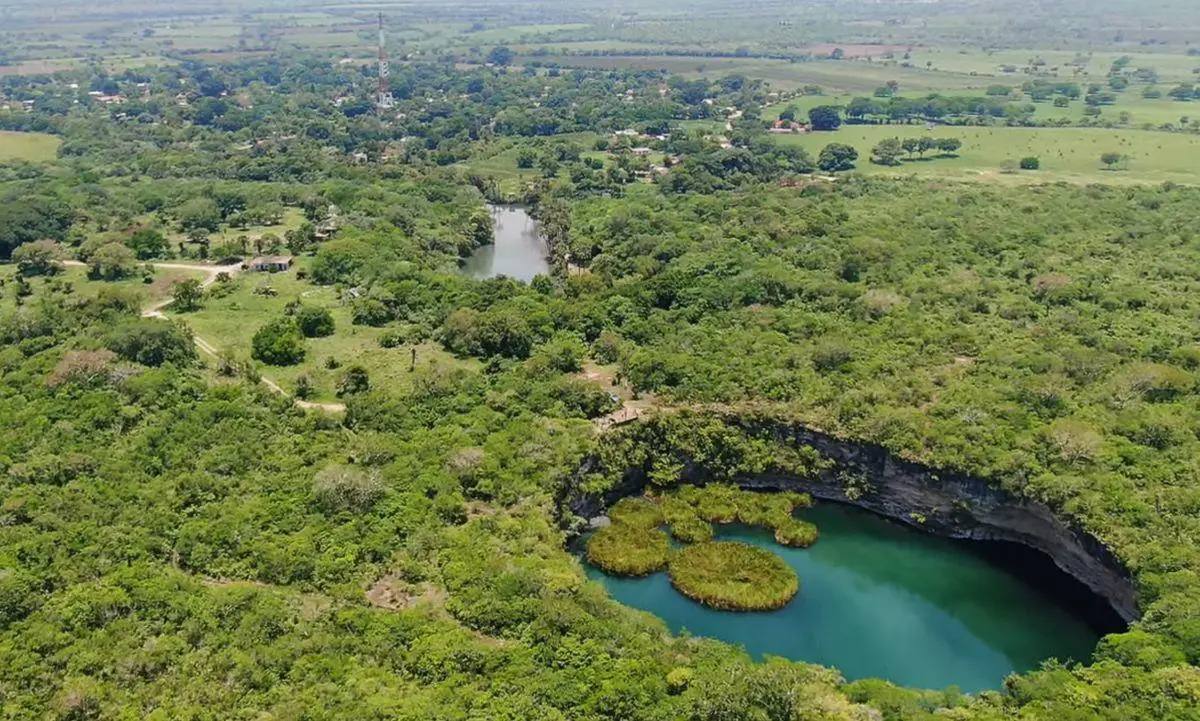
Naica Cave of the Crystals
Mexico
Cave with giant selenite crystals up to 12 meters long and 55 tons heavy. The air temperature in the cave is up to 58 °C high. Now flooded.
Sótano de las Golondrinas (Cave of Swallows)
Mexico
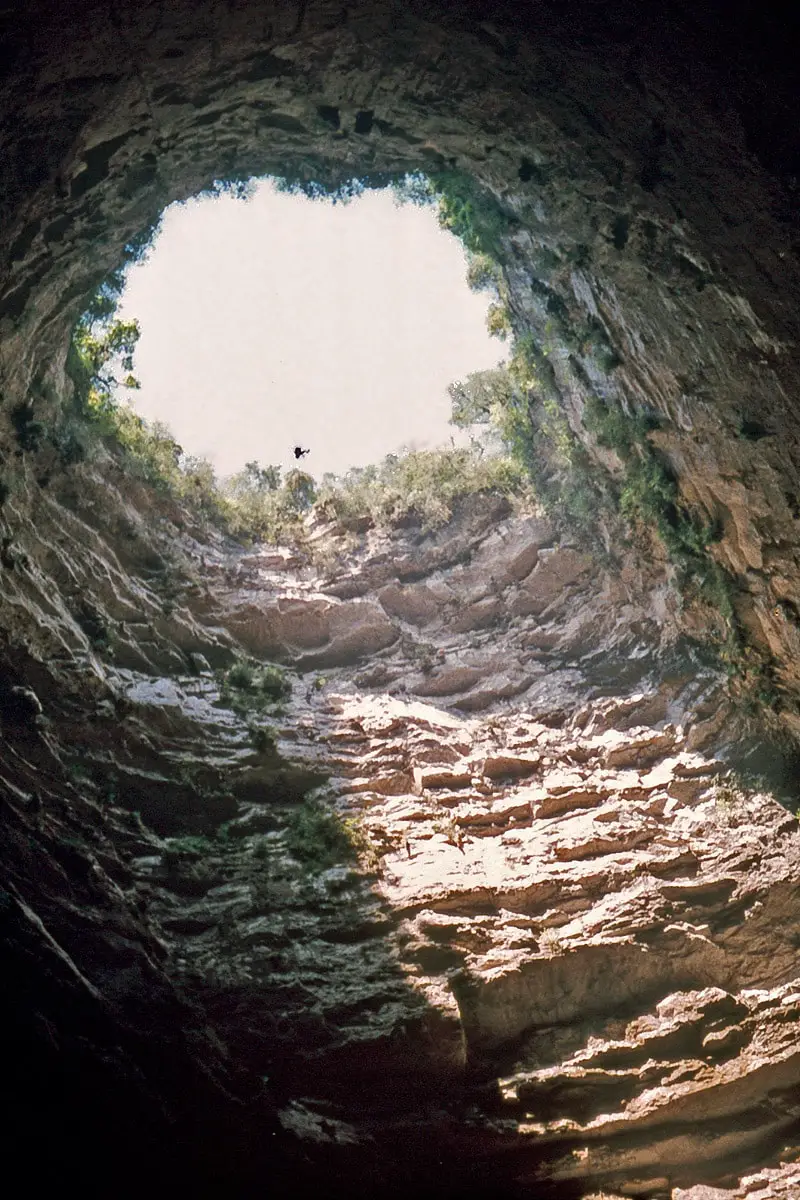
The largest cave shaft in the world – an enormous 49 x 62 meters wide hole, 372 meters deep. Famous due to a group of green parrots who have to fly ascending in circles around the cave until they get out of it.
El Zacaton sinkhole
Mexico
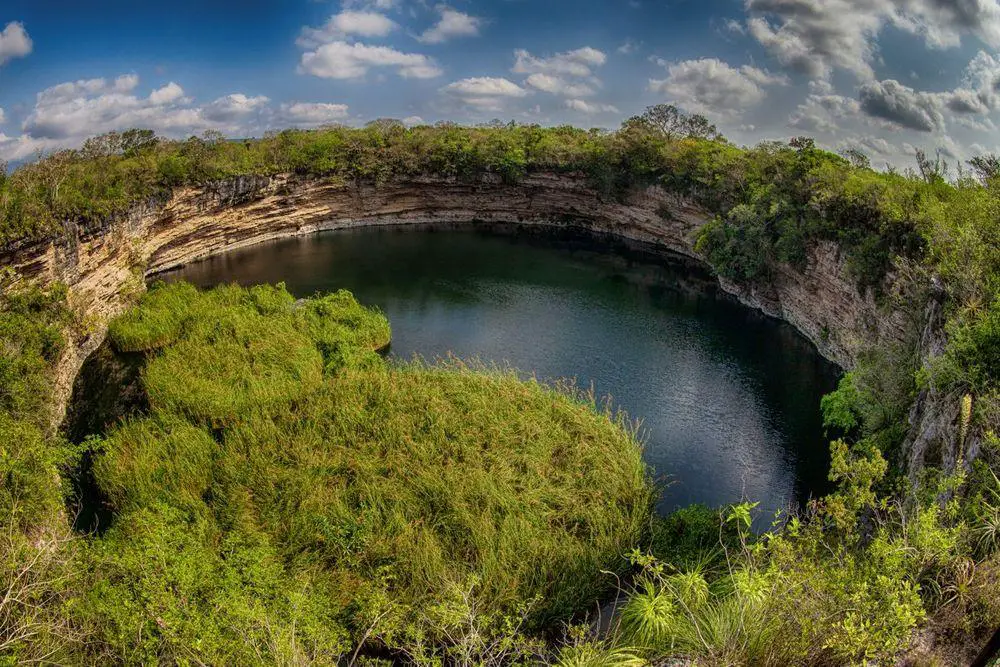
The second deepest water-filled sinkhole in the world. The total depth of the sinkhole is 339 m, and the lake is 319 m deep. On the surface of the lake, there are floating several round travertine islands. Lake is formed by volcanically heated acidic groundwater.
Lechuguilla Cave
United States
222.6 kilometers long cave, one of the most decorated and beautiful caves in the world with unique kinds of speleothems, such as: hydromagnesite ballons, U-loops, up to 6,1 meters long gypsum hairs.
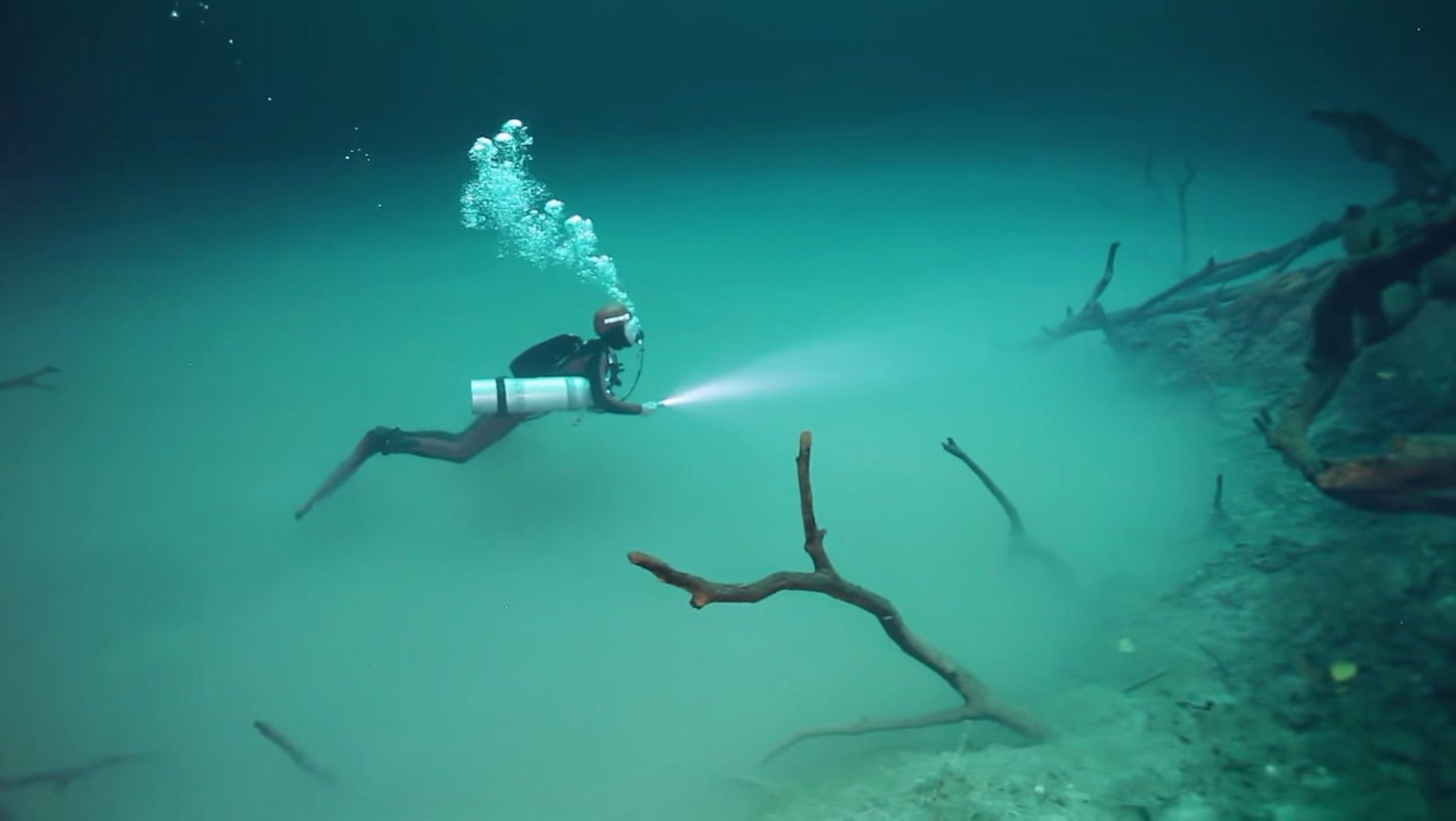
Cenote Angelita
Mexico
Unique water-filled sinkhole with a ghostly layer of hydrogen sulfate at the depth of some 30 m and seawater below it.
South America
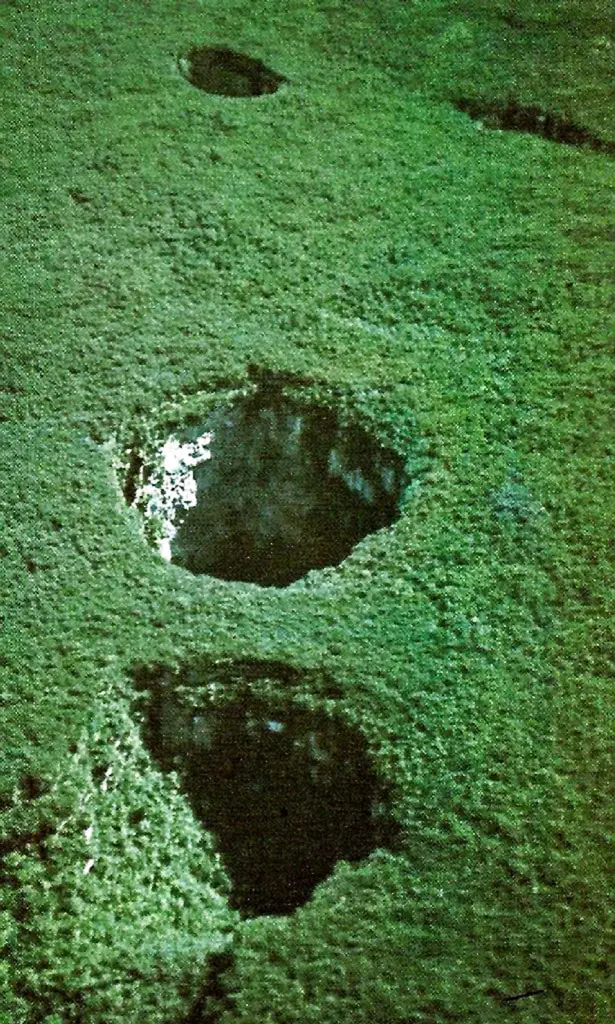
Sima Humboldt and Sima Martel
Venezuela
314 and 248 meters deep, ancient quartzite sinkholes that are located on the top of forested table-top mountains and contain patches of isolated, primeval rainforest on their bottoms.
Recommended books
Great Caves of the World


Caves are found on every continent. The United States is home to the world’s longest cave system, the Mammoth Cave in Kentucky, and to the world’s most popular tourist cave, New Mexico’s Carlsbad Caverns. Great Caves of the World takes readers to these and 25 other astonishing and challenging caves across the globe.
Atlas of the Great Caves of the World


Atlas of the Great Caves of the World is an almanac, encyclopedia, and book of records all under one cover. It is an invaluable reference book for cave explorers and cave enthusiasts of all levels.