List of attractions by regions
Brazil is divided into 26 states and 1 federal district.
Federal district
| Distrito Federal | ||
States
| Acre | ||
| Alagoas | ||
| Amapá | ||
![]() | Calçoene megalithic observatory - Amazon Stonehenge | Megaliths |
| Amazonas | ||
| Bahia | ||
| Ceará | ||
| Espírito Santo | ||
| Goiás | ||
| Maranhão | ||
| Mato Grosso | ||
| Mato Grosso do Sul | ||
| Minas Gerais | ||
| Pará | ||
| Paraíba | ||
| Paraná | ||
| Pernambuco | ||
| Piauí | ||
| Rio de Janeiro | ||
| Rio Grande do Norte | ||
| Rio Grande do Sul | ||
| Rondônia | ||
| Roraima | ||
| Santa Catarina | ||
| São Paulo | ||
| Sergipe | ||
| Tocantins | ||
Brazil - interactive overview map
Wikipedia article about Brazil
Featured:
Calçoene megalithic observatory - Amazon Stonehenge
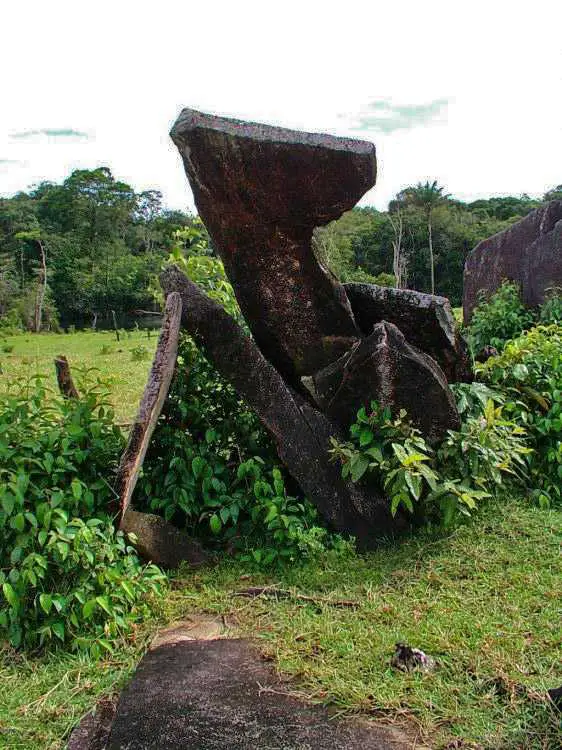
Calçoene megalithic stones. Seemingly chaotic aggregation of stones possibly has certain order.
Wikimedia Commons, user Leandroisola, 2008 / CC BY-SA 3.0
Sometime in the past in the north-east of Brazil there were living people who created beautiful pottery and built megalithic structures. The best known monument left by these people is Calçoene megalithic observatory, often called also Amazon Stonehenge. Ancient builders of this structure used interesting methods to mark the winter solstice - this site served as ancient astronomical observatory.
Main attractions
Brazil is enormous, diverse country with many amazing and unique attractions. Especially impressive are the diverse natural landmarks - many surprising geological monuments and areas with unique and endemic plants and animals. Few know it outside the country - but there are many beautiful historical cities. Many beautiful monuments of architecture have been created in Brazil in 20th century.
Below are listed some of most amazing landmarks.
Natural landmarks
Brazil belongs to the largest countries of the world and most of the country is located in tropics. Thus it contains huge amount of very interesting geological and biological attractions including largest rainforest of the world - Amazon Rainforest.
The specifics of Wondermondo are such that here are not described attractions with large area - thus you will not find descriptions of Amazon Rainforest or Pantanal here. Wondermondo though offers description of smaller unique landmarks.
Rock formations
Diverse geology of Brazil has resulted in numerous very impressive rock formations met around whole country. Below are listed some of the characteristic ones.
-
Itaimbezinho Canyon – Rio Grande do Sul. Up to 720 m deep and 6 km long canyon with unbelievable, very impressive sights. Additional charm is added by exotic, tall araucarias.
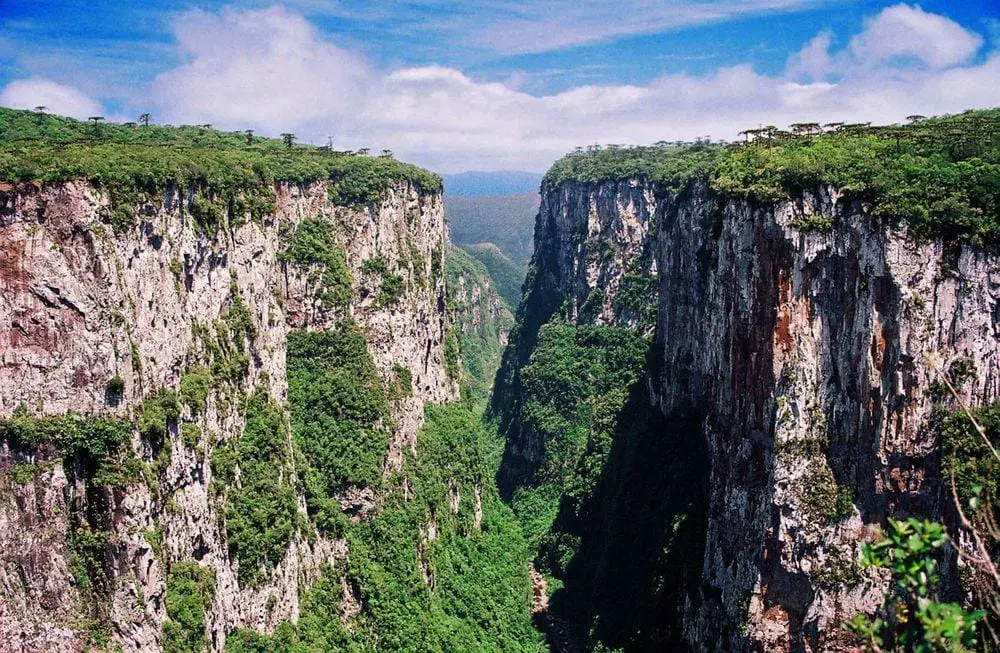
Itaimbezinho Canyon.
Valdiney Pimenta, Flickr / CC BY 2.0 - Pedra da Gávea – Rio De Janeiro. Granite and gneiss dome rising 842 m above the sea level. World’s largest monolith on a coastline. The giant rock has some similarity to human face.
- Sugarloaf Mountain – Rio De Janeiro. Impressive, rounded, 396 m high granite peak, one of the dominants in the landscape of Rio De Janeiro. Can be reached by cable car.
- Morro do Pico – Fernando de Noronha Islands, Pernambuco. Unusual, slanted peak rising from the ocean 321 m high.
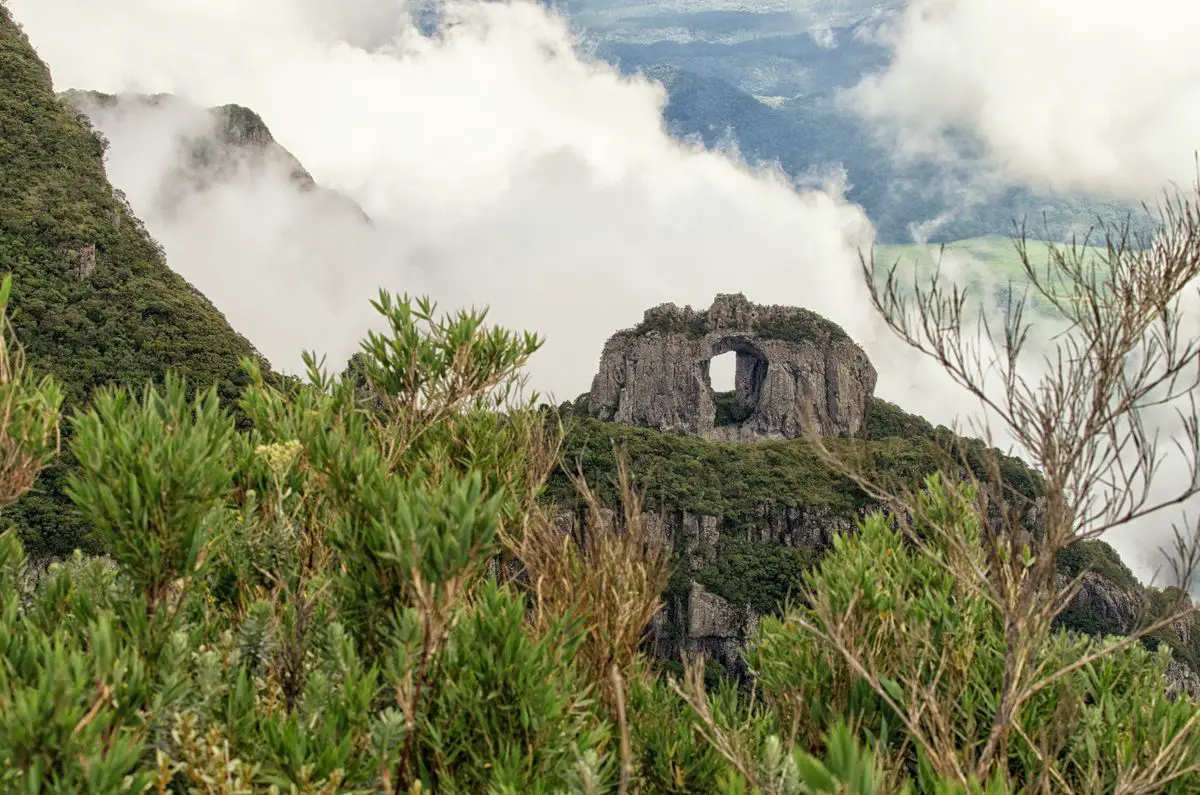
- Pedra Furada – Santa Catarina. Large natural arch – or rather a hole in rock with forest growing in it.
- "Eye of the Lear" – Bahia. Enormous and impressive, some 45 m tall natural arch.
Caves and sinkholes
- Abismo Guy Collet – Roraima. Deepest known quartzite cave in the world and by far the deepest in Brazil, explored up to 671 m depth.
-
Toca da Boa Vista – Bahia. Longest cave not only in Brasil but in whole Southern hemisphere. Thus far explored passages with total length of 105 km, labyrinth contains beautiful cave formations.
Lago Azul.
Renato Saboya, Flickr / CC BY 2.0 - Buraco das Arara – Goiás. Very impressive, 126 m deep sinkhole with lush tropical vegetation and several species of animals living on its bottom.
- Serra do Ramalho – Bahia. System of several large caves with unique species of organisms including cave fish and the unusual arachnid Amblypygi.
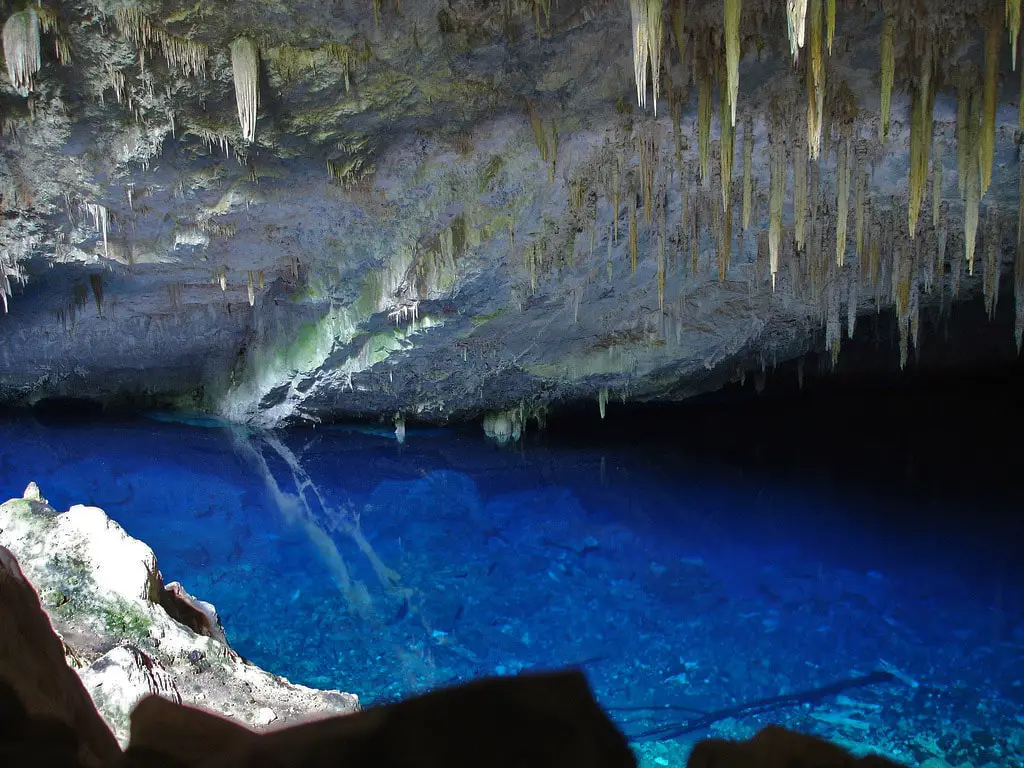
- Gruta do Lago Azul – Mato Grosso Do Sul. Unusually beautiful cave thanks to deep, very large cave lake up to 70 m deep. In the morning the lake is illuminated by the Sun.
- Gruta do Janelão, Peruaçu karst – Minas Gerais. Group of very impressive karst formations – underground river with 3 km long and up to 100 m wide and high passage. Includes two giant collapse dolines up to 170 m deep and several smaller ones. Includes one of the tallest stalagmites in the world – 28 m high.
- Gruta dos Brejões – Bahia. Very impressive, 6.6 km long cave with 106 m high entrance, passages up to 150 m tall and several collapses with skylights. Contains giant, unusual travertine terraces and ancient cave paintings.
- Lago Azul – Goiás. Water-filed sinkhole, dived up to 274 m depth.
Waterfalls
Brazil is extremely rich with smaller waterfalls, often located in beautiful jungle setting. On the border of Brazil is located one of the most impressive waterfalls of the world - Iguazu Falls. Unfortunately the most powerful falls of the world - Guaíra Falls (Salto de Sete Quedas) have been flooded by Itaipu Dam.
-
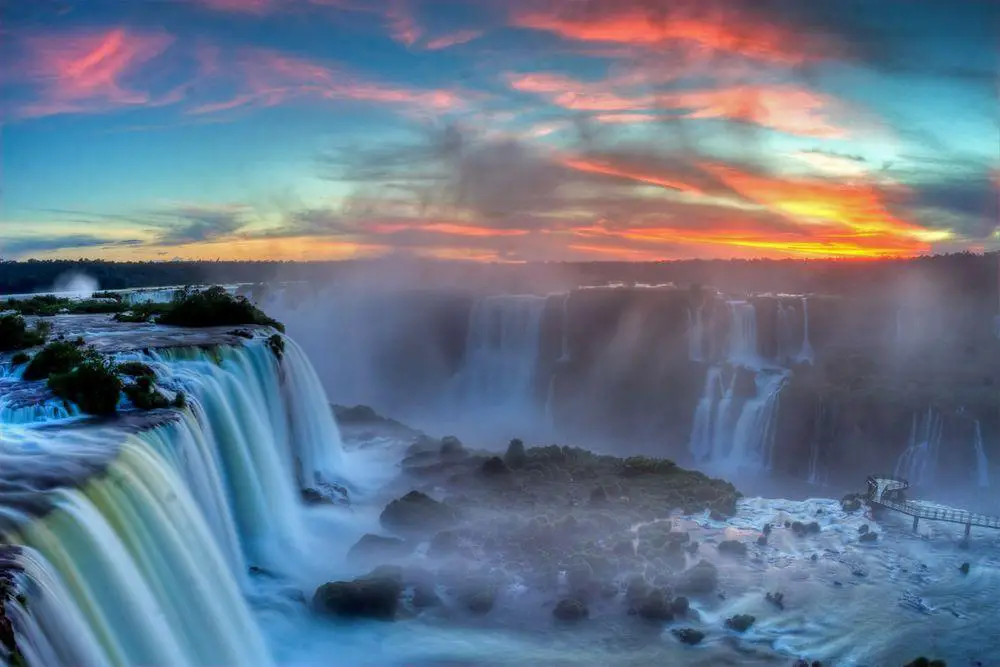
Iguazu Falls (Salto de Iguaçu)- Misiones, Argentina and Paraná, Brazil. One of the most enormous and most impressive waterfalls of the world, they are "only" 82 metres tall, but 2,700 metres wide.
Caracol Falls.
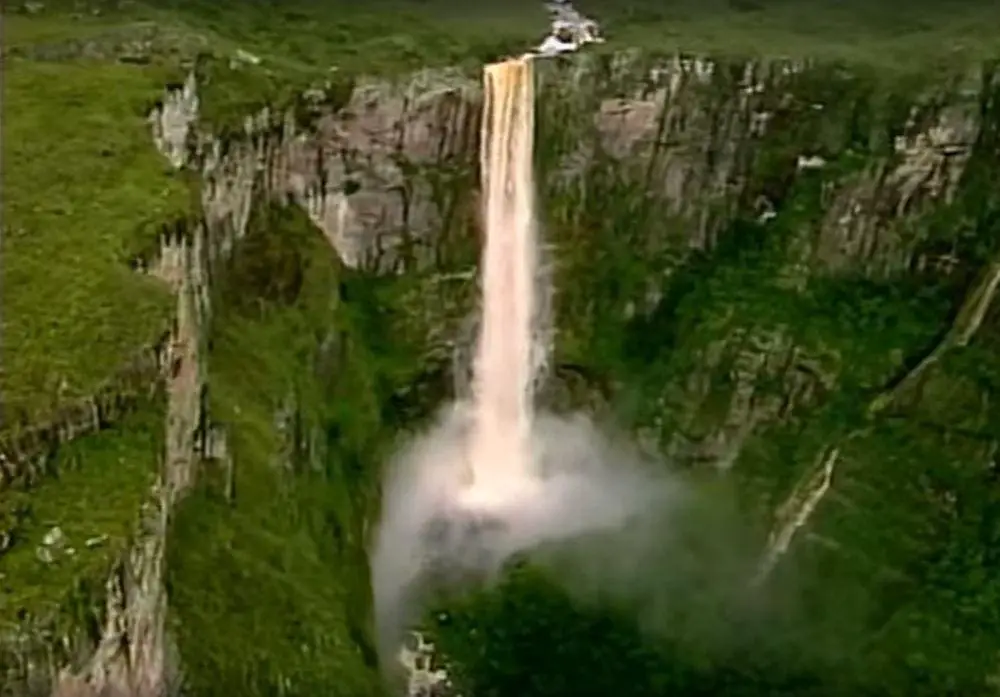
Tiago Fioreze, Wikimedia Commons / CC BY-SA 3.0 - Cachoeira da Fumaça – Bahia. Possibly the highest waterfall in Brazil. Single plunge – water has a free fall of 384 m. Seasonal.
- Aracá Falls - Amazonas, Brazil. A powerful 365 m tall fall, discovered only recently, around the year 2000.
- Caracol Falls – Rio Grande Do Sul. One of the most picturesque falls in Brasil. 130 m high fallm water falls in several tiers in a free plunge.
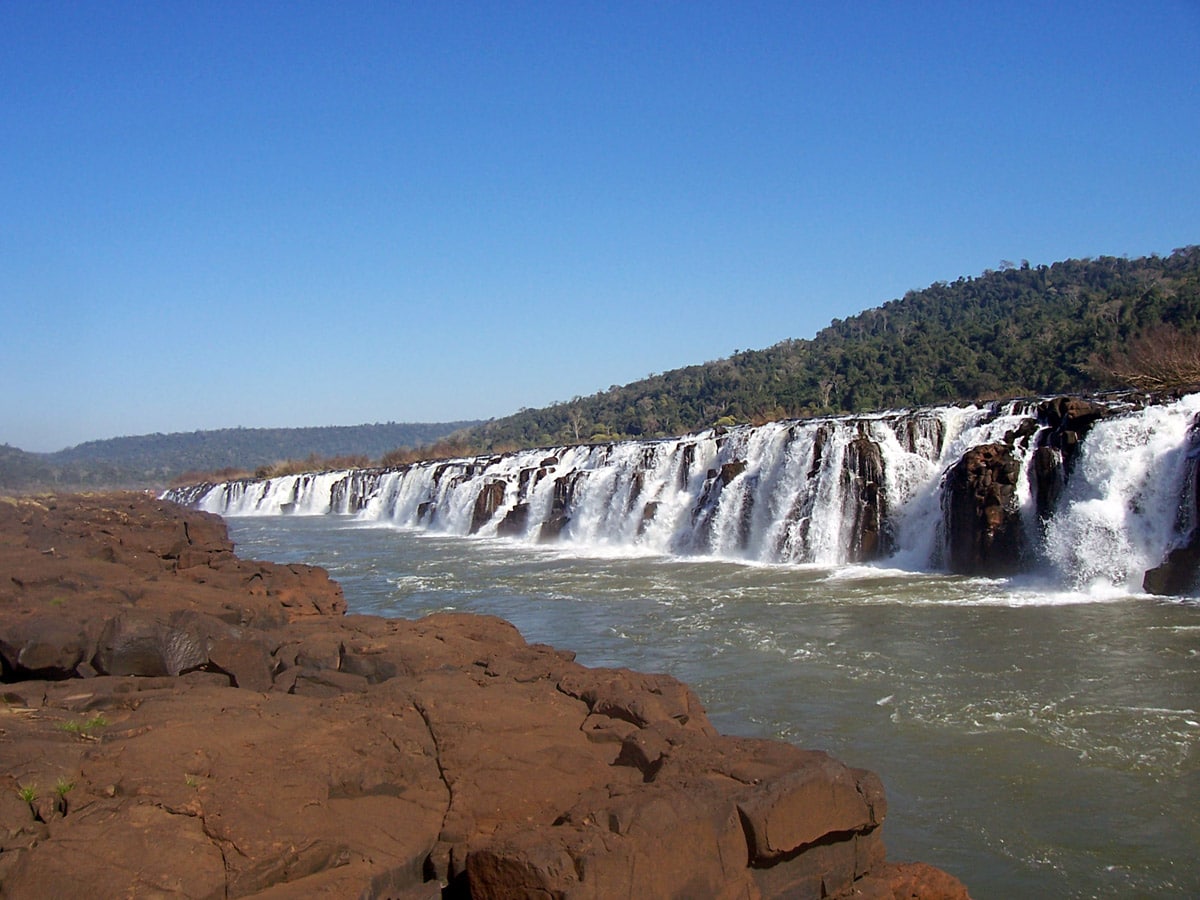
- Saltos del Moconá - Rio Grande do Sul and Argentina, Misiones. Unusual, very impressive waterfall on Uruguai River. This approximately 2 km long and 25 m tall waterfall is located in parallel to the flow direction of the river and end in the middle of stream. Practically whole waterfall is in the side of Argentina.
Ecosystems and rare species
The list below most certainly can be longer - Brazil belongs to most biodiverse countries of the world with multiple locations where unusual species of plants and animals are confined to small area.
- Sooretama Biological Reserve and Linhares Forest Reserve – Espirito Santo. The largest remaining area of North Eastern Atlantic forests. This approximately 50 000 ha large forest to large extent is virgin and belongs to most biodiverse rainforests of the world with very high degree of endemism.
- Golfinhos Bay – Fernando de Noronha Islands, Pernambuco. Unique site where almost every morning at 7:00 – 7:30 are observed 1000 – 1200 spinner dolphins (Stenella longirostris (Gray, 1828)) coming to rest before leaving for ocean.
- Lagoa Salgada - Rio de Janeiro, Brazil. Hypersaline lagoon with unique columnar carbonate stromatolites - natural formations by 19 species of cyanobacteria.
- Ilha da Queimada Grande - São Paulo. 43 ha large island with endemic snake – Golden Lancehead (Bothrops insularis). This is one of the most venomous snakes in the world – venom needs to be powerful in order to kill the only prey of snakes – birds.
Other natural landmarks
-
Lençóis Maranhenses – Maranhão. Huge area covered with sweeping sand dunes, almost without vegetation. Abundant rain creates beautiful deep blue lagoons between the dunes with fish living there.
Lençóis Maranhenses with lagoon.
Sarah and Iain / Iain and Sarah, Flickr / CC BY 2.0 - Mina da Batalha – Paraíba. Mine where the unique Paraíba tourmaline is found. This beautiful gemstone contains copper and thus is colored in amazing blue-green color not met in any other tourmaline in world (except in Nigeria).
- Saint Peter and Saint Paul Archipelago – small islands belonging to Pernambuco. The only location where the abyssal mantle is exposed above the sea level. It is also the second largest megamullion of the world – unique geological formation of seabed.
- Rocas atoll – island, belongs to Rio Grande do Norte state, the only atoll in Southwestern Atlantic ocean and one of the smallest atolls in the world.
Man made landmarks
Brazil is rather rich with prehistoric monuments - richer than it was thought some decades ago. But the best known attractions have been created over the last centuries, since the start of colonization. Country has many interesting historical towns and separate buildings and amazing monuments of modern architecture.
Archaeological monuments
Brazil is quite rich with petroglyphs - they are located in many regions around the country with many new sites in Amazon Rainforest and elsewhere discovered.
Last decades have brought to attention the existance of several ancient developed cultures in Amazon basin. For some longer time there was known Marajoara Culture in Amazon delta but since the development and spread of satellite imagery there have been found traces of densely populated and well organised cultures in Amazon basin (Geoglyphs of Acre). Most likely in future there will be made new amazing discoveries.
-
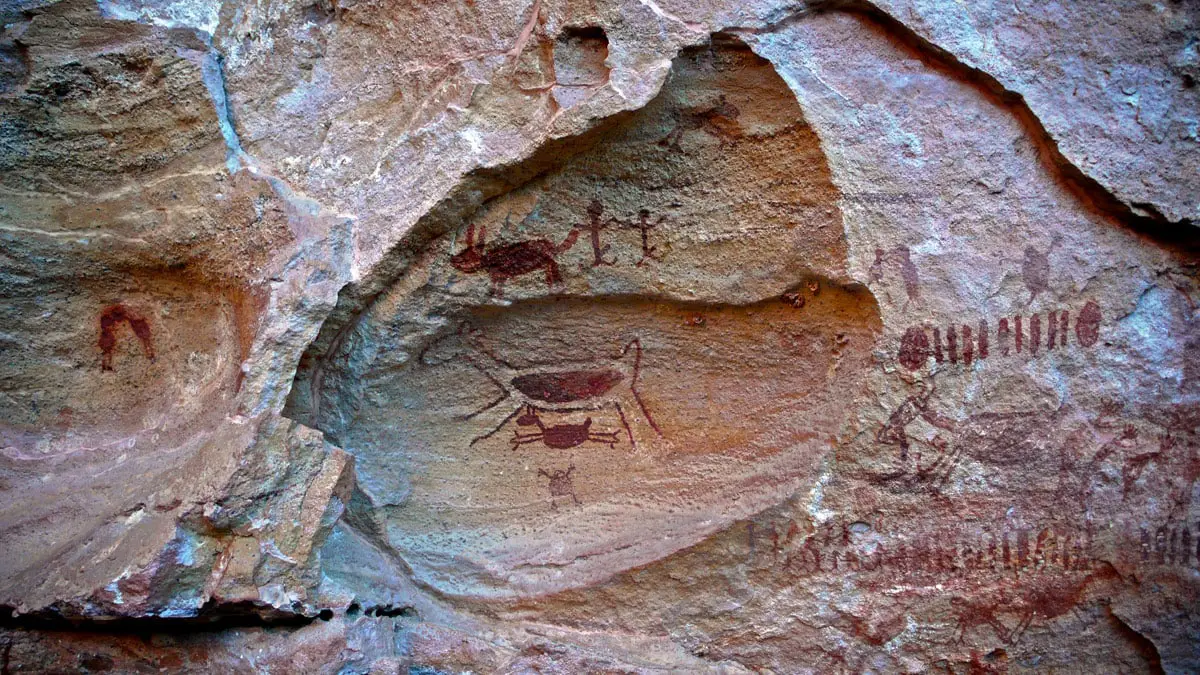
Serra da Capivara – Piauí. More than 300 archaeological sites with numerous up to 26 – 22 thousand years old (Pedra Furada shelter) rock paintings of Nordeste and Agresete cultures. Controversial carbon dating shows that people here lived even 35 – 48 thousand years ago what contradicts the theories of human arrival in Americas.
Petroglyphs - symbols of Serra da Capivara.
Marco Del Fiol, Flickr / CC BY 2.0 - Calçoene megalithic observatory - Amazon Stonehenge - Amapá, Brazil. Pre-Colombian structure - a circle marked with 127 blocks of granite, stones up to 3 metres high. Possible ancient obervatory. Area contains numerous interesting megaliths.
- Geoglyphs of Acre – Acre. In some locations where the Amazonian rainforest has been cut down there appear mysterious signs on the soil – for most part hundreds of enormous squares and circles. These might be remnants of dense habitation of this seemingly virgin land.
- Pedra Pintada - Roraima. Very impressive, overhanging 35 m tall cliff with a cave which contains 11,200 years old petroglyphs.
Urban planning monuments
Plentiful natural resources of Brazil provided a background for development of rich, beautiful cities in 16th - 18th century. Later economical downturn helped to conserve them in unchanged style and today we can enjoy many authentic, beautiful historical cities of Brazil.
Newly built capital of Brazil - Brasília - serves as a testimony to ambitions of Brazil to become significant power of the world.
-
Historic centre of Olinda – Pernambuco. One of the oldest cities in Brazil, established in 1537 and reconstructed in late 17th century. One of the largest historical city centres in Brazil with more than 20 Baroque churches and convents.
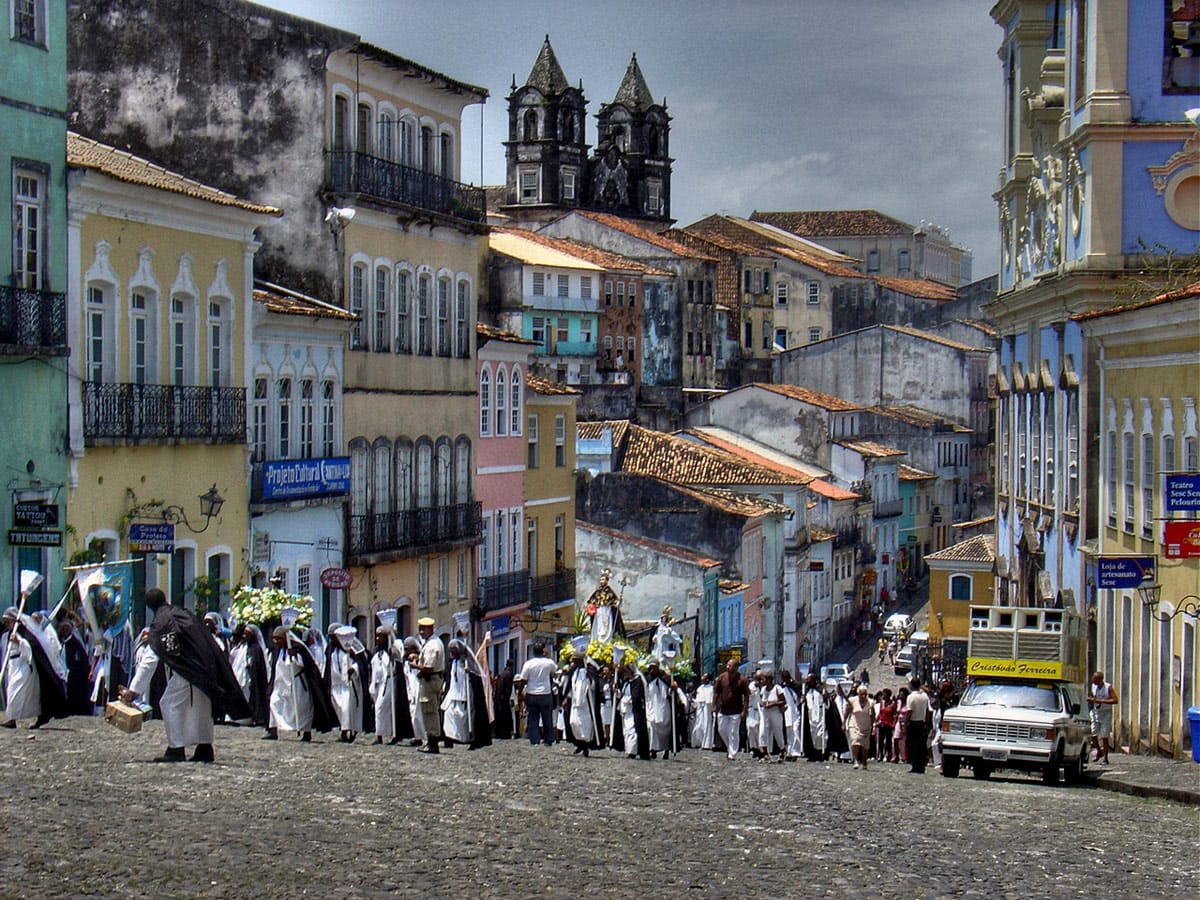
Pelourinho - historic centre of Salvador de Bahia.
José Luis Ruiz, Flickr / CC BY 2.0 - Pelourinho (Historic centre of Salvador de Bahia) – Bahia. Large historic centre of the first capital of Brazil in 1549 – 1763, built on upper side of high cliff overlooking the Bay of Todos de Santos. Old city has retained its planning from 16th century, contains numerous valuable historical buildings – churches, palaces.
- Historic centre of São Luís – Maranhão. Well preserved, charming historic centre of town established by French in 17th century, invaded by Dutch and finally colonized by Portuguese. Town has unique local style of architecture, rich with decoration.
- Historic Centre of Ouro Preto – Minas Gerais. Former colonial mining town, founded in late 17th century and renovned due to beautiful Barocco architecture and well preserved historic centre.
- Historic centre of Goiás Velho - Goiás. Monument of early Brazilian colonisation and mining from 18th – 19th century. Goiás served as a development centre of indigenous urban planning and architecture of the interior of Brazil and is well preserved up to this day. Region contains several more well preserved historic cities.
- Diamantina – Minas Gerais. Authentic town of diamond miners, built in 18th and early 19th centuries with numerous buildings in Brazilian Baroque style.
- Brasília – Distrito Federal. Capital city of Brazil with unique planning from 1956 by Lucio Costa and Oscar Niemeyer. Used expansive avenues, city is divided into functional sectors.
Palaces
The times of natural resources based prosperity created influential and rich local nobility. These families built numerous great palaces both in the cities and countryside. Brazil has also true royal and imperial palaces.
- Gustavo Capanema Palace – Rio De Janeiro. One the first large scale modernist buildings in the world, 15-floor government office building. Designed in 1935 – 1936, built in 1943.
- Paço Imperial – Rio De Janeiro. Royal palace of Brasil, built in the middle of 18th century. Initially served as seat of governors of Brazil, residence of kings and emperors of Brazil in 1808 – 1889. Built in Baroque style.
Churches
In Brazil was developed specific trend of Baroque and Rococo styles - and this style is best represented in local churches. Splendour of these buildings is hard to beat.
20th century has been represented in local architecture with magnificent, elegant and innovative church buildings.
- São Francisco Church and Convent in Salvador – Bahia. Baroque style church with exuberant interior, built in 1708 – 1755.
- Church of Saint Francis of Assisi in Ouro Preto – Minas Gerais. Beautiful Rococo style cathedral, built in 1766 – 19th century.
- Santuario de Bom Jesus de Matosinhos in Congonhas and related buildings – Minas Gerais. Beautiful, ornate Rococo style church built in 1772.
- Cathedral of Brasília – Distrito Federal. Unusual hyperboloid structure of 16 bent concrete columns with glass roof in between, built in 1970 according to design of Oscar Niemeyer.
- Rio De Janeiro Cathedral – Rio De Janeiro. Modernist building, built in 1974. 75 metres tall conical building, 96 metres in diameter, adorned with four 64 metres tall glassworks.
Other monuments of engineering, architecture and art
- Amazon Theatre – Manaus, Amazonas. Beautiful, enormous Ecclectic style opera house, built in 1885 – 1896. Developed in the jungle metropolis Manaus during the times of rubber boom, using expensive materials from while world.
- Christ the Redeemer – Rio De Janeiro. One of the most iconic statues in the world, the largest Art Deco style sculpture in the world, built in 1922 – 1931. Statue itself is 39.6 m high but it is located on the top of another landmark – the 710 metres high granite peak - Corcovado mountain. This is the highest granite dome in Brazil. Magnificent sights of the Rio de Janeiro city open from the top of mountain.
- Itaipu Dam – Paraná and Alto Paraná department, Paraguay. Largest hydropowerplant of the world by the capacity of annual production of electricity, with installed capacity of generators – 14 GW. Dam is 7.7 km long and 196 m high and belongs to largest man-made structure of the world, nuilt in 1984.
- Niterói Contemporary Art Museum – Niterói in Rio De Janeiro. Museum building of unique architecture similar to UFO, achievement of structural design. Designed by Oscar Niemeyer, built in 1996.
- Juscelino Kubitschek bridge – Distrito Federal. Suspension bridge of unique design – with three assymetrical arches, total length 1200 m. Built in 2002.


4 July 2010 Gatis Pāvils