World 🢖 Africa 🢖 Democratic Republic of the Congo
Waterfalls 🢔 Geological wonders 🢔 Categories of wonders
Wonder
Inga Falls
 In short
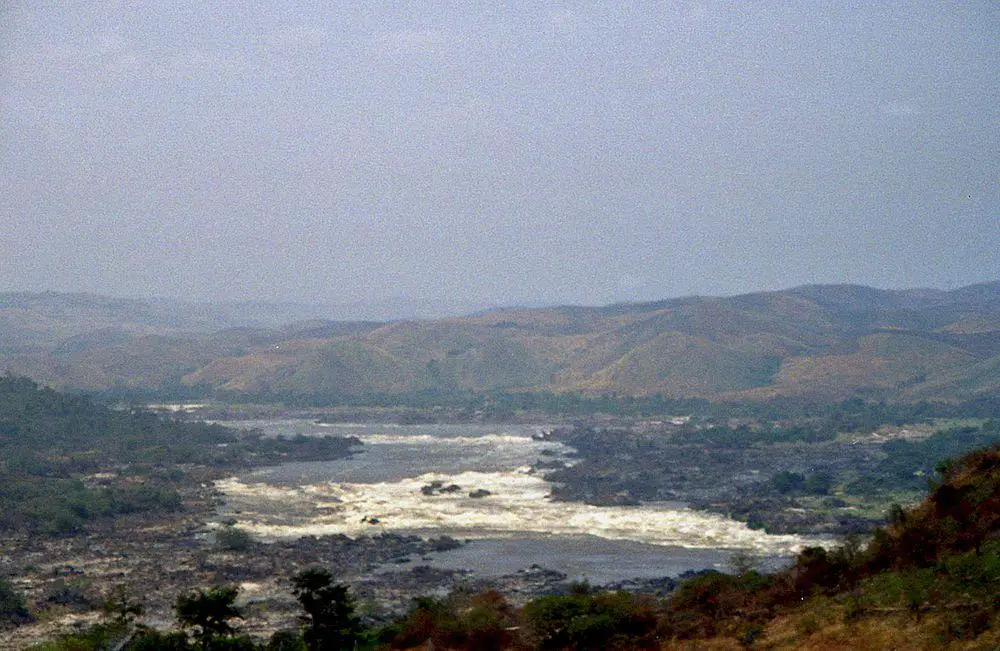
Often it is announced that the largest waterfall in the world is Inga Falls in the Democratic Republic of the Congo. This is not entirely true – Inga Falls is not a true waterfall, these are rapids falling per 96 m over a distance of 15 km. Nevertheless, this is an extraordinary natural landmark.
 46.8%
46.8%
GPS coordinates
Location, address
Map of the site
If you see this after your page is loaded completely, leafletJS files are missing.
 In detail
Giant rapids
Falls have formed in a sharp bend of the Congo River – the second largest river in the world by volume of water and the tenth longest in the world. The discharge of the river is 42,476 m³/s, and the maximum recorded volume of flow has been 70,793 m³/s. Only Amazon is more powerful – but a lot more powerful, with four-five times more water!
Well before Kinshasa Congo River becomes wide as a lake: the flow of the giant river slows down and the width reaches 23 km. This is Pool Malebo – the last halt of waters before the river has reached Crystal Mountains where have formed Livingstone Falls.
Livingstone Falls are a series of rapids between Kinshasa and Matadi. Here Congo over a distance of 350 km is passing over 32 large rapids with a total drop of 270 m. The giant river often is squeezed into an unbelievably narrow channel – sometimes even less than 260 m wide – and is meandering between the mountain ranges.
Inga Falls are a part of Livingstone Falls, the last rapids before the magnificent Yellala Falls. It is hard to tell the correct width of these falls as the width of the river throughout the rapids fluctuates from 260 m to more than 4 km. An impressive threshold of rapids exactly at a sharp bend of Congo is 3.6 km wide.
Livingstone Falls for centuries obstructed colonization of Central Africa. They were impassable with ships and boats.
No wonder – in the mighty river form more than 10 m wide whirlpools, there are countless cliffs, and the speed of the stream often reaches 50 km/h. The stream has gnawed deep in the rock – this is the deepest riverbed in the world with a known depth that reaches 220 m. There are technically deeper rivers in the world but their riverbeds have been formed by other factors, such as glaciers.
In some locations in Livingstone Falls there are underwater waterfalls, where the stream passes rock thresholds, speeds up, and falls deep in canyons invisible above the water.
Unique fish
Congo River here is unique from a biological point of view. In this giant, fast, extremely deep stream live unique fishes that have not been found anywhere else in the world. In total in the area of Livingstone Falls are known more than 300 species of fish but most likely there are many more still to be discovered.
Here have been found deepwater fishes which during their life have never seen the light. Some species of fish differ on each shore of the river – the powerful current in the middle has divided the populations and these fishes for generations have not crossed the river.
Hydroelectric plants
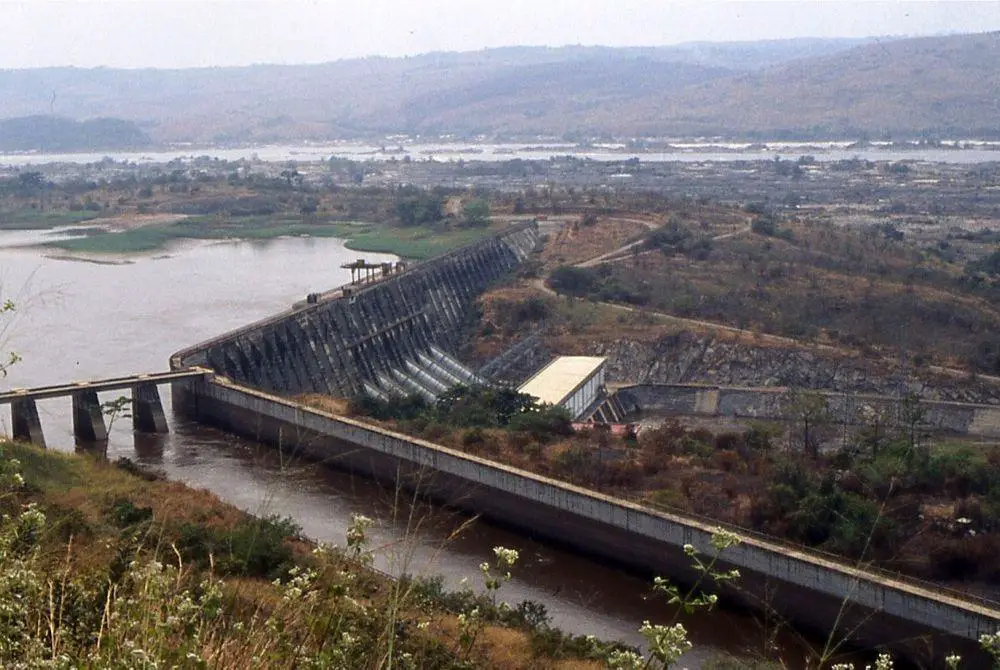
Nowadays part of the Congo stream does not reach Inga Falls. There has been made artificial channel diverting the stream to hydroelectric dams: Inga I (350 MW) and Inga II (1,424 MW). A major part of the stream still flows through the falls, securing the preservation of a natural migration path for local river fauna.
The power of the stream in Livingstone Falls theoretically could cover the electricity needs for a major part of Africa. Thanks to the even flow of Congo throughout the year there is no need to create a large artificial lake and not much land is flooded.
Thus developers are eager to continue – there are planned two more dams in Inga Falls. Inga III is planned to have output up to 3,500 MW but the "Great Inga Final Stage" – 39,000 MW. Great Inga project might be the most powerful hydropower plant in the world.
This plan is much criticized due to high costs, the potential impact on local ecology and finally – due to the extreme costs of connecting this plant to the international grid of electricity – it is assessed that these connections may cost several times more than the plants themselves.
Let’s hope that the people of Congo will find a way to preserve the magnificent Inga Falls and the whole of Livingstone Falls.
References
- The Astonishing Livingstone Falls, TravelDope.net. Accessed on November 10, 2010.
- Evolution in the Deepest River in the World, Smithsonian.com. Accessed November 17, 2010.
Linked articles
Waterfalls
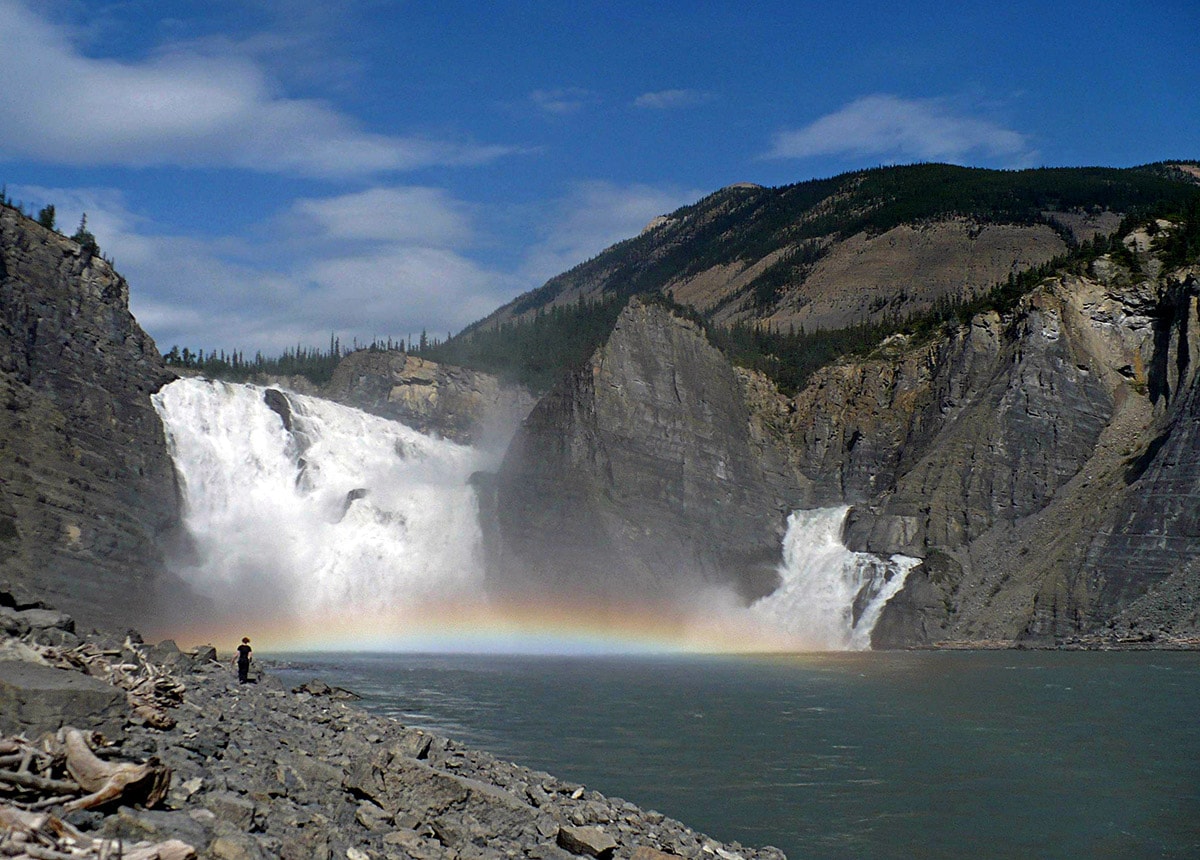
Some of the most fascinating and awe-inspiring natural monuments are waterfalls or locations where a river abruptly changes its elevation.
Wonders of Democratic Republic of the Congo
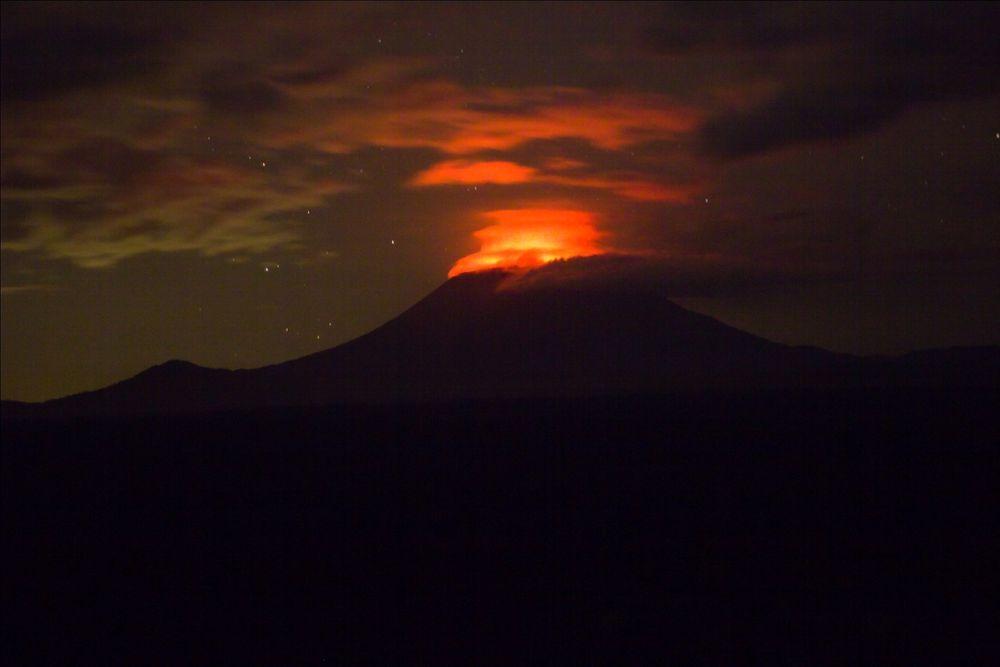
The Democratic Republic of the Congo belongs to the least explored and most promising countries of the world regarding exciting landmarks. The last decades have been unfortunate in the history of this enormous country as it has gone through a series of devastating wars and anarchy periods scaring away foreign explorers. The major part of the country is covered with impenetrable, very diverse equatorial jungle and crossed by large rivers. The jungle covers mountain ranges, the base of volcanoes, and surrounds barren inselbergs and precipices with countless high waterfalls.
Wonders of Africa
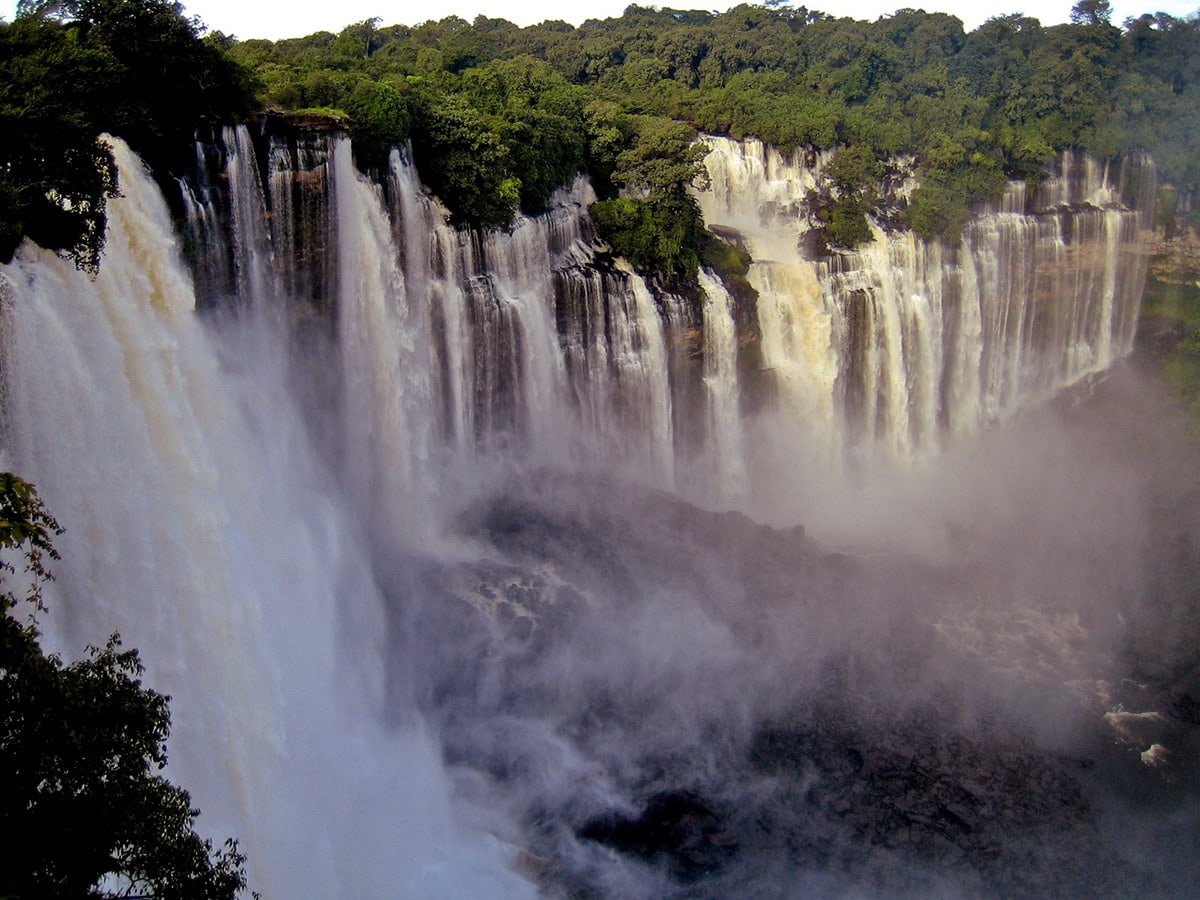
Africa has many outstanding wonders and some of the most surprising ones are the heritage of Egyptian civilization, the vernacular architecture of the Sahel region, tropical ecosystems, and others.
Recommended books
Canoeing the Congo: The First Source-to-Sea Descent of the Congo River


At 2,922 miles, the Congo is the eighth longest river and the deepest in the world, with a flow rate second only to the Amazon. Ex-Marine Phil Harwood embarked on an epic solo journey from the river’s true source in the highlands of Zambia through war-torn Central Africa. With no outside help whatsoever he faced swamps, waterfalls, man-eating crocodiles, hippos, aggressive snakes, and spider webs the size of houses.
River Monsters: True Stories of the Ones that Didn’t Get Away


Called “the greatest angling explorer of his generation” (Independent on Sunday), Jeremy Wade takes viewers where no wildlife program has gone before. Now Wade goes truly beneath the surface, disclosing full details of how he catches each species and recounting the off-camera highlights of his extraordinary life. From his arrest as a suspected spy in Southeast Asia to a plane crash in the rainforest, every page of the Wall Street Journal bestseller River Monsters is packed with adventure.