Wondermondo 🢖 World 🢖 Wonders of Australia and Oceania 🢖 Wonders of Micronesia 🢖 Wonders of the Federated States of Micronesia
Territory
Wonders of the Federated States of Micronesia
 Highlights
The most amazing wonders of the Federated States of Micronesia are:
- Archaeological heritage. These small islands are very rich with very interesting monuments of the past. Two monuments are true "stars" of world importance – Nan Madol and the Rai of Yap, but there are many more.
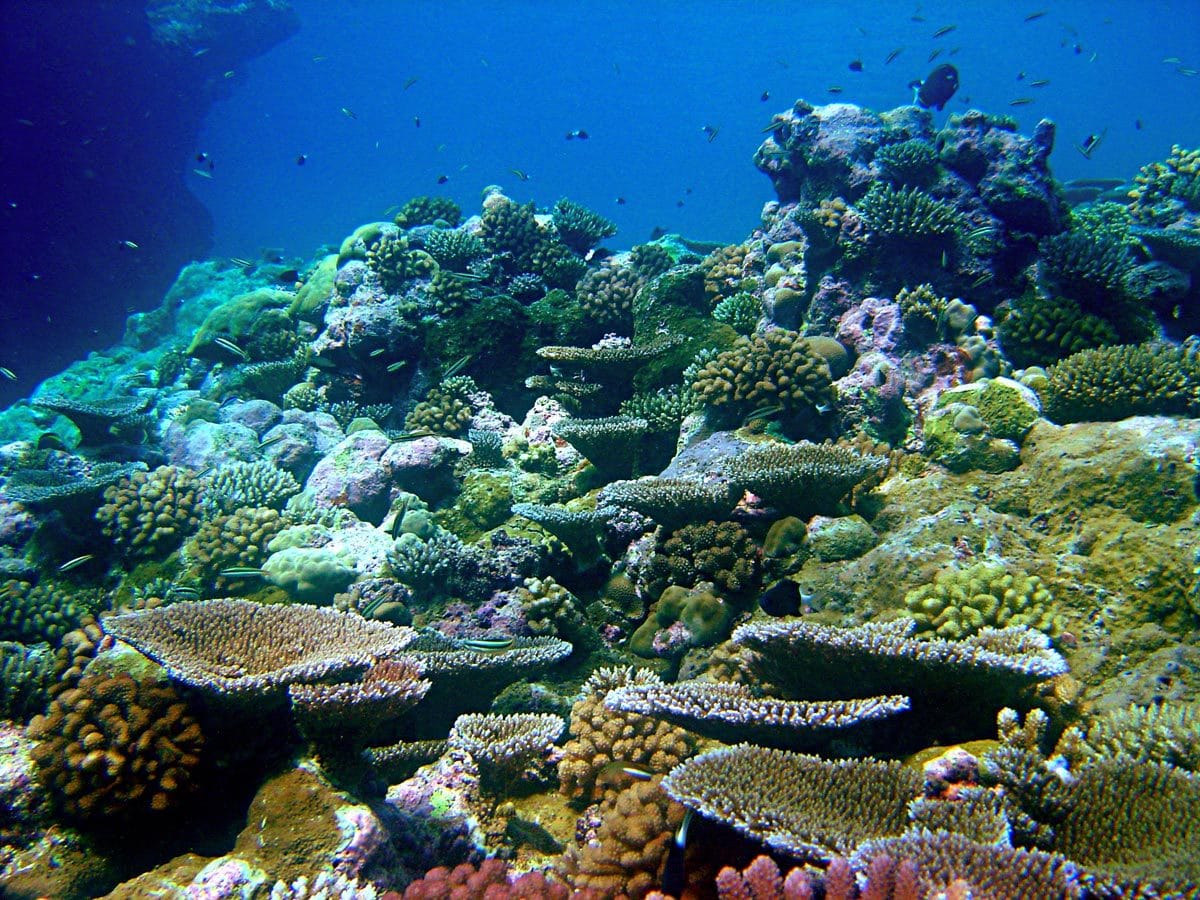
- Biodiversity above the water and below it. On the hilltops of Pohnpei and Kosrae still grow some of the lowest montane cloud forests in the world with multiple species of plants and animals found only there. Even more amazing is the underwater life with countless species of sea animals.
Map with the described wonders
If you see this after your page is loaded completely, leafletJS files are missing.
 Top 24 wonders of the Federated States of Micronesia
Geological wonders
Pohndollap (Sokehs Rock)
Pohnpei
Spectacular monolith – some 275 m tall cliff. It was used as a fortress during the uprising against the German colonial government in 1910.
Sawarlap and Sawartik Falls
Pohnpei
Two beautiful, tall waterfalls located close to each other.
Kepirohi Falls
Pohnpei
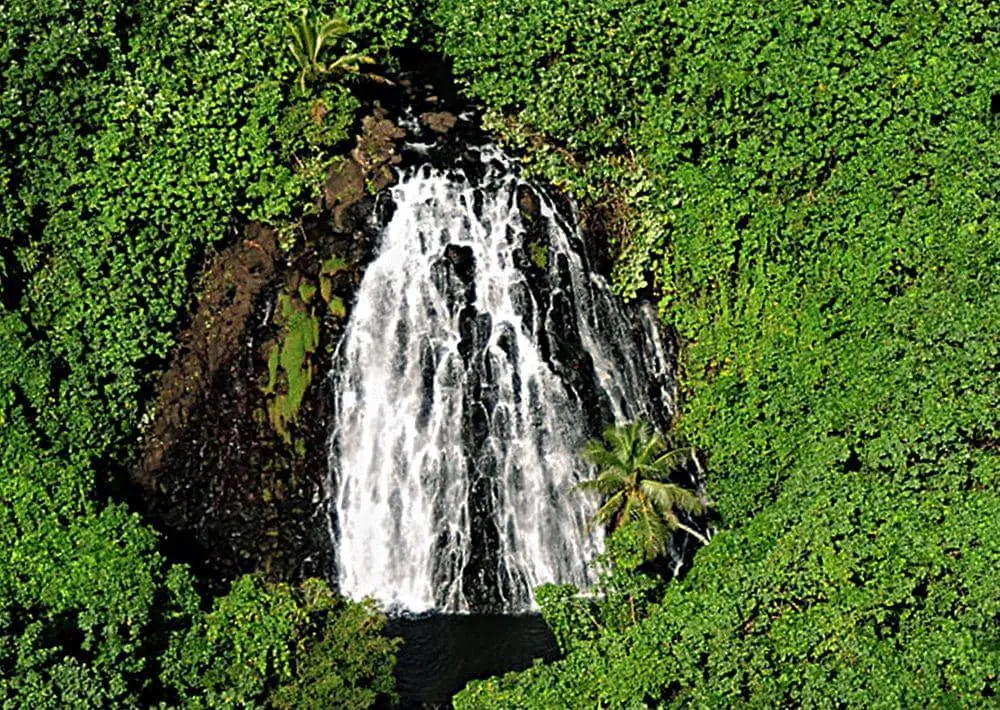
A magnificent cascade, some 15 m tall.
Tonata Guns and Caves
Chuuk
Natural caves, fortified by the Japanese in World War II and used to house large guns.
Pahntakai Falls
Pohnpei
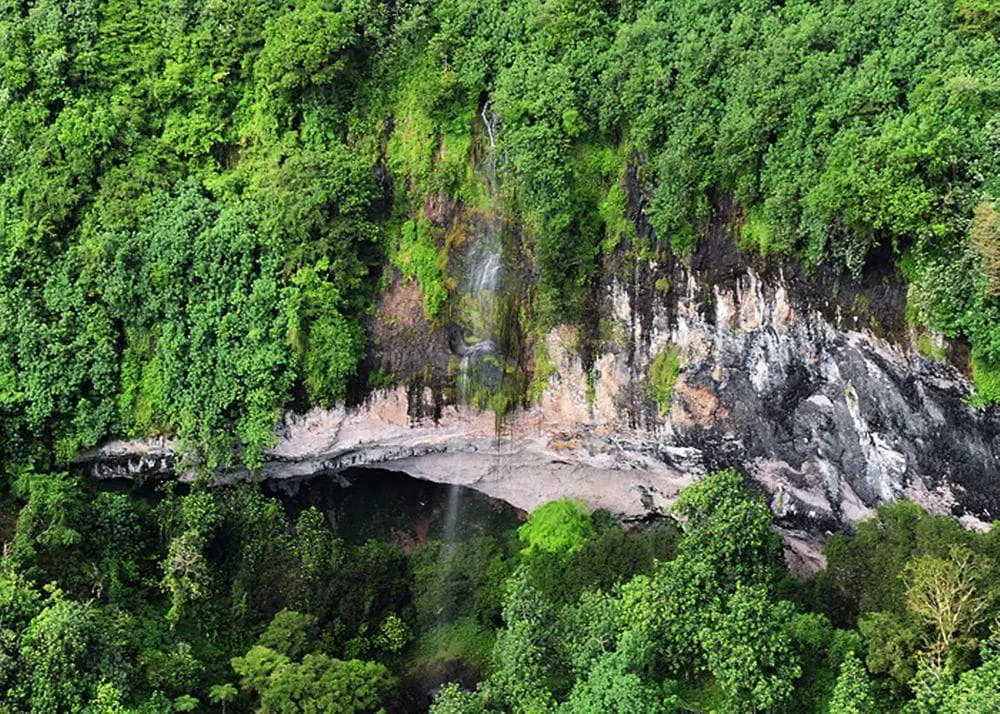
Very tall cascade – a thin stream forming more than 30 m tall falls over an overhanging cliff. Behind the falls are small caves.
Liduhduhniap Falls (Liduduhniap Waterfall)
Pohnpei
Spectacular waterfall with two cascades – approximately 4.5 m and 15 m tall. An interesting detail is a natural hollow at the base of the falls. Water in this hollow was used for the preparation of sakau – a ceremonial drink. After the rain, this stream becomes wild and may be dangerous.
Biological wonders
Kosrae montane cloud forest
Kosrae
One of the lower elevation cloud forests in the world, starting already at the height of 450 m. Contains numerous endemic species of plants and animals found only here.
Sacred Lasialap Eel Pond (Pwuodoi Eel Pond)
Pohnpei
A site with a unique tradition – a pond where large, tame eels live. It is forbidden to harm these fishes and tourists can admire how some local people call the eels and keep them in their hands.
Pohnpei montane cloud forest
Pohnpei
One of the lower elevation cloud forests in the world, starting already at the height of 450 m. Here are numerous endemic species of plants and animals found only here. One of them – the beautiful palm Clinostigma ponapensis – forms pure stands.
Mount Winipat (Winipot, Uinipot)
Chuuk
Unique tropical forest with endemic species of plants and animals. The forest is dominated by Chuuk Poisontree (Semecarpus kraemeri) and only here lives a Teardrop White-eye (Rukia ruki) – a bird that depends on poisontree. Here lives also the Chuuk Islands Giant Millipede – a 15.5 cm long millipede and several more plants found only here (Schefflera kraemeri, Semecarpus kraemeri, Randia carolinensis).
Archaeological wonders
Nan Madol
Pohnpei
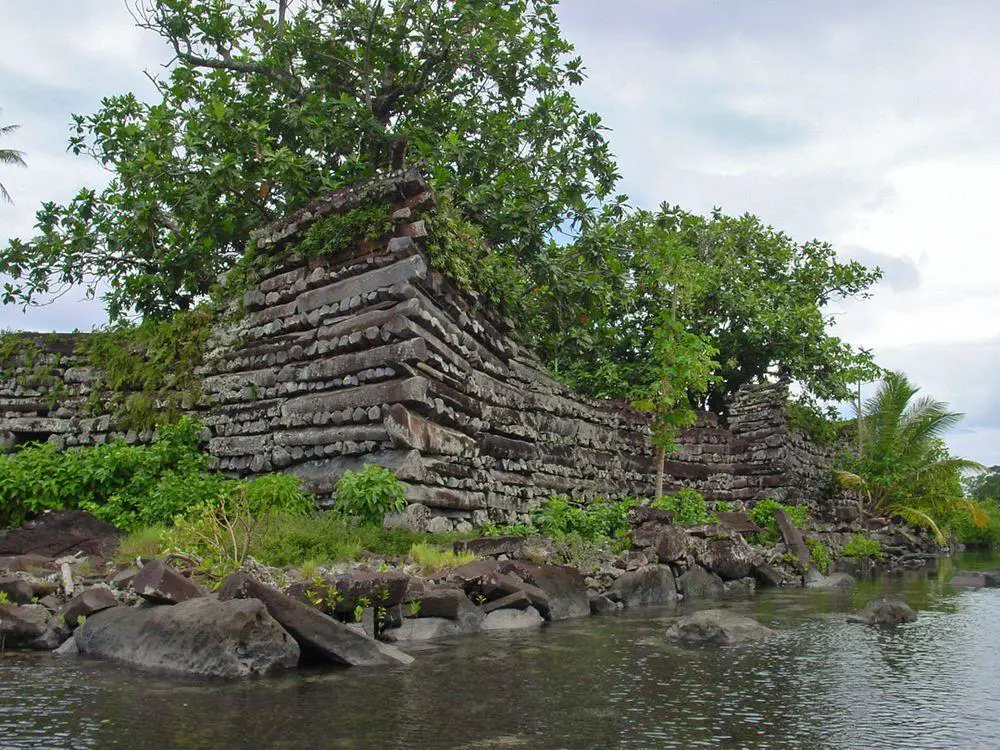
Unique archaeological monument in this part of the world – ruins of a prehistoric city. Consists of nearly 100 artificial islets with massive stone walls, with the largest stones weighing up to 50 tons. The capital of the Saudeleur dynasty. The megalithic structures were built in the 12th – 13th century and inhabited until the early 14th century.
Lelu ruins (Leluh)
Kosrae
The former capital of Kosrae. It developed sometime around 1400 AD and was inhabited until the coming of Europeans in the 19th century when some 1,500 people lived in the city. This large island city now has ruins of more than 100 walled enclosures made of stone, royal burial compounds, and shrines.
Pohnpaid petroglyphs
Pohnpei
A rich petroglyph find with more than 750 carved drawings and symbols. Part of the petroglyphs is on a large cliff, and part (in a different style) – on the nearby boulders. It is possible that the oldest petroglyphs here were made sometime around 0 AD.
Tonachau petroglyphs
Chuuk
At the foot of this legendary mountain – the abode of God Souwoniras and his son – in basalt cliff have been etched numerous petroglyphs.
Finol Tokosra stone statues
Kosrae
A group of large stones shaped like fish (manta rays), turtles, and geometric figures. Also on the southern coast of Kosrae has been found a large slab of basalt that might be an ancient statue that is similar to the statues of Rapa Nui. There are stories about large statues that existed in Kosrae in earlier times.
Safonfok
Kosrae
Site of an ancient village. On this site was developed an industry of coral fishhooks.
Likinlulem
Kosrae
Site of an ancient royal village in the southwest of Kosrae. Remnants of stone walls.
Dinay Village site
Yap
Abandoned historical village with numerous remnants of stone structures, and terraces. This village is located inland.
Menka
Kosrae
An archaeological site that is considered to be an important religious site with the ruins of diverse structures.
Architecture wonders
Rai of Yap
Yap
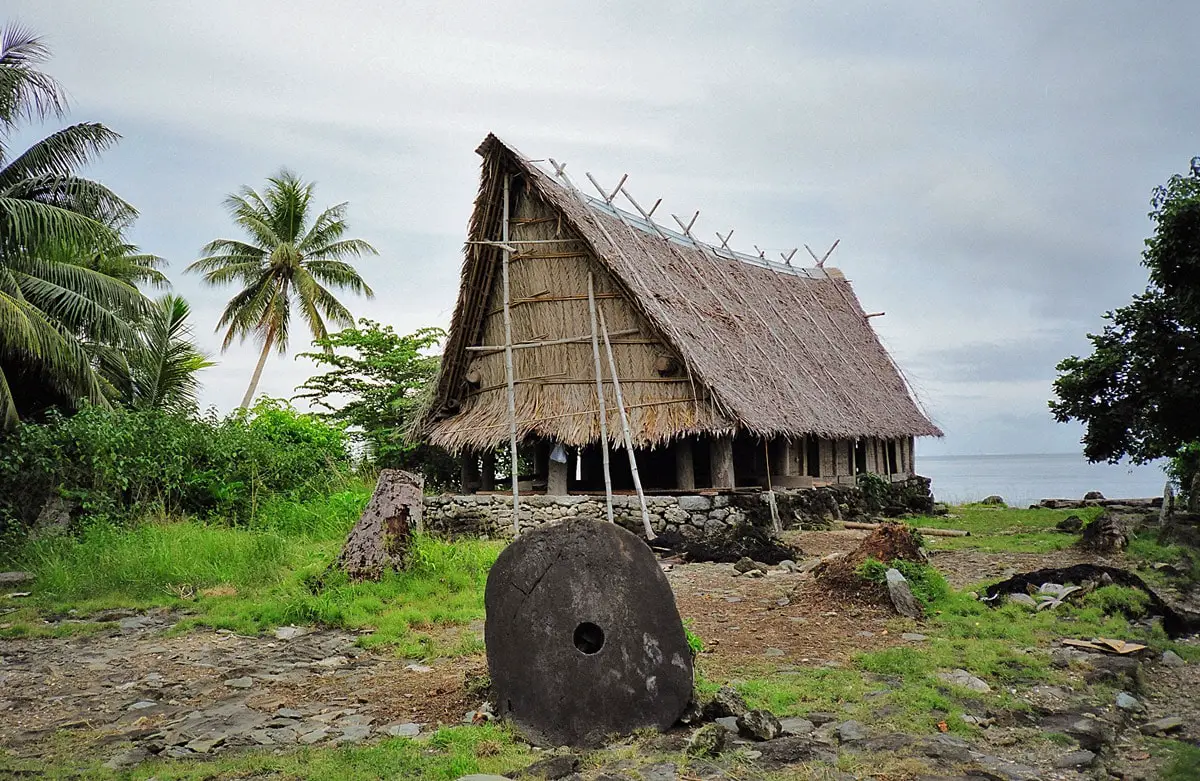
Limestone discs with a hole in the middle, and a diameter of up to 3 meters, used as money over the last 500 years. In 1929 there were registered 13,281 stone discs all over the island, now many have been looted and some thousands remain. The largest "coins" are on Rumung Island – one coin here has a diameter of 3.6 m.
Truk Lagoon (Chuuk Lagoon)
Chuuk
One of the largest ship graveyards in the world. In 1944 here were bombed and sunk 60 Japanese ships and 275 airplanes.
Pingelap
Pohnpei
On this small island live 250 people with their own language and cultural traditions. Many people on this island have a rare disease – achromatopsia – they are color blind.
Ancient footpaths of Yap
Yap
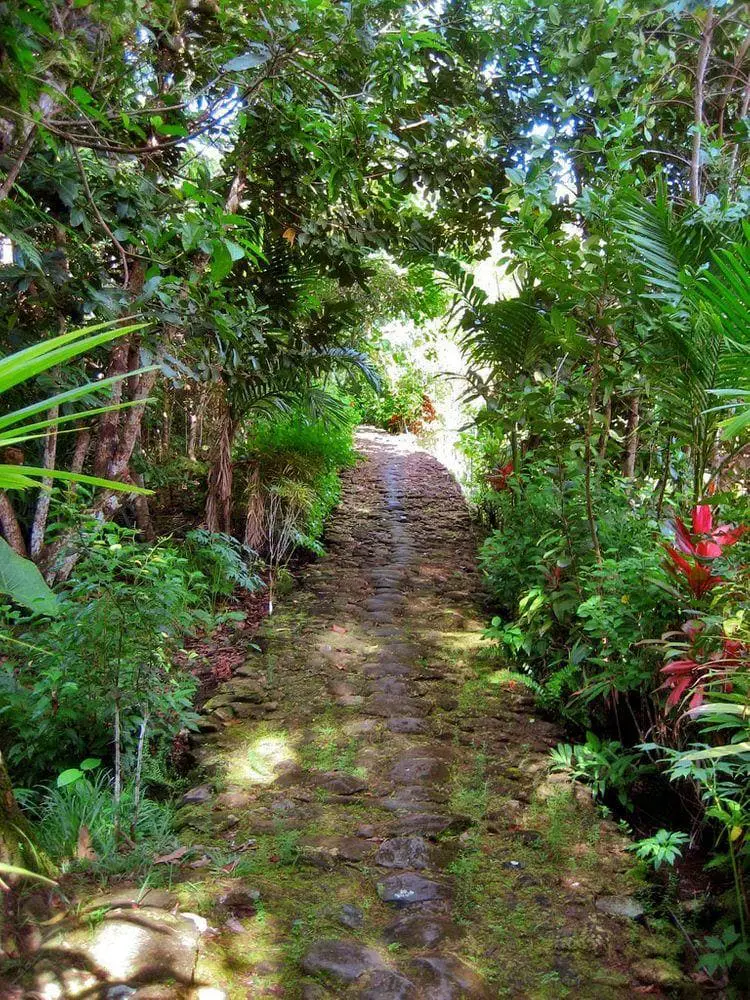
The villages of Yap island are connected by a network of ancient footpaths. Paths are laid with stones and are slightly elevated above the surrounding ground. These footpaths have been well preserved over the centuries and often are beautified with flowers and decorative shrubs.
Bechiyal Meeting House
Yap
Old, very large meeting house that has been built in a characteristic local style. There are more structures in the traditional style on the island but Rebhiel rural house might be the most interesting one.
 Recommended books
Micronesian Blues


Micronesian Blues tells the true story of former L.A. street cop Bryan Vila’s hilarious road to cross-cultural enlightenment as a police chief in the far Pacific islands of Micronesia.
Micronesia and Palau (Other Places Travel Guide)


Micronesia and Palau have long been known to diving enthusiasts for some of the most intriguing and spectacular dive spots on earth. Yet as the reputation of these islands spread, more travelers are looking to escape the modern Western world and become transported to a calmer, slower pace of life. The writers of this guide all lived, worked, and played on the islands which they write about. First-hand knowledge, cultural insight, and personal recommendations allow visitors to feel like locals while enjoying the indisputable beauty of these islands and people.
wow..this place look really beautiful
I would love to see it all with my own eyes one day!