
World 🢖 Asia 🢖 India 🢖 Jammu and Kashmir
Buddhist shrines 🢔 Religious architecture 🢔 Architectural wonders 🢔 Categories of wonders
Wonder
Saspol Caves
 In short
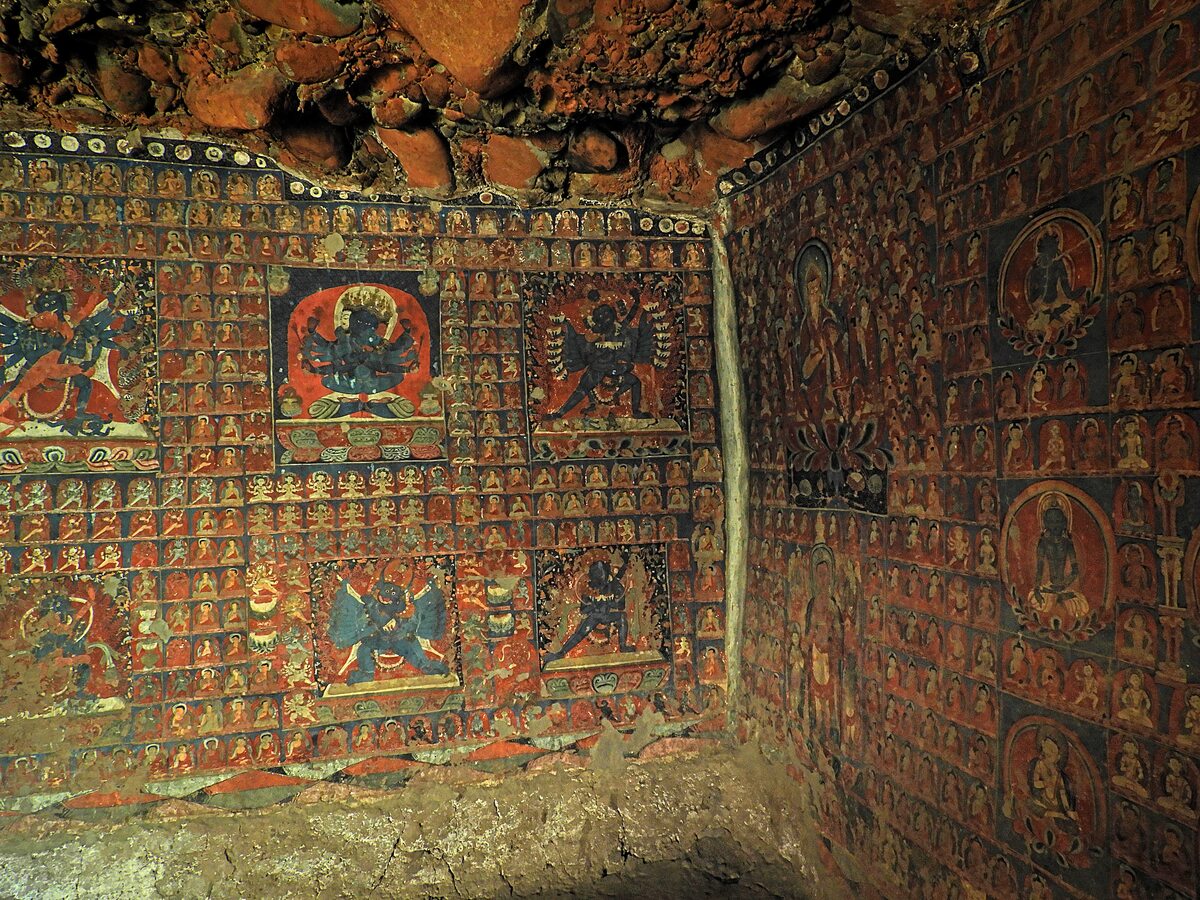
Jammu Kashmir contains amazing monuments of Tibetan medieval culture and some of the most interesting ones are located in the Indus valley around Saspol village. Right in the village are located Saspol Caves – amazing rock-cut temples. Four of these caves are richly adorned with paintings of the Buddhist pantheon from the 13th – 15th century AD, representing a fusion of Indian and Tibetan Buddhist art.
 41.3%
41.3%
GPS coordinates
Location, address
Alternate names
Age
Religion
Map of the site
If you see this after your page is loaded completely, leafletJS files are missing.
 In detail
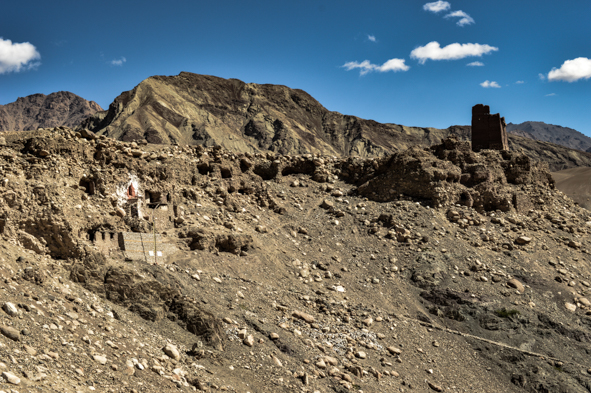
Caves are formed in conglomerate rock on a cliff towering to the southwest of the village. On top of this rock, there are remnants of an ancient fort. Part of the facade wall of caves has been reinforced with a wall of boulders.
There opens a wide, beautiful view of the Indus valley from the caves.
The interior of caves is simple – the ceiling, for the most part, has been left without changes, with large boulders perched in the conglomerate. The walls though are plastered with clay and covered with bright-colored paintings. Paintings consist of a large amount of smaller miniatures showing the many deities of the Buddhist pantheon.
Caves have rather simple planning, there have not been used columns as it is usual in Central and Southern Indian cave temples. Some caves basically are just shelters.
Entrance in the main temple – Cave 2 – is painted with orange color. Earlier it was hard to access, now there are made stairs. Paintings in Cave 1 (counted from the west) are bleached. Cave 3 is the upper part of the two-storied cave. Cave 4 is located higher than the others.
Caves have been shaped in the 13th – 15th century AD by the followers of the Tibetan Buddhist school Drikung Kagyu, focusing on meditative practice. This school of Buddhism is prominent in Ladakh up to this day while in Tibet it has been replaced by other schools long ago.
An interesting feature of paintings is some miniatures showing Hevajra – one of ishta-devas (final achievement of personal meditation, fully enlightened being) and Samvara, guardian deity. In some cases, there is drawn two-handed (in the case of Samvara – four-armed) form of these deities, in some – twelve-armed form. These are two parallel lineages in the perception of this deity, a meeting of Indian and Tibetan traditions.
Surroundings of Saspol have numerous other monuments of history including large boulders with ancient petroglyphs.
References
- The Caves of Saspol, booklet with images, 2006. Accessed in 16 May 2010.
- Indian Archaeology, 1981 – 82 – a review, New Delhi, 1982.
- Saspol – photo gallery, Raoul Kieffer’s Travel Book, accessed in 11th July 2018.
Saspol Caves are included in the following article:
Linked articles
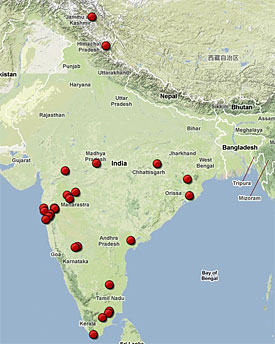
Wonders of India
India is the seventh-largest country in the world by area, and, naturally, such a large area contains a huge amount of exciting attractions…
Wondermondo considers that India is the second richest center of architectural heritage in the world after Europe and maybe no single country in the world can match it in this respect.
Buddhist shrines
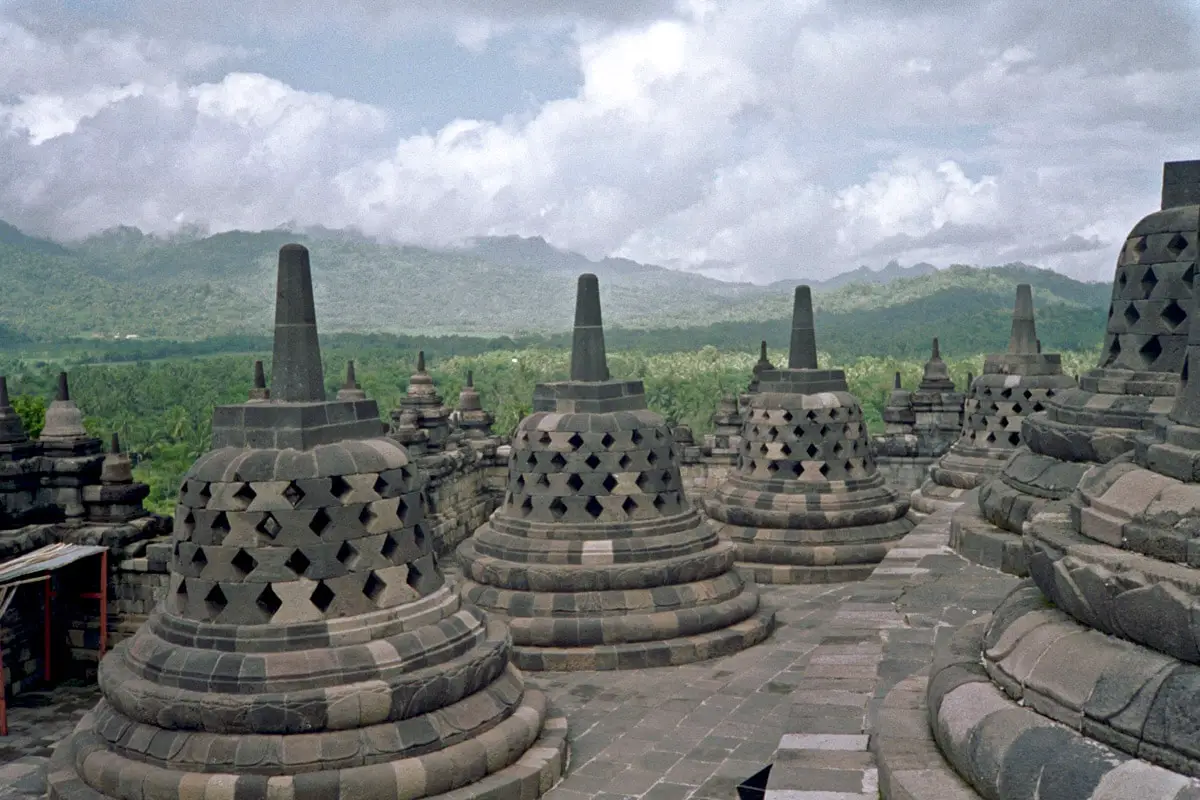
Buddhism is one of the world religions and at the same time is a spiritual philosophy with diverse traditions, beliefs, and practices. There exists a rich tradition of architecture expressed in Buddhist temples and monasteries.
Rock-cut architecture and sculptures
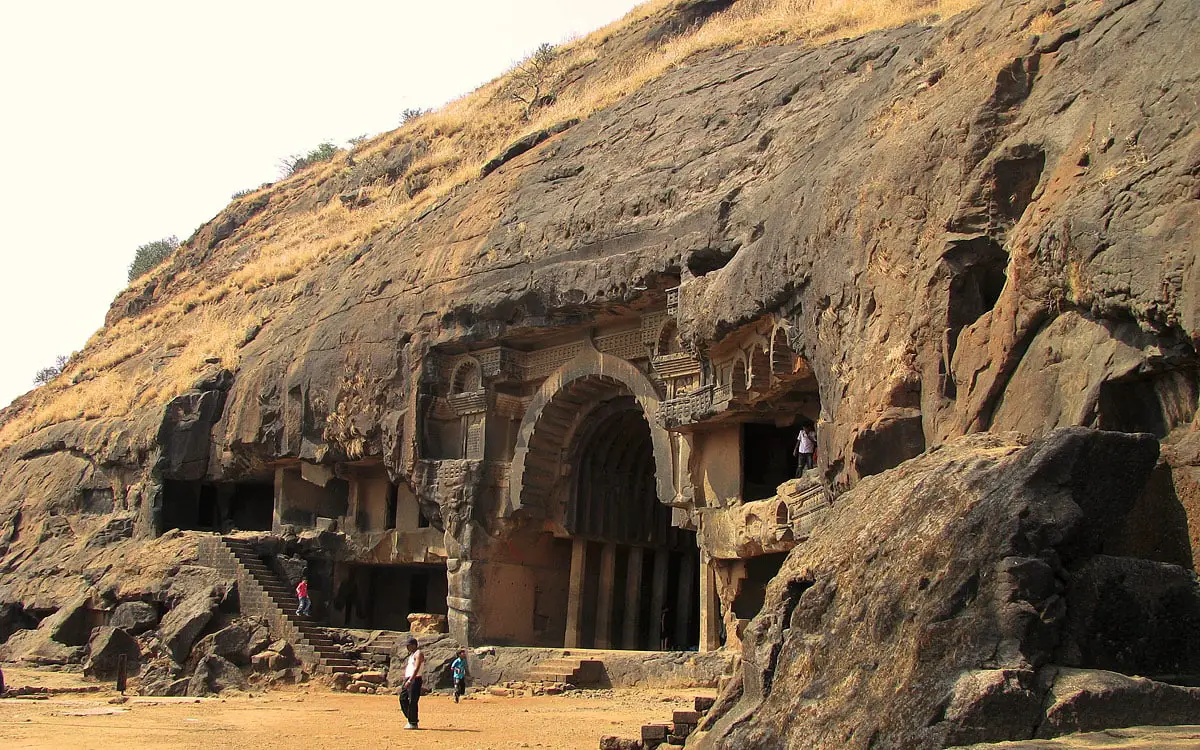
Rock-cut architecture is a very ancient form of architecture – the oldest structures are more than 5 thousand years old. The resistivity of the natural stone and the constant climate inside these structures has preserved many art values around the world.
Recommended books
India Unveiled: Spirit, Tradition, People


This is the one book you need to understand the spirit of India. Internationally acclaimed as the best book of its type on India, this sixth expanded, revised edition of the multi-award-winning book India Unveiled: Spirit, Tradition, People by Robert Arnett truly reveals the diversity and sacredness of the oldest continuously living civilization on earth.
India: A Sacred Geography


A spiritual history of the world’s most religiously complex and diverse society, from one of Harvard’s most respected scholars.