
Wondermondo 🢖 World 🢖 Wonders of South America 🢖 Wonders of Guyana
Territory
Wonders of Guyana
 Highlights
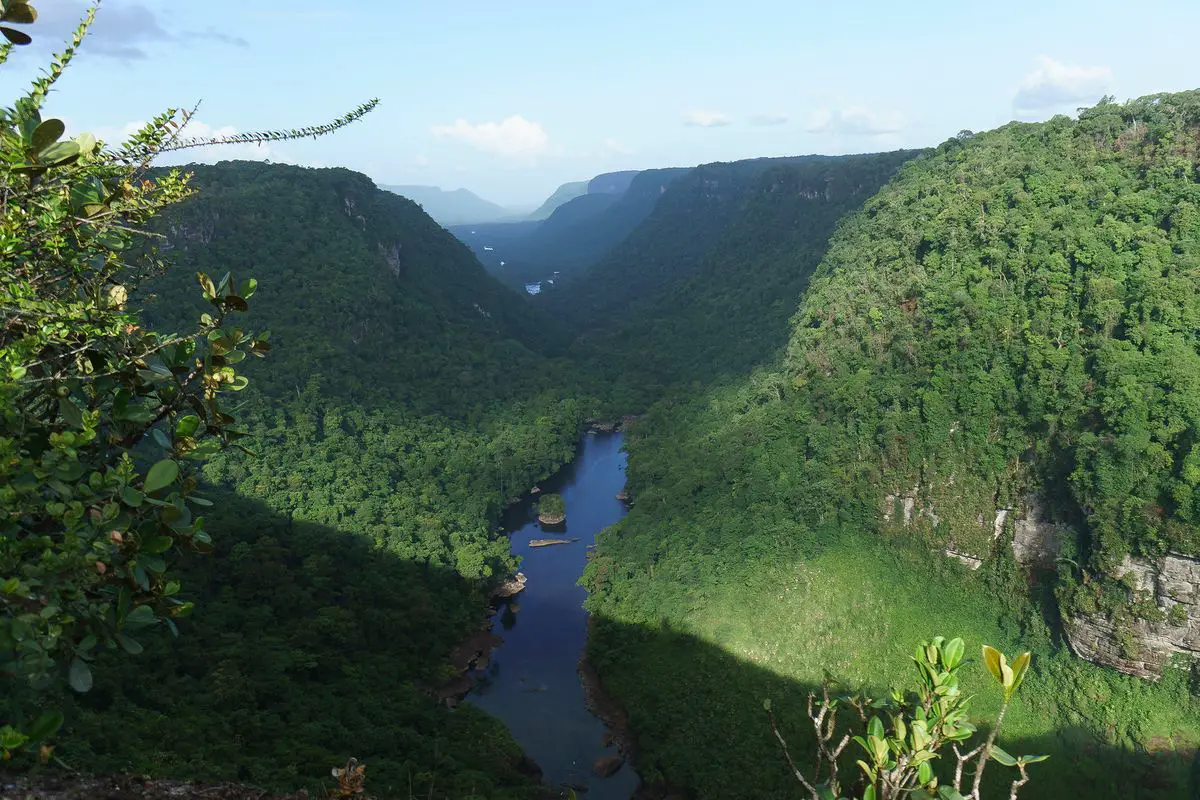
In the future Guyana may bring many positive surprises – this country is little explored and may hide unique natural wonders unknown to the people. For the most part, Guyana consists of unspoiled nature – wast expanses of tropical forests, savanna, mountains.
It is also possible that in remote parts of the country there are interesting archaeological monuments still to be discovered. Over the last decades, there have been found numerous sites with petroglyphs.
Map with the described wonders of Guyana
If you see this after your page is loaded completely, leafletJS files are missing.
 Articles about Guyana
10 major waterfalls in Guyana
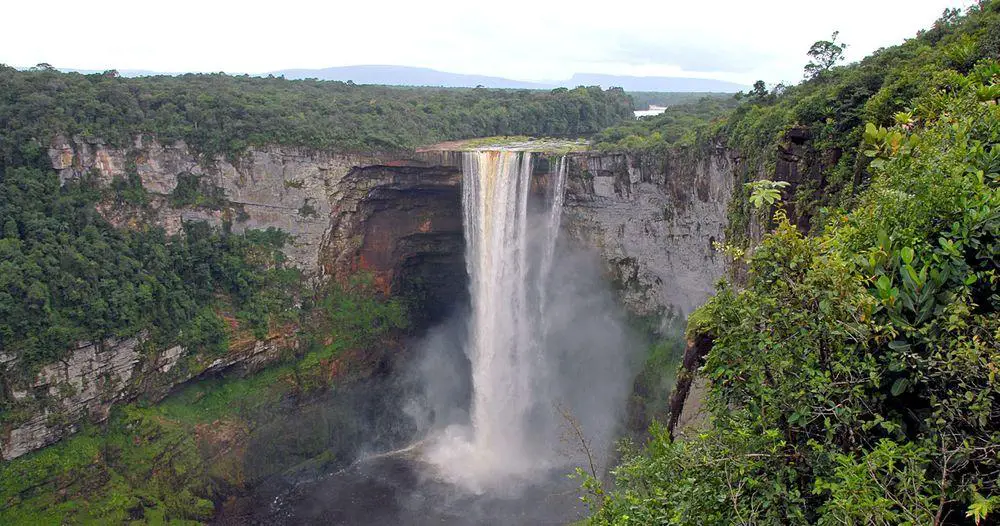
This list includes 10 enormous waterfalls of Guyana. Wondermondo can not assert that these are the largest falls in this country – but each of these falls is very impressive!
Waterfalls of Guyana – the list
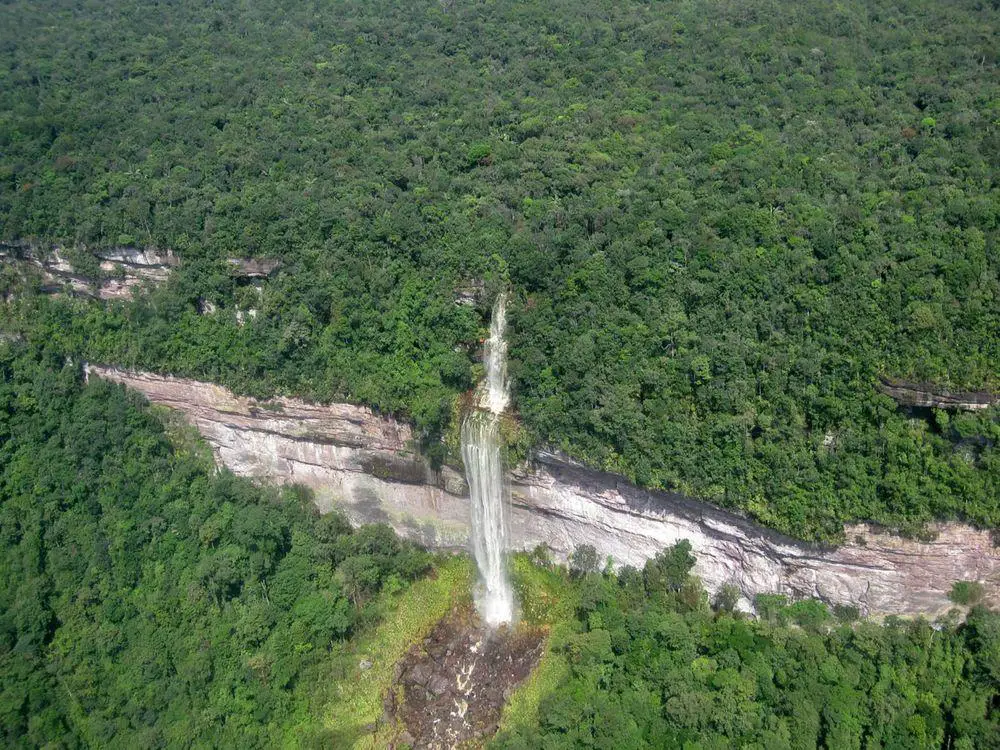
Table with some 70 impressive waterfalls of Guyana. It is very far from being complete, e.g. here are not included the countless rapids, such as the magnificent King Edward VII Falls. But, nevertheless – one of the best sources of information about the waterfalls of Guyana!
Top 22 wonders of Guyana
Geological wonders
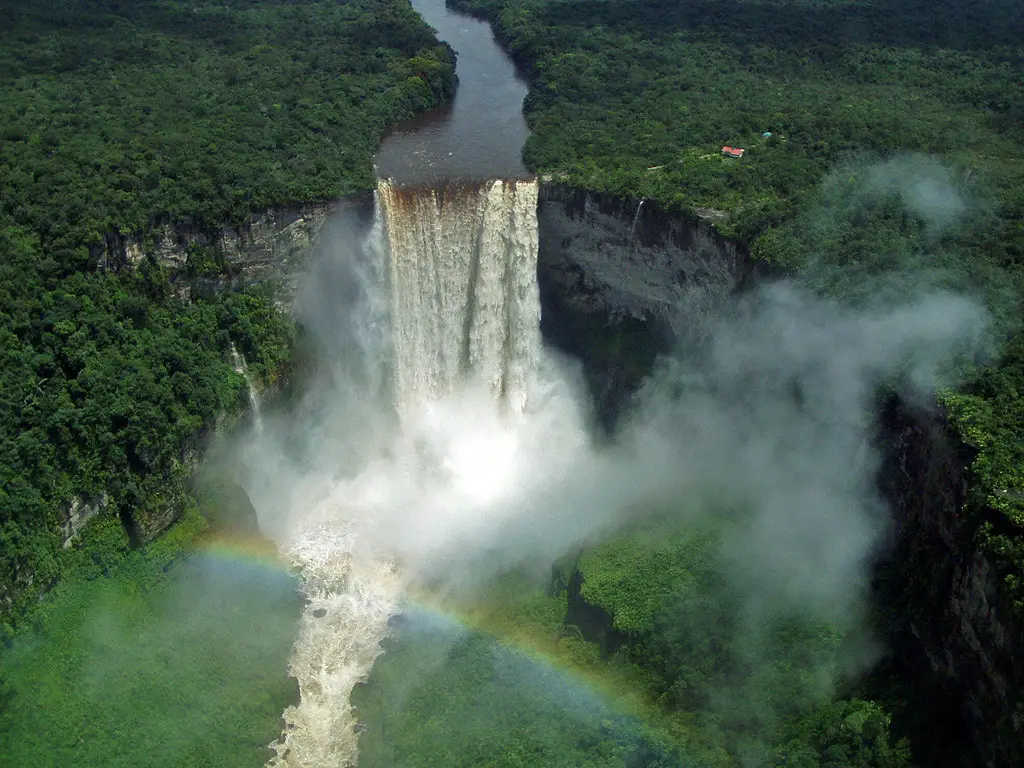
Kaieteur Falls
Potaro-Siparuni
One of the most spectacular and powerful waterfalls in the world, combining a very high volume of water and a large height of fall. 226 m high free fall on Potaro River, total height – 251 m, volume up to 660 cubic meters per second.
Mount Roraima
Cuyuni-Mazaruni, also in Brazil and Venezuela
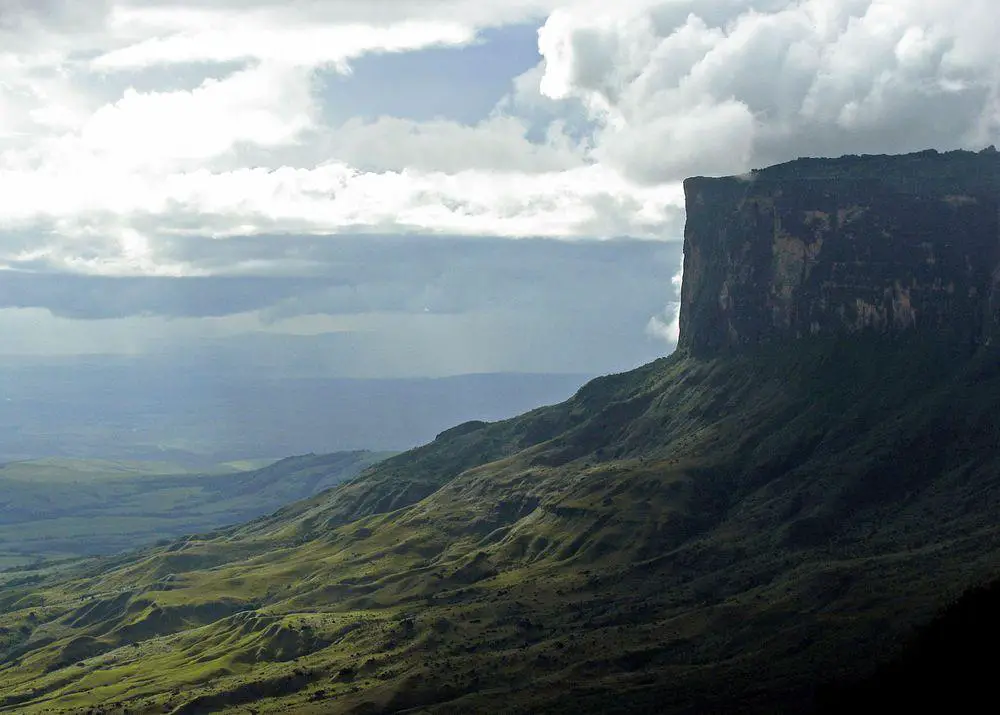
The famous table-mountains in this part of the world have near-unique karst formations in quartzite. Over the many millions of years, it has been eroded by water, creating countless very interesting formations. Roraima is up to 2.8 km high.
Oshi Falls (King George VI Falls)
Cuyuni-Mazaruni
Very impressive, 214 m high waterfall with a single plunge. A large amount of water.
Kumerau Falls (Kumarau Falls)
Cuyuni-Mazaruni
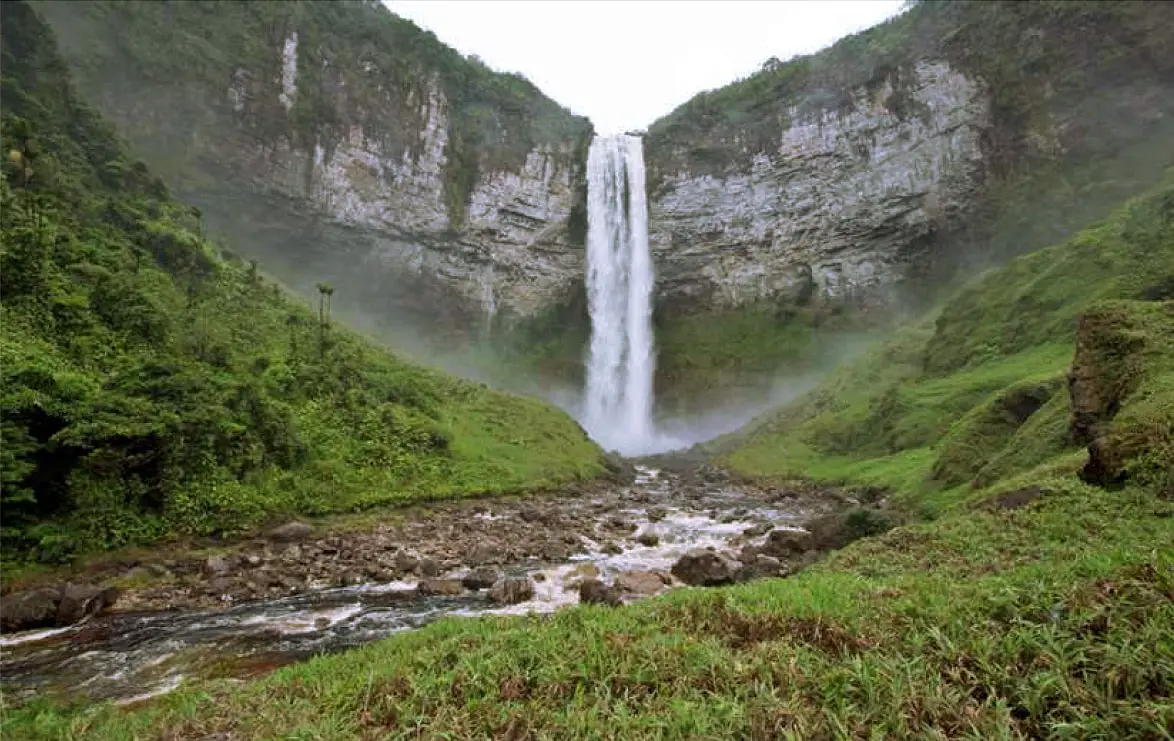
190 m high and 60 m wide plunge, one of the most impressive waterfalls in the country.
Amaila Falls
Potaro-Siparuni
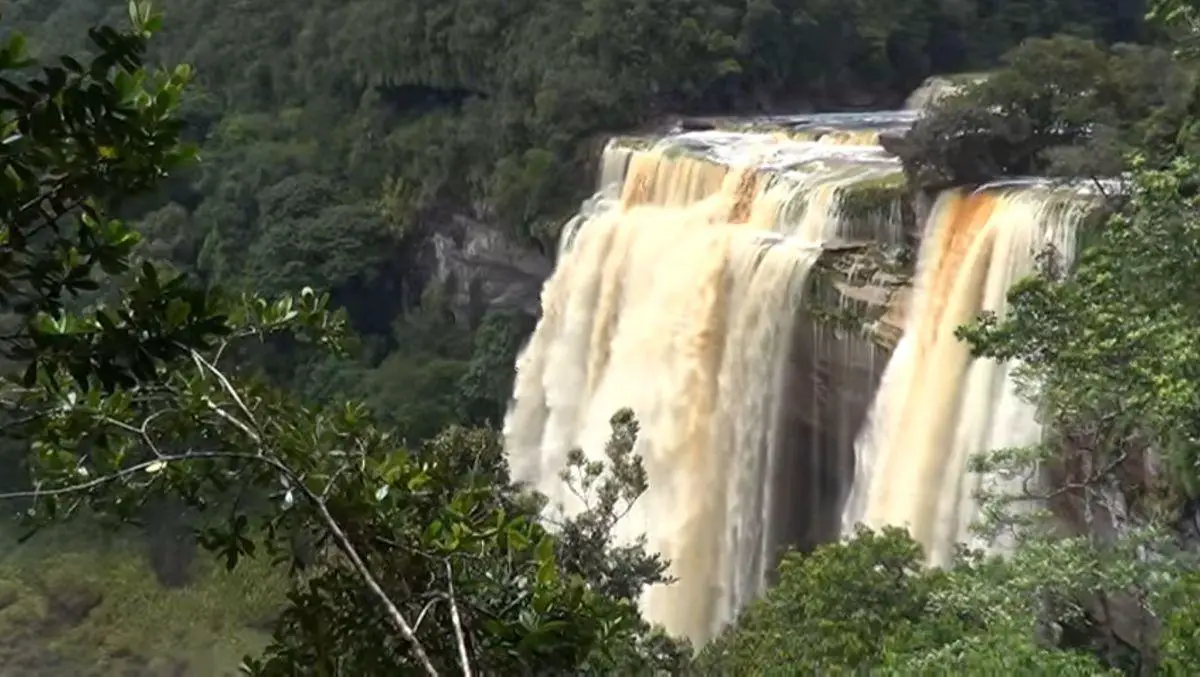
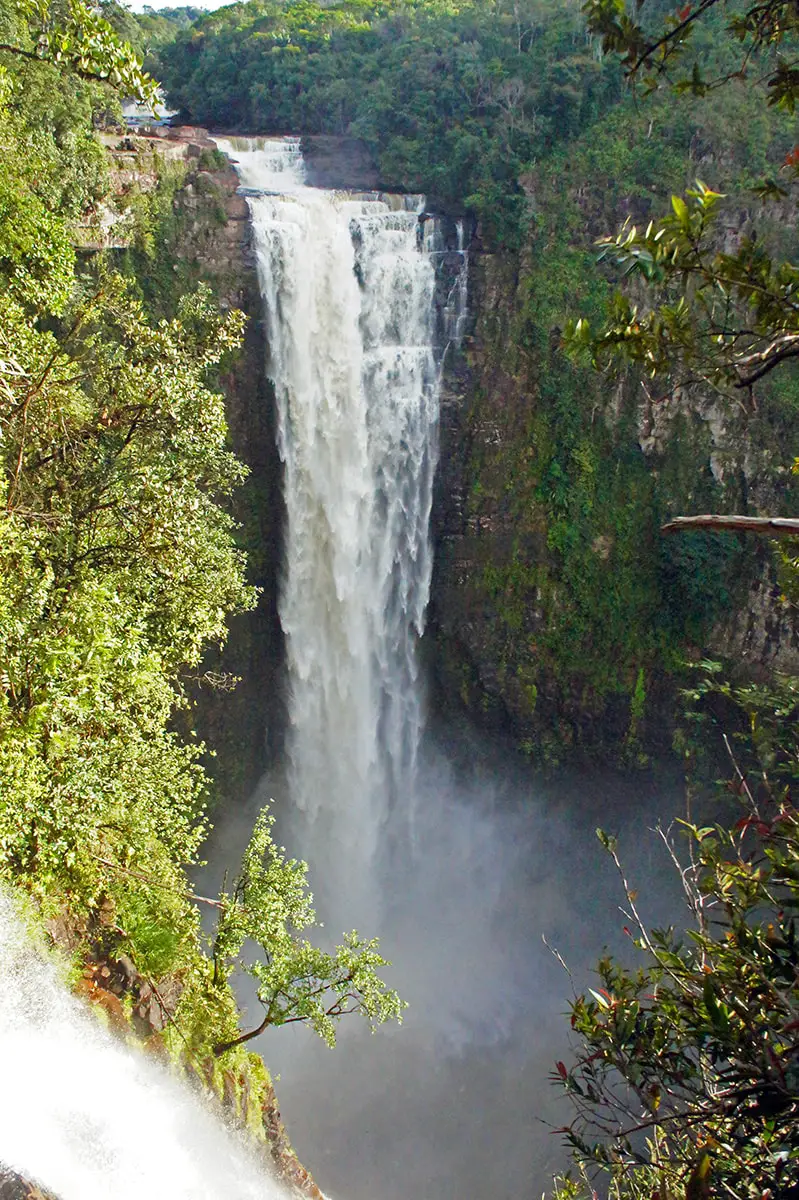
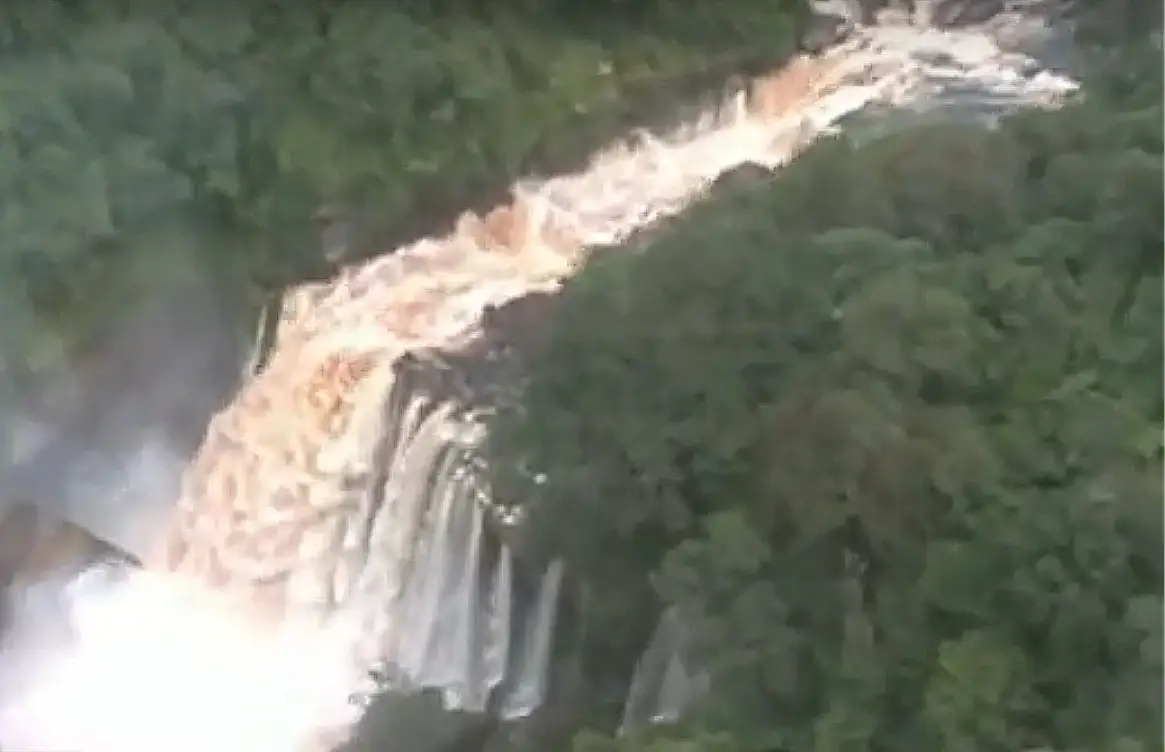
Impressive chain of falls on Kuribrong River. The total fall over a 3.5 km distance is approximately 365 m. The largest plunge is 60 m high, falls have formed an impressive gorge.
Ayanganna mountain
Cuyuni-Mazaruni
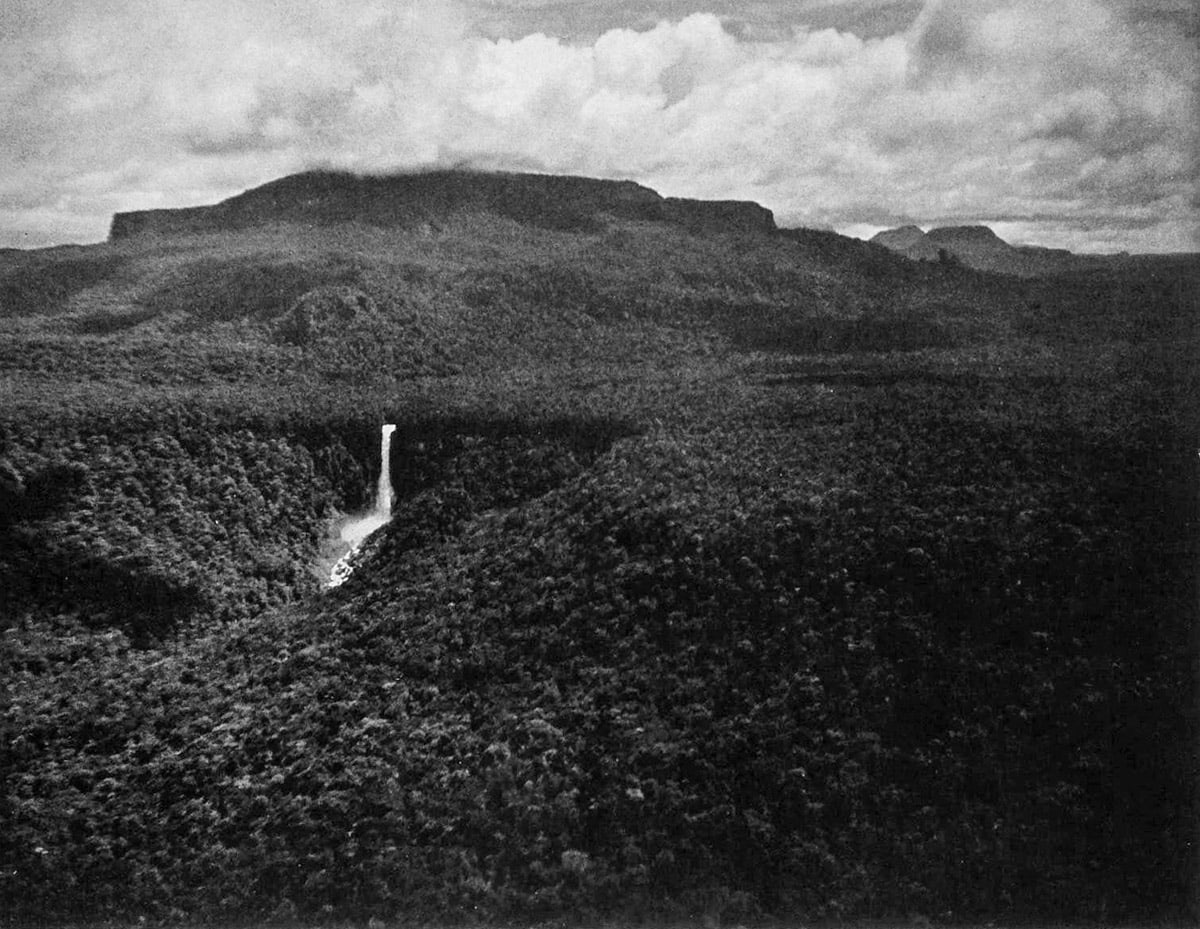
Impressive tepui – high plateau with steep sides.
Orinduik Falls
Potaro-Siparuni
One of the known falls in Guyana, some 25 m tall and more than 150 m wide. Waterfall has formed on jasper.
Aruwai Falls
Cuyuni-Mazaruni
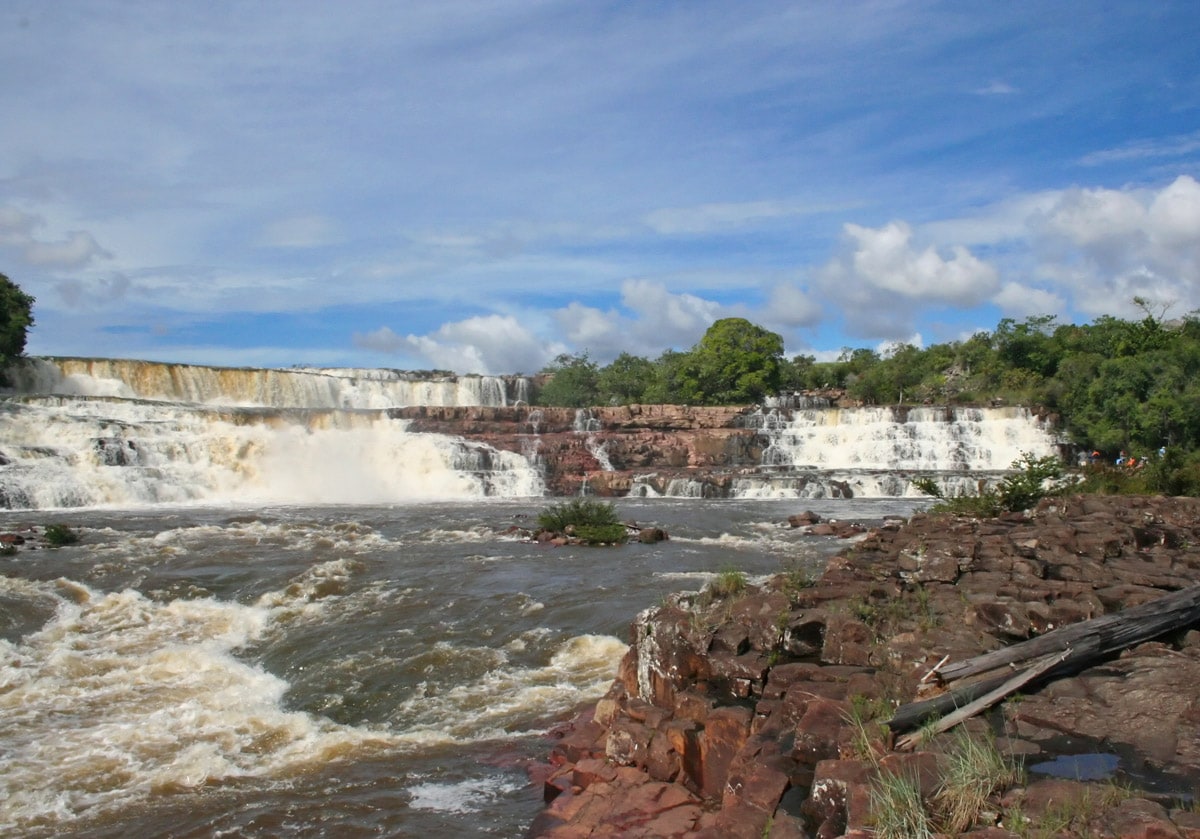
Series of rapids and waterfalls over the distance of some 2 km of Mazaruni River. Total height is some 60 m, width exceeds 500 m.
Biological wonders
Iwokrama Forest
Potaro-Siparuni
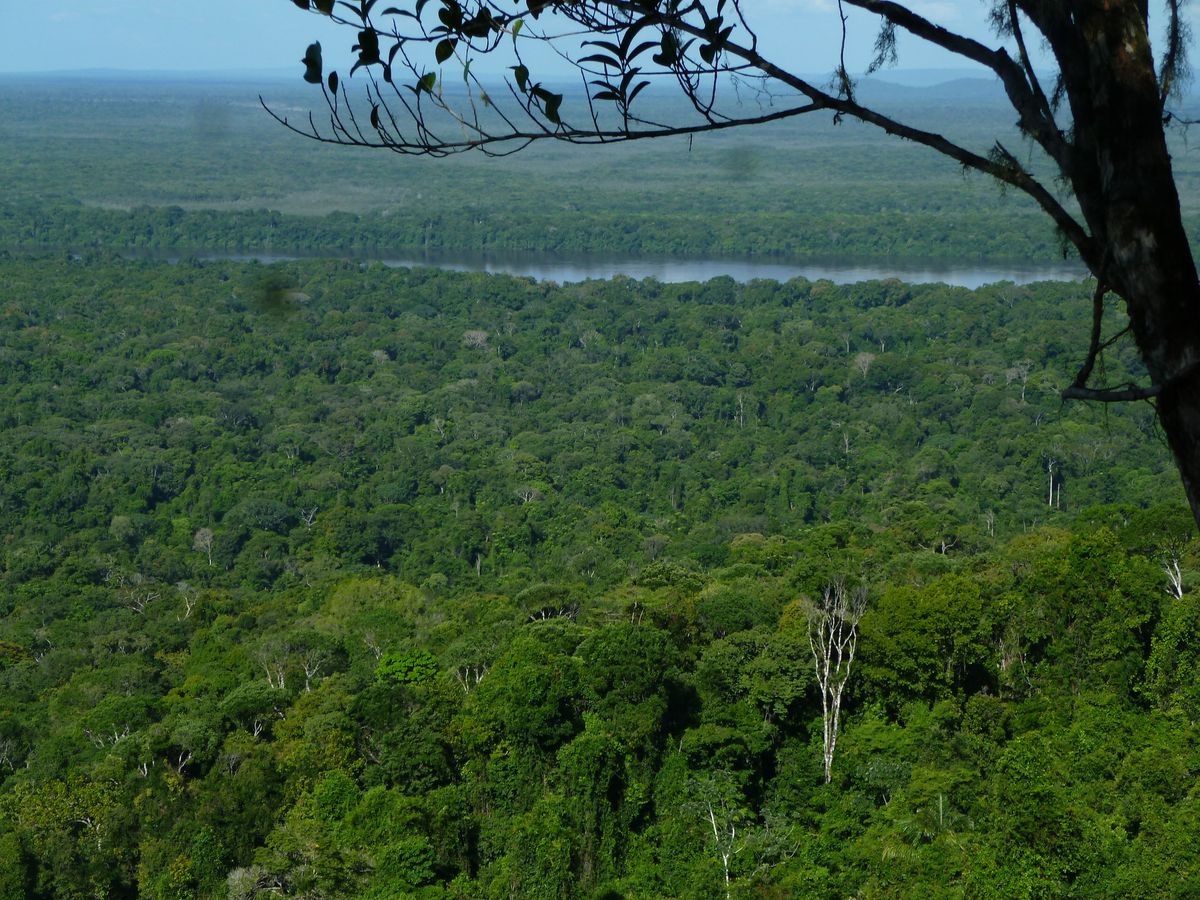
One of the last pristine tropical forests in the world, 3 710 km² large, dissected by one road. The highest diversity of fish species (known more than 420 species) and bat species (known 90 species) in the world.
Eastern Kanuku Mountains
Upper Takutu-Upper Essequibo
Little explored mountains that are covered with tropical forests, up to 850 m high. Extremely high biodiversity, including the world’s highest diversity of bats in a single locality (31 species).
Merume Mountains, central part
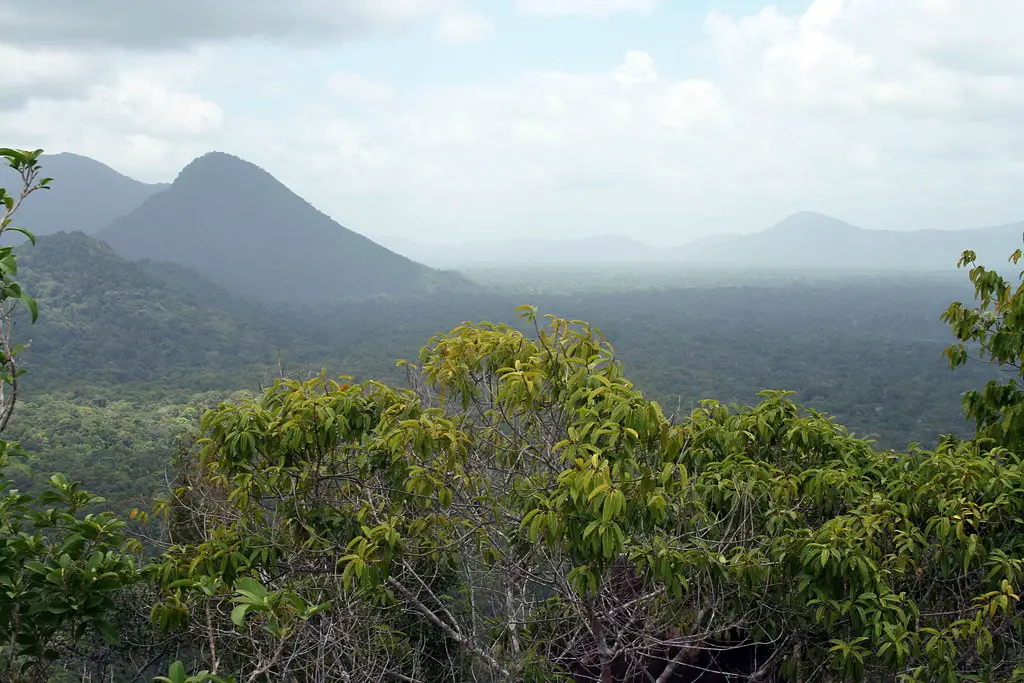
Cuyuni-Mazaruni
Jungle-covered mountains. One of the few places in the world not accessed by people yet. The last serious attempt to reach these mountains took place in 1992.
Shell Beach, Guyana
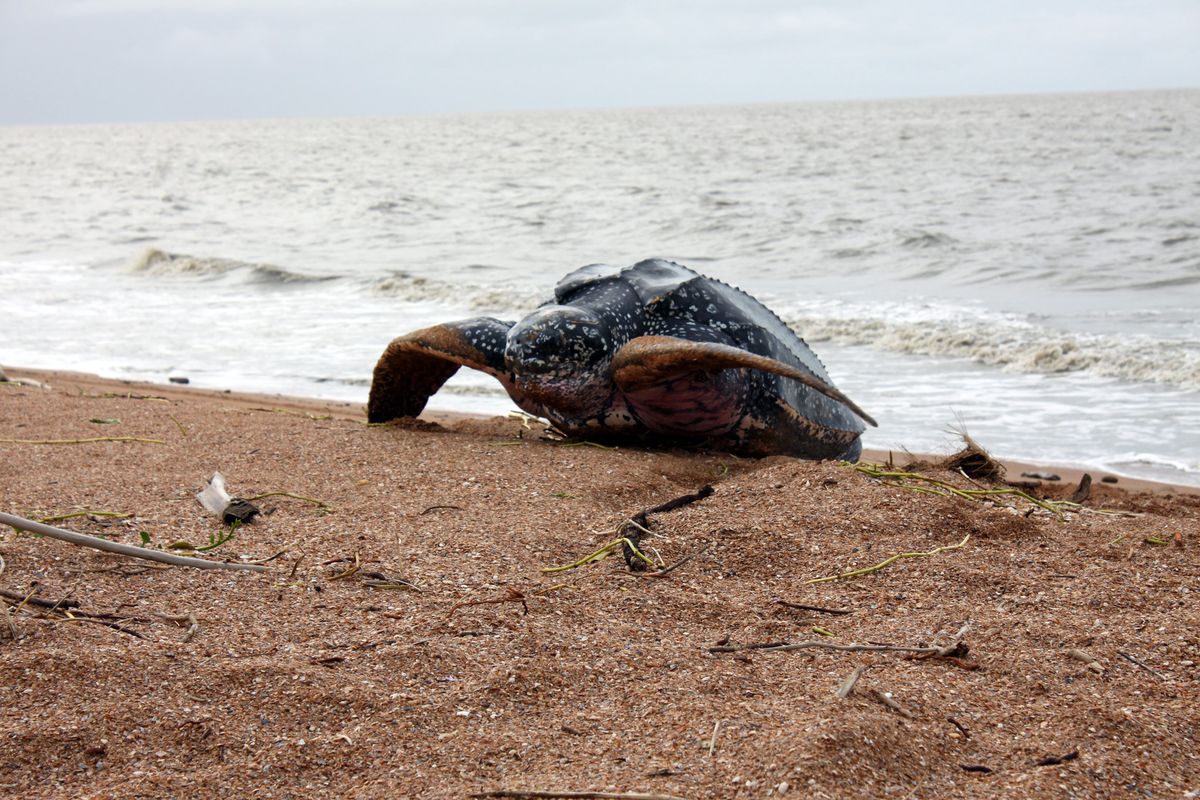
Barima-Waini
Approximately 140 km long beach. In some parts, the beach consists of pure shells of numerous diverse species. Important nesting site for 8 species of sea turtles.
Archaeological wonders
Aishalton Petroglyphs and Makatau rock shelter
Upper Takutu-Upper Essequibo
Savannah with boulders that are covered with numerous petroglyphs and polissoirs. Stone arrangements.
Rewa petroglyphs
Upper Takutu-Upper Essequibo
Numerous petroglyphs at the eastern end of Kanuku Mountains, near the confluence of Kwitaro and Rewa rivers, near Corona Falls.
Karowrieng paintings (Maiputi Falls rock paintings)
Cuyuni-Mazaruni
Rock paintings at the base of the tepui, some of the few known ancient paintings in Guyana. Contain also numerous prints of hands.
Petroglyph site near Big “S” Falls and Kurupukari petroglyphs
Potaro-Siparuni
Two of the many petroglyph sites near the confluence of the Siparuni and Essequibo rivers. Petroglyphs were created sometime around 3000 BC. Belong to Enumerative and Fish Trap Petroglyph traditions.
Architecture wonders
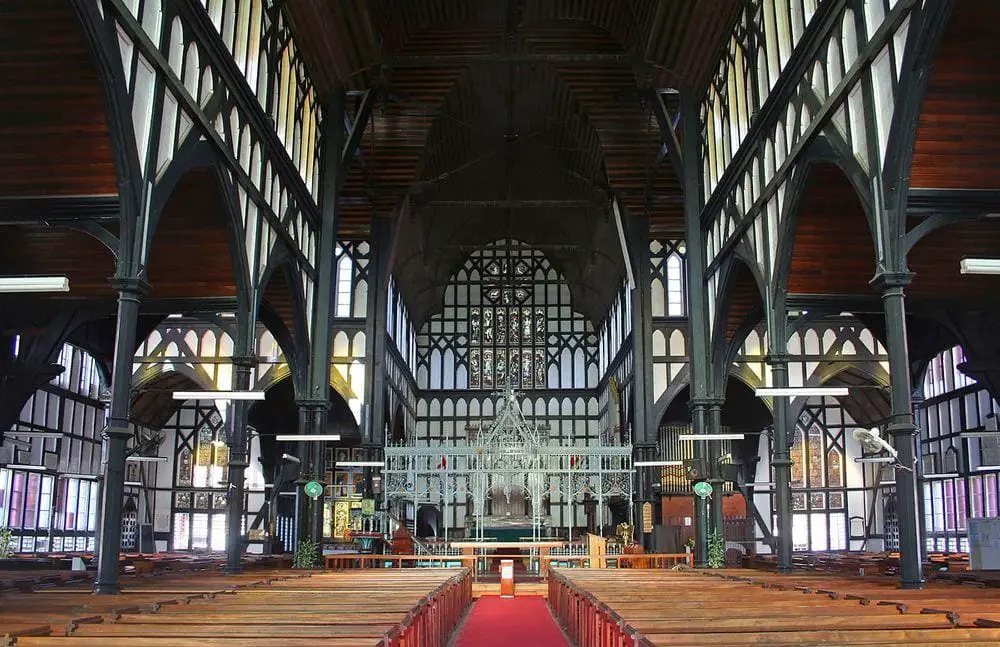
St. George’s Anglican Cathedral
Demerara-Mahaica
One of the tallest wooden churches in the world, 43.5 m high, built in 1899.
Georgetown historical centre
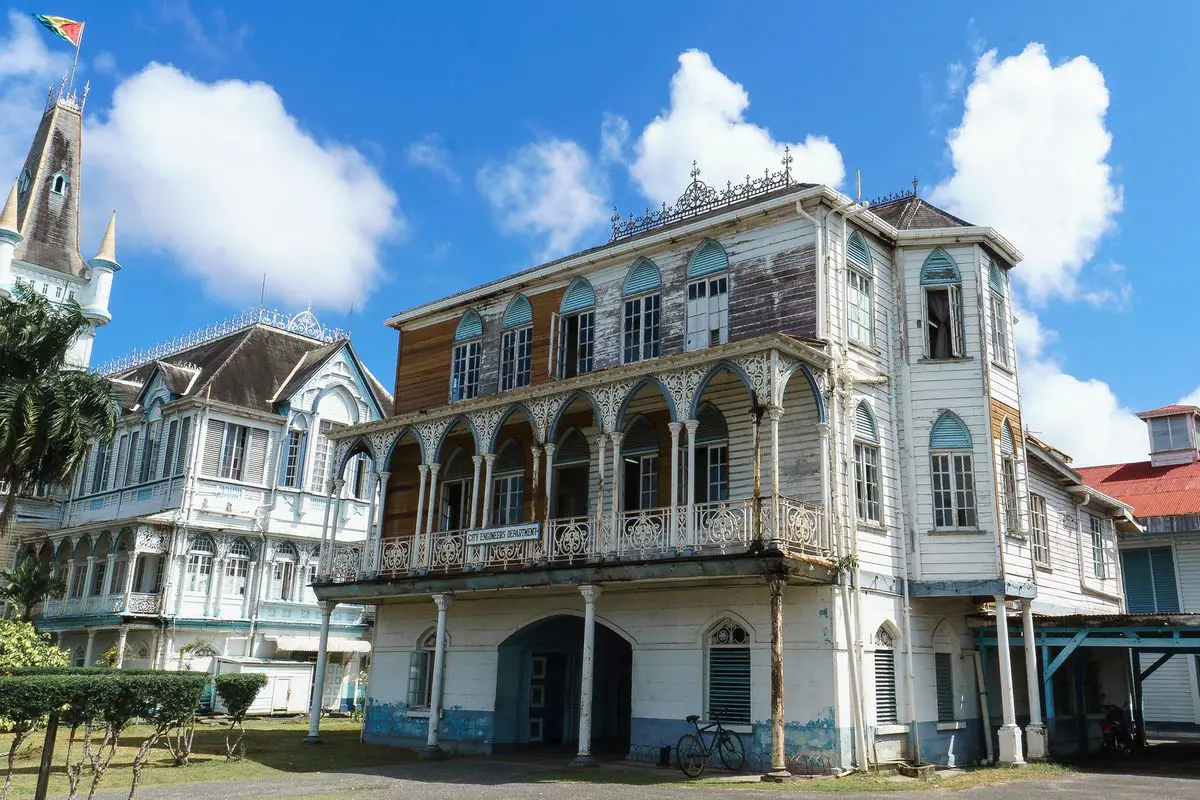
Demerara-Mahaica
Originally designed by Dutch in the 1700ies, ornate wooden architecture, and green alleys.
Recommended books
The Guyana Story: From Earliest Times to Independence


The Guyana Story-From Earliest Times to Independence traces the country’s history from thousands of years ago when the first Amerindian groups began to settle on the Guyana territory. It examines the period of early European exploration leading to Dutch colonization, the forcible introduction of African slaves to work on cotton and sugar plantations, the effects of European wars, and the final ceding of the territory to the British who ruled it as their colony until they finally granted it independence in 1966.
Guyana (Bradt Travel Guide)


This new third edition of Bradt’s Guyana remains the only guidebook available to this South American gem, a jungle-clad country teeming with exotic wildlife. Thoroughly researched, easy to use, and interesting to read, Bradt’s Guyana is written and updated by writers who have lived in and promoted Guyana for many years and is an ideal companion for all travelers, from wildlife watchers to fishermen, anthropologists to conservationists and ‘voluntourists’.
